




John Wesley's Heart Strangely Warmed
Anglican clergyman experiences conversion at Aldersgate meeting.
FaithTap · Sep 24, 2026 · 11 min read
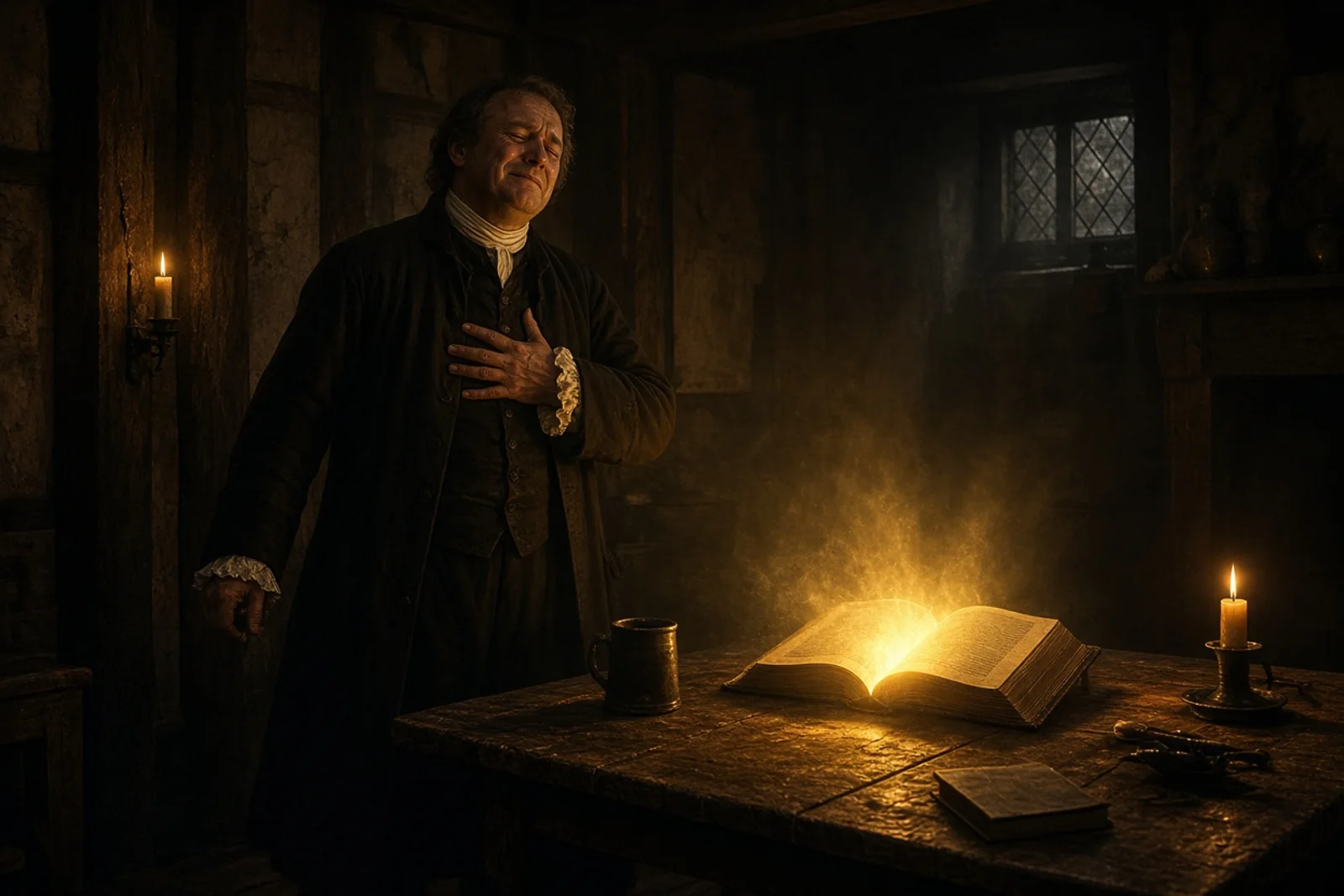
I tugged at his sleeve outside the door on Aldersgate Street, the evening air still warm from the day’s sun on the paving stones. Wesley stood with his shoulders drawn in, the same look he had carried since stepping off the ship from Georgia months before. I told him the group would not mind another listener and that the reading had already begun. He followed without another word.
We took places on a bench near the back. A single lamp burned on the table. The reader’s voice carried steadily through the small room, turning the pages of Luther’s preface. He spoke of the heart changed by faith in Christ alone, the shift from striving under the law to resting in what had already been done. I watched Wesley’s hands. They had been clenched on his knees. They loosened by degrees.
Near a quarter before nine the reader reached the part about the inner change God works through trust in the Son. Wesley’s head lifted. His eyes stayed on the reader but the line of his mouth eased. He drew one long breath and let it out without sound. I had seen him preach in churches and fields, seen him argue points of doctrine late into the night, yet I had never seen that particular stillness settle on him.
He rose partway through the next sentence. His voice was quiet at first, then carried to every corner. He said he now trusted Christ and Christ only for salvation. He said an assurance had come that his sins, even his, were taken away and that he was delivered from the law of sin and death. Several heads turned. No one interrupted. He went on to pray aloud for those who had spoken against him and made his work harder. The words were plain, without flourish. When he finished he sat again, but his posture had changed. The tension that had lived between his shoulder blades was gone.
After the meeting broke we walked back toward his lodging. He spoke little on the way. Once he stopped under a street lamp and looked at the ground as if listening to something inside his own chest. I asked nothing. At his door he thanked me for bringing him and went inside.
The next morning he appeared at the usual hour for the small gathering we kept. He spoke of the same assurance, but now he added that peace and victory over sin mattered more than any rush of feeling. When temptation returned later that day he met it by lifting his eyes and claiming the help already given. He told us the difference was simple: before, he fought and sometimes lost; now he fought and remained standing.
On the Thursday he went to St. Paul’s in the afternoon. The anthem that day began with the line about singing always of the Lord’s loving-kindness. He told me afterward that the words had tasted like bread. The same evening he mentioned a fear that had tried to settle on him, the old question of why the change did not feel more dramatic. He answered it by saying he knew peace with God today and had been forbidden to borrow trouble from tomorrow.
By early June the restlessness that had marked him since Georgia began to ease into purpose. He spoke of going to Germany to meet the Moravian brethren whose witness had reached him in London. He said his mind needed the steadiness their example might give. Preparations were quiet. He packed few things. Before he left he preached once more in the open air near Moorfields. The old urgency remained, but the edge of strain had left his voice. People who had heard him before remarked on the steadiness.
I saw him again after his return from Herrnhut. The three months had not removed every question, yet the ground under his feet had settled. He continued to meet the societies, continued to read and to answer letters, but the record of each day now carried a different tone. The entries spoke of keeping his eye fixed on Christ and waiting on Him continually. The temptations still came, yet each time he answered by looking upward rather than inward.