




John Woolman Urges Quakers to Free Slaves
Journalist travels and convinces meetings to manumit.
FaithTap · Sep 29, 2026 · 10 min read
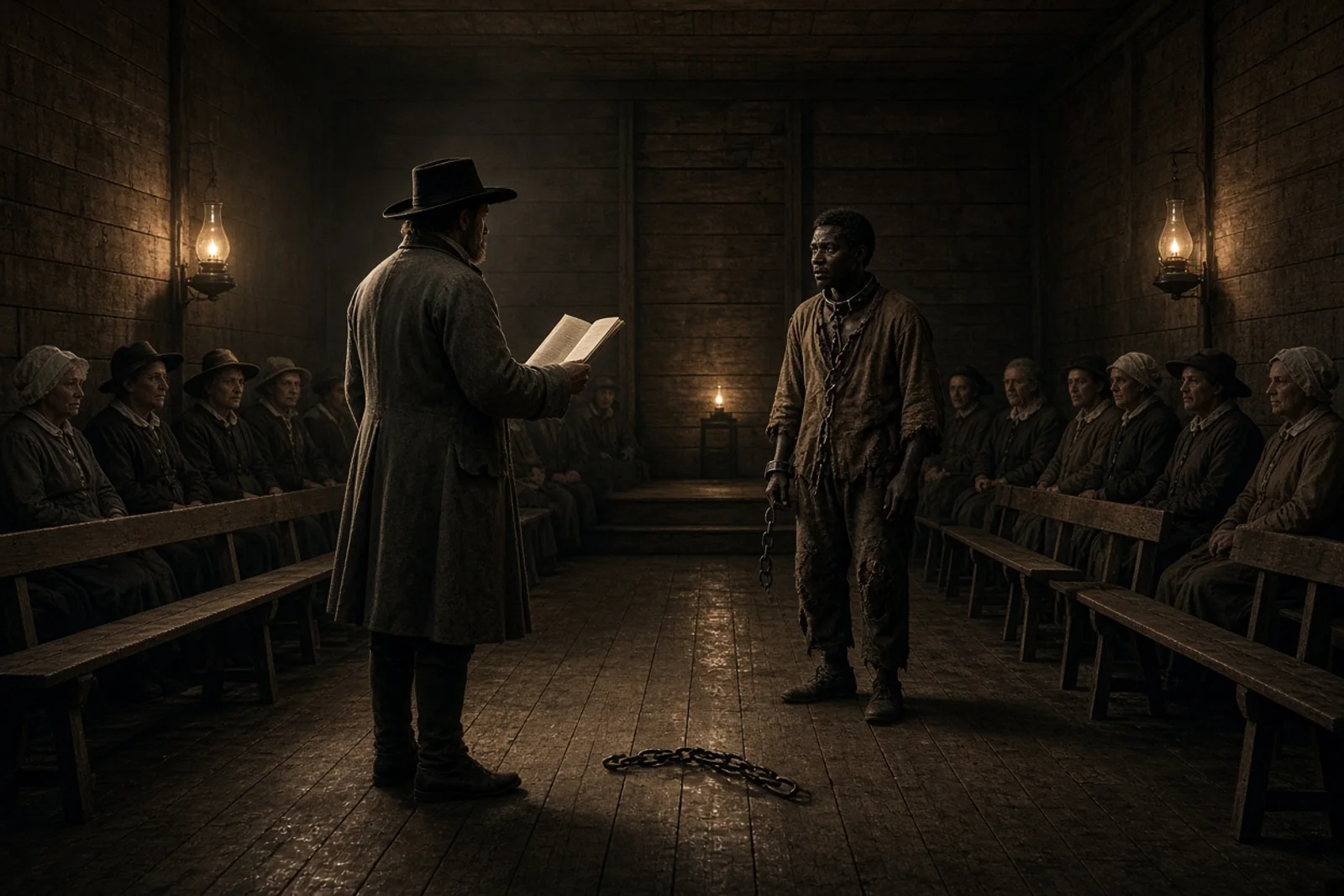
The bench beneath me creaked when I shifted my weight. Sunlight cut through the high windows of the meeting house at Mount Holly and fell across the rows of plain coats and bonnets. John Woolman had walked in from the road that morning, dust on his shoes, a packet of folded sheets under one arm. He did not sit at once. He stood near the facing bench and waited while the silence settled.
He opened the packet after the first speaker finished. The pages were still damp from the printer in Philadelphia. He read the opening lines aloud in his quiet voice, the one that never rose even when the room grew warm. He spoke of one blood and of sojourners who share the same afflictions. No one moved. A fly tapped against the glass.
After the reading he asked whether any Friend present kept Negroes. Three hands lifted, slowly. Woolman looked at each face without accusation. He asked only that they consider the matter again before the next quarterly meeting. Then he sat. The clerk recorded the query in the minute book and the meeting closed.
I walked with him afterward to the house where he would stay the night. He carried the remaining copies wrapped in linen. The road was rutted from spring rain. He said little until we reached the gate. Then he asked if I would ride with him to the next meeting at Burlington. I agreed before I had thought the distance through.
We left before dawn. The packet rode between us on the seat. At each stop Woolman handed copies to the elders first, then to anyone who would take one. In some houses the pages passed from hand to hand without comment. In others a man would read a paragraph aloud and then fold the sheet shut as if the words burned. Woolman never pressed. He simply waited until the conversation turned or the silence returned.
One evening in a low-ceilinged room near Crosswicks a man named Samuel Smith stood and said he had already freed his two servants. Woolman asked only how the man’s neighbors had received the news. Smith answered that some called him rash. Woolman nodded and made no further remark. Later I saw him write the names in a small notebook he kept in his coat.
The heat of midsummer pressed on the meetings. In one house the shutters stayed closed against the glare and the air grew thick with the smell of wool and sweat. Woolman read the same passages each time. The words did not change, yet each reading seemed to land on different ears. A woman near the door began to weep quietly during the second paragraph. She left before the close and did not return.
By the time we reached the Philadelphia Yearly Meeting the packet was nearly empty. Woolman had given away the last copy on the steps outside. Inside, the gallery was crowded. When his name was called he rose and spoke for less than ten minutes. He asked the body to consider whether the buying and selling of men could stand beside the command to love the least of these. Then he sat again. The clerk’s pen scratched across the page. No vote was taken that day.
After the session I found him outside under the shade of a sycamore. He was mending a tear in his coat sleeve with thread pulled from the hem. I asked whether he thought the words had reached anyone new. He answered that the words were not his to measure. He folded the needle into a scrap of paper and returned it to his pocket.