




Johnny Cash Reads the Bible in Prison
Country singer testifies of prison conversion.
FaithTap · Oct 5, 2026 · 11 min read
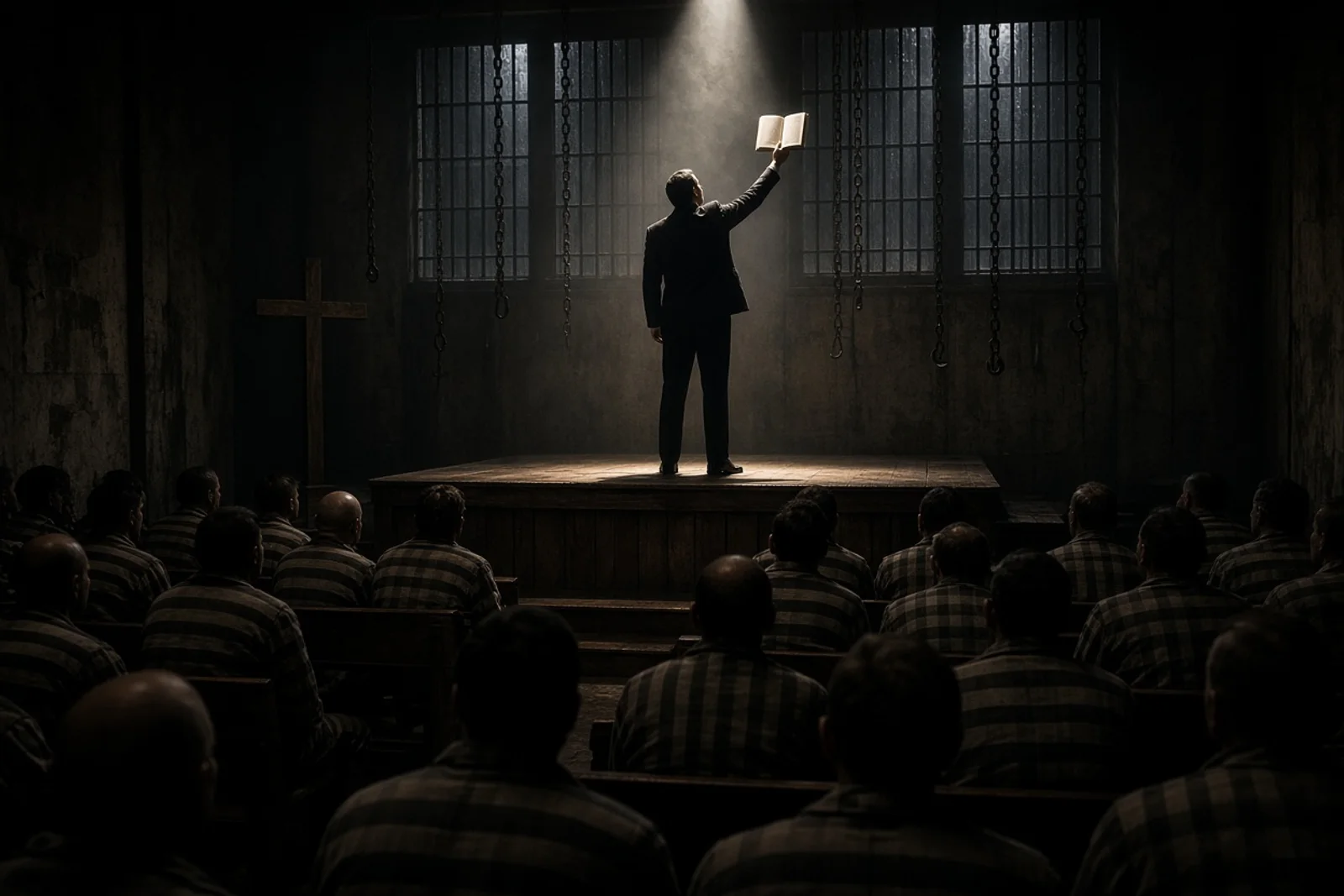
The gates slammed shut behind us and the sound rolled along the concrete like something that meant to stay. I followed Reverend Gressett down the corridor, the photographer a step behind me, our footsteps too loud. Cash had already gone ahead with June. The air smelled of damp stone and institutional soap.
We reached the small room they had set aside. Cash stood near a table in his blue sport coat, turtleneck underneath, listening while Gressett spoke in a low voice. The minister held a reel of tape. He threaded it onto the recorder I carried and the song came through the speaker, a prisoner’s voice singing about the chapel inside these walls. Cash leaned forward. He asked for the words written out. Someone handed him a sheet and he copied them in pencil, slow and careful, right there on the table.
That night in the hotel he sat on the edge of the bed with the paper and the guitar across his knees. The band filtered in and out. He worked the chords until they fit the lines about the grey stone and the light that still reached inside. June sat nearby, quiet, watching him shape the song the way a man fits a key to a lock he has never tried before.
Morning came cold. We drove out again, the vans carrying the amplifiers and the stands. At the prison the guards checked every case twice. One of them found a small pistol in a road case and set it aside without comment. No one explained where it had come from. We moved on.
Inside the cafeteria the long tables had been cleared. Prisoners filled the benches, their faces turned toward the low stage. Cash walked out in black and the sound that met him came from every direction at once, a roar that pressed against the granite. He counted off the first number and the band fell in behind him. The walls sent every chord back doubled.
Between songs he spoke to them the way a man speaks to people he already knows. He told them the next one had been written by a man still inside. He said the name Glen Sherley and the room shifted. Then he played the song Gressett had brought the day before. The prisoners stayed with every line. When it ended the noise rose again, louder than before.
After the second show we stood near the side door while the equipment was loaded. Sherley was brought forward. Cash shook his hand and they spoke for a few minutes. Sherley’s face stayed mostly still, but his eyes moved like a man measuring distance he had not expected to cross. Cash told him the song would be on the record.
In the months that followed the album reached people who had never bought a Cash record before. Radio played the prison sounds along with the music. Cash kept the letters that came from other prisons and read pieces of them aloud on stage. He asked Gressett what could be done for men like Sherley once they walked out the gate.
Two years later the parole board released Sherley. Cash arranged a job and a place to stay. Sherley stood on stages with the band, sang his own songs, and learned how to move through rooms where no one watched the door. He married. He became a father. Cash took him to Washington to speak about the places they had both known from different sides of the bars.