




Jonathan Edwards Embraces Sovereignty
Future theologian finds new delight in God's holiness during reading.
FaithTap · Oct 5, 2026 · 11 min read
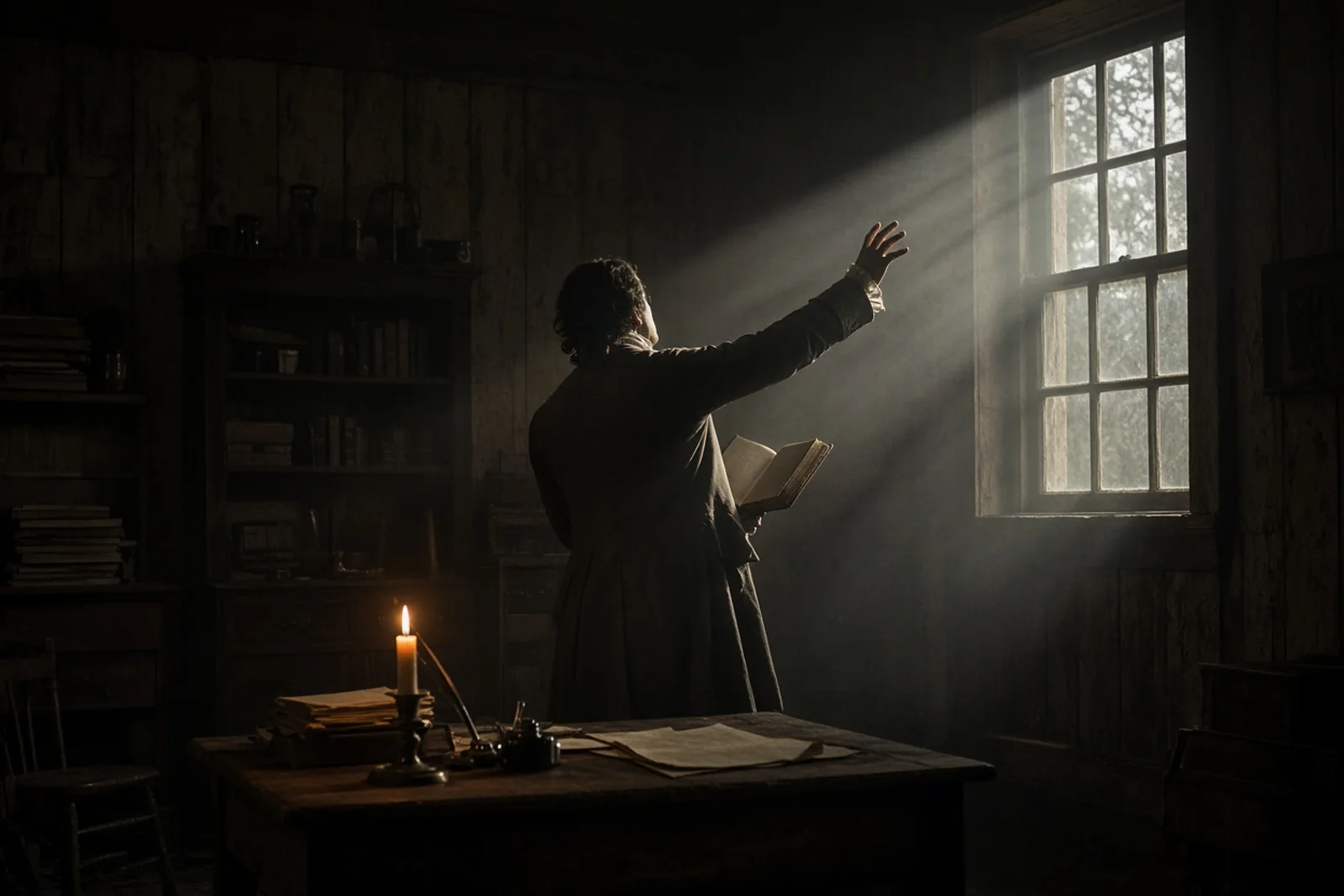
The candle had guttered low again. I pushed the wick upright with the end of my quill and watched the flame climb. Across the narrow table Jonathan sat with his Bible open, shoulders drawn forward the way a man leans into a headwind he cannot see. We had shared this attic room above the college hall for three terms. Most nights he read until the bell rang for morning prayers. Some nights he argued with the pages under his breath.
He had carried the same objection since boyhood. The thought that God chose some for life and passed by others without regard to anything they had done struck him as unjust. He told me once, while we walked the path behind the orchard, that the doctrine tasted of iron in the mouth. He could recite every text that seemed to support it, yet each one left him more restless than before.
That evening he turned the leaves slowly. His finger stopped at First Timothy. I heard him draw breath to read aloud, then stop. The words came out quiet, almost private. “Now unto the King eternal, immortal, invisible, the only wise God, be honour and glory for ever and ever. Amen.”
He did not speak again for a long time. His eyes stayed on the page, but the tension in his neck eased by degrees. I kept copying notes from a lecture on the Romans, yet I found myself glancing up. Something had shifted in the room, though the candle still smoked and the wind still pressed against the shutter.
Later he told me the sense had come without warning. A glory belonging to God alone had filled the lines until they seemed larger than the paper. He said it was not an argument that convinced him. It was more like light reaching the bottom of a well he had stopped trying to measure. The old objections did not rise. They simply had no place left to stand.
We walked out together the next morning. Students hurried past us toward the hall. Jonathan kept his hands behind his back and looked at the ground as we went. When I asked whether the doctrine still troubled him he answered that it no longer did. The justice of it had become as plain to him as any fact he could see with his eyes. He spoke without heat or triumph, only a kind of settled quiet.
In the months that followed he read the same passages that once provoked him and found them newly ordered. He began to speak of sovereignty as something to be ascribed to God with gladness rather than defended against complaint. The change showed in small ways. He no longer broke off a conversation when the subject turned to election. He stayed and listened.
By the spring he had finished his studies and taken a license to preach. I saw him once more before he left for New York, standing at the edge of the green with his few books tied in a cloth. He asked after my own plans and wished me well. The old restlessness had left his face, replaced by a steadiness that looked almost like rest.
Years later word reached me that he had married Sarah Pierpont and settled in Northampton under his grandfather’s care. The same man who once could not bear the thought of absolute sovereignty now preached it without apology. Congregations felt the difference. People who had heard only thunder in the doctrine began to hear something else, a kind of brightness.