




Jonathan Edwards' Personal Narrative of Faith
Theologian Jonathan Edwards records his conversion experience in a personal narrative.
FaithTap · Sep 25, 2026 · 10 min read
We crouched in the mud that afternoon, Jonathan and I and two others from the meeting-house yard, hauling cut branches into a low ring where the swamp water barely reached our ankles. The air smelled of rot and pine pitch. We drove the poles deep and lashed them with strips of bark, then spread the last boughs across the top until the space inside was dark enough for prayer. Jonathan kept saying we needed one more layer so the rain would not reach us when we knelt. His hands were raw from the work, but he would not stop until the roof held.
After that we met there most weeks when the weather allowed. Five times a day he slipped away from the house, sometimes alone, sometimes with us. I watched him come back from the woods with his face still set, as if the words he had spoken in secret were still moving on his tongue. The rest of us tired of the habit before long. He did not.
By the time he left for college the booth had fallen in on itself. I saw him once more before he went, standing at the edge of the pasture with his bundle. He said nothing about the old places. Two years later word reached us that he had been taken with pleurisy and lay near death. When he returned home the following winter his face had thinned and his voice carried a new roughness. He sat at his father’s table and ate little. At night I heard him pacing the upper room.
He began to speak of the old objections again, the ones that had troubled him since boyhood. God’s choice of some and not others, the eternity of the lost, the justice that left men in torment without remedy. These thoughts came between him and sleep. He told his father he had tried to lay them aside by force of will, but the more he pushed the heavier they pressed. His father listened without answering at once. They sat together in the small study until the lamp burned low.
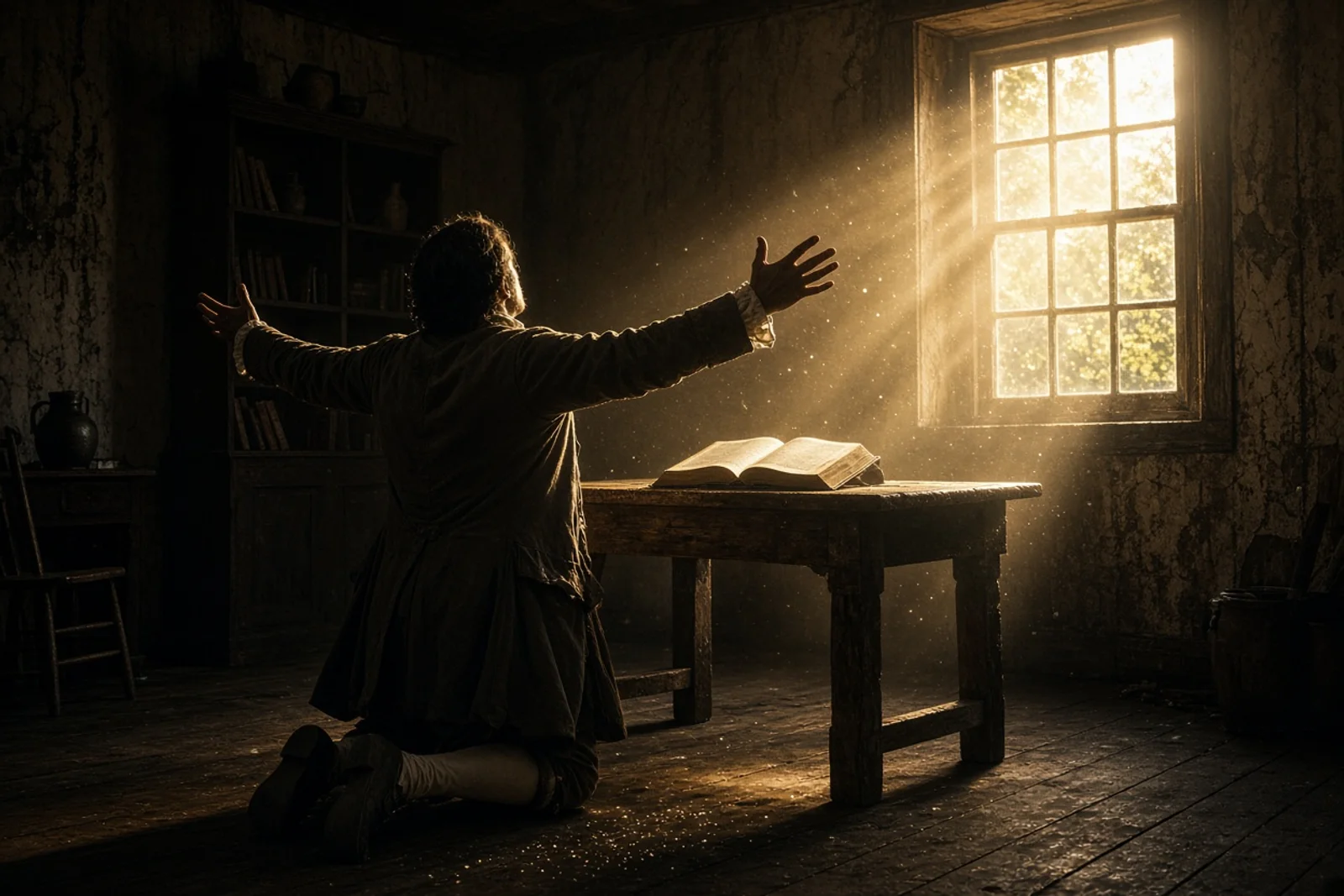
One evening after supper Jonathan opened the Bible at the table and read aloud from the first letter to Timothy. When he reached the seventeenth verse he stopped. He read it again, slower. Then he closed the book and sat with both hands flat on the boards. His father asked what had struck him. Jonathan said only that the words had come into him differently than before, as if the weight of them had shifted. He did not say more at the table.
Later he walked out alone into the pasture behind the house. I was mending a fence rail at the lower edge and saw him stop midway up the slope. He stood a long time with his head lifted toward the clouds that were just beginning to thin after rain. When he came back his step had changed. He did not hurry. He looked at the grass as though he had not seen it that morning.
In the weeks that followed he took fewer walks into the woods for the old kind of prayer. Instead he stayed near the house and read for longer stretches. Sometimes he carried the book outside and sat with it open on his knees while he watched the light move across the fields. He spoke less about his own efforts and more about what he saw in the ordinary sky. The moon held him one night for nearly an hour. He stood at the window and traced the edge of it with one finger on the glass, saying nothing.
His father noticed the difference first. One afternoon they spoke again in the study. Jonathan told him the sense of things had grown steadier, not loud but constant, so that even the plainest objects carried a brightness he had not known how to name. His father asked whether this had come by any sudden terror. Jonathan said it had not. It had come while he read and had stayed without being forced.
By spring he was riding out with his father to neighboring pulpits. He still carried the same objections in his mind, yet they no longer stopped him. He told me once, while we walked the lane, that the doctrine no longer appeared as a barrier but as part of the same glory he had met in the verse. He did not press the point. He simply walked on.