




Margery Kempe Dictates Her Spiritual Autobiography
First English woman writes conversion narrative.
FaithTap · Sep 22, 2026 · 10 min read
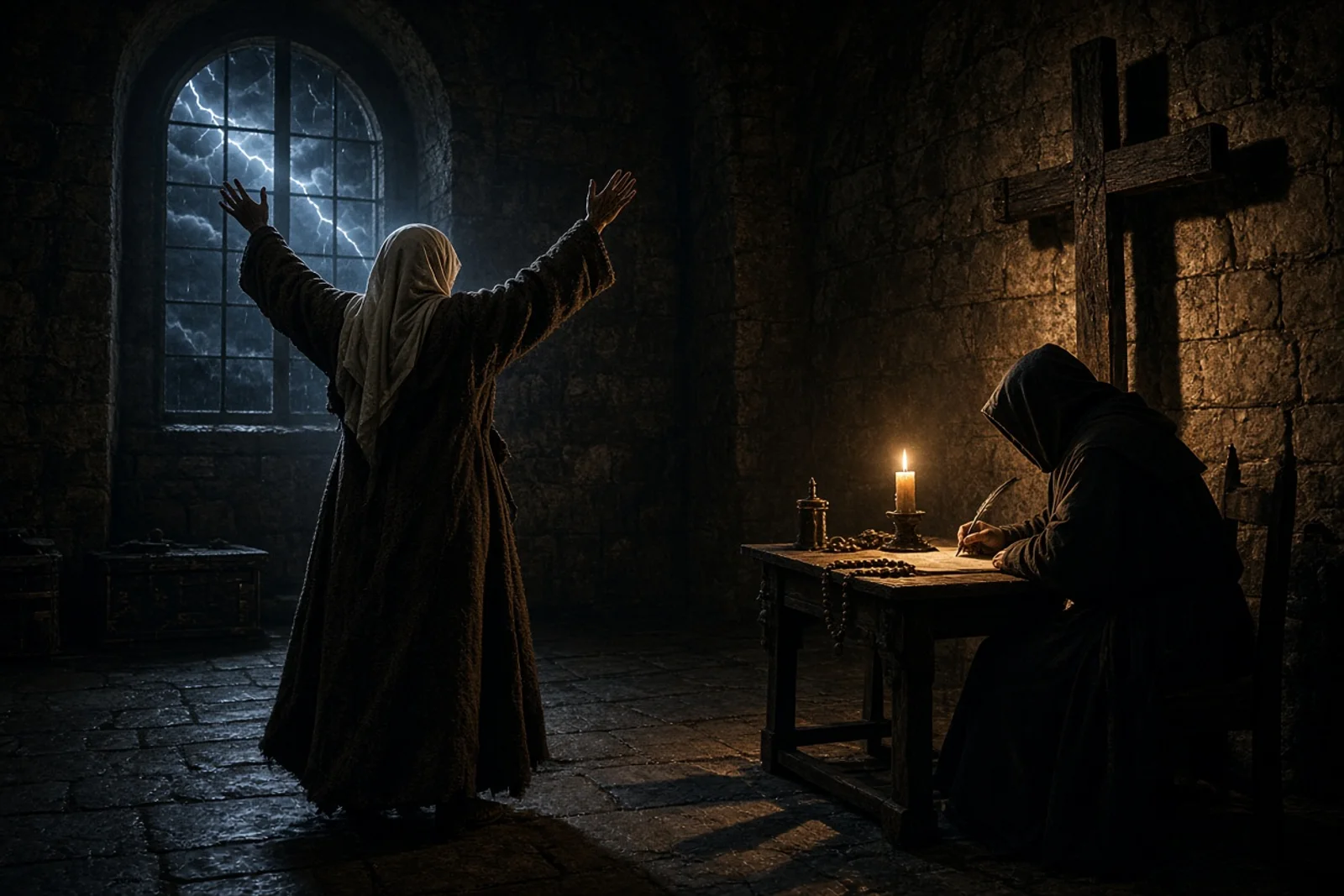
The priest set the bench by the window where the light held longest. I carried the inkpot from the shelf and set it where he could reach without turning. Outside the shutters the street ran toward the river, and the sound of carts came up through the boards. Margery Kempe stood in the doorway until the priest nodded. She stepped inside and sat on the low stool she always took.
She began with the childbed. The words came fast at first, then slowed when she reached the part where the devils came. The priest wrote without looking up. His hand moved steadily, the quill scratching. I stood by the wall and kept the spare sheets ready. When she stopped to breathe, the room felt larger than it was.
She spoke of the brewery next. The mash had soured twice in one season. The grain mill followed, the wheel breaking in the first month. She named the men who had lent her the money and the day her husband paid the last of it back. The priest asked nothing. He only dipped the quill and kept going.
By the third morning the pages lay in a stack on the table. Margery arrived with her cloak still damp from rain. She sat, folded her hands, and told how she had walked to Norwich to speak with Julian. The anchoress had listened through the grate. Margery repeated what Julian had said about shame and merit. The priest paused, blotted, then wrote the sentence out in full.
On the fifth day she reached the agreement with her husband. They had walked together on the road to Bridlington. He had asked her the question about his head and the marriage debt. She answered him plainly. The priest’s hand slowed for that part. He read the line back to her once. She nodded and told him to leave it as it stood.
The room grew warmer as summer held. I opened the shutter wider after midday. Margery spoke of Jerusalem and the ship that carried her. She named the places she had knelt and the voices she had heard on the deck at night. The priest wrote until the light failed. He left the last line unfinished and covered the ink.
One afternoon she broke off and asked for water. I brought the cup. She drank and set it down, then began again with the friar who had accused her of false tears. She told how he had read of Marie of Oignies and afterward left her in peace. The priest added the date of that meeting in the margin.
The priest’s eyes tired by the eighth week. He rubbed them with the back of his hand and asked her to speak slower. She did. The words about her son’s letter from Gdańsk took longer to set down. She waited while he formed each letter. Outside, the bell rang for vespers and she stayed until the line was finished.
She spoke of the trials. The questions put to her in Leicester and York. The threat of the fire. The men who had searched her for the white cloth she wore. The priest wrote without comment. When she reached the moment she had been cleared, she stopped. The room was quiet except for the sound of carts below.