




Mary Verghese Rebuilds Life After Paralysis
Indian surgeon pioneers rehabilitation for disabled
FaithTap · Oct 1, 2026 · 11 min read
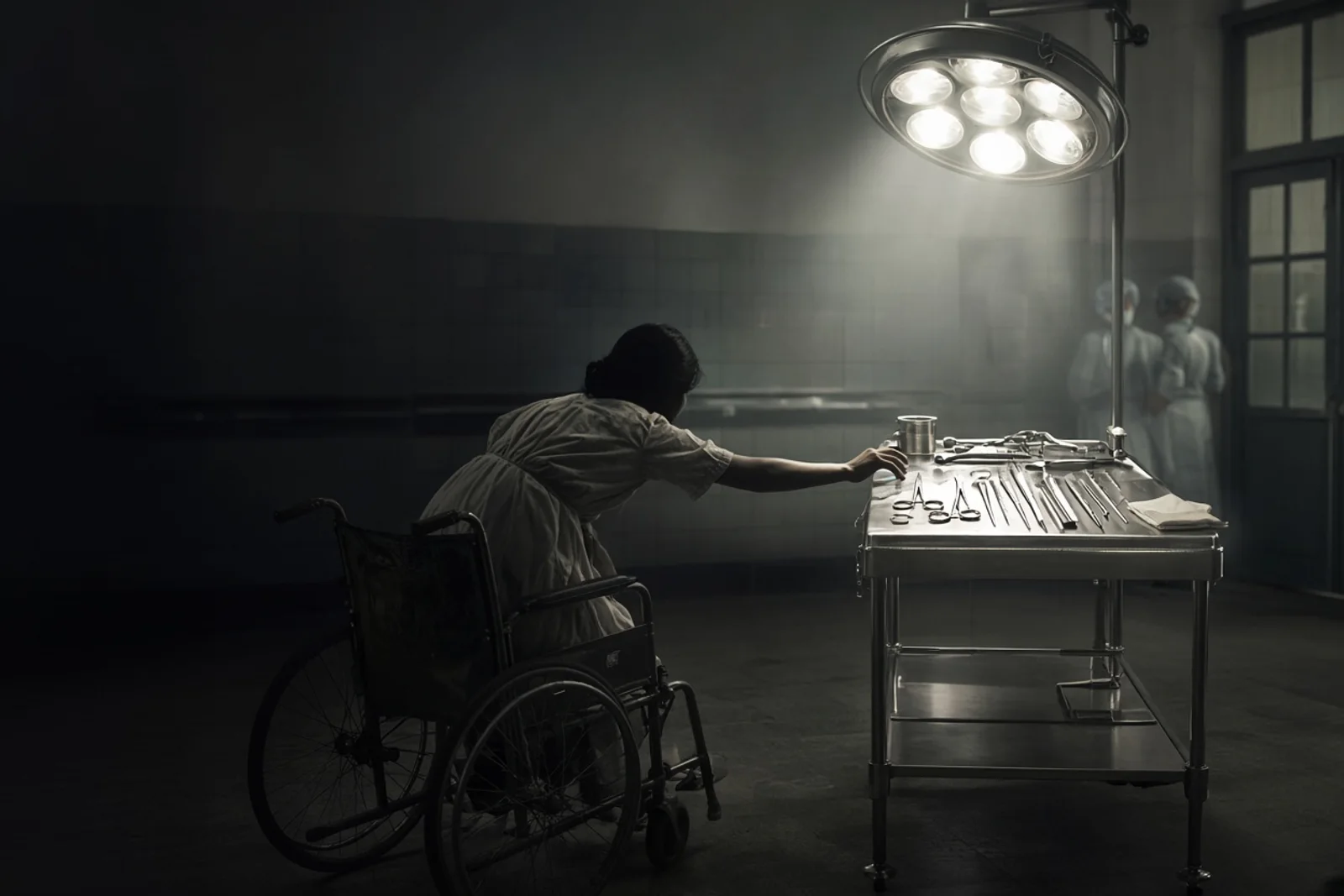
The wheels stopped just short of the instrument tray. I adjusted the lamp so the beam fell across the patient’s face without throwing glare into her eyes. Mary Verghese sat already gloved, her chair locked, the footrests folded away so nothing caught the pedal. She reached for the fine hook without asking for it. The room held the usual quiet that came when she worked, only the soft click of metal and the hiss of the sterilizer in the corner.
She had returned from New York three weeks earlier. The letter from Dr. Rusk’s office had arrived first, then the trunk with the new braces and the diagrams she had drawn herself. She unpacked the diagrams on the long table outside the leprosy ward and showed us how the new exercises would begin the same week. Patients watched from their beds. One man with both hands bandaged asked whether the chair would fit through the doorway. She measured it with her forearm and said it would.
Before the accident she had planned to deliver babies. Everyone at CMC knew that. After the road crash in fifty-four the surgeons told her the cord was cut. She lay weeks without feeling below the waist. Dr. Brand came to the bedside one morning and told her there was still work a surgeon could do sitting down. She answered that she had never planned to sit. He left a pair of tendon-transfer drawings on the sheet anyway.
Months later she began to operate again, first assisting, then taking the knife herself. The leprosy patients needed eyelids rebuilt so the lashes would not scratch the cornea. She learned to steady her elbows on the armrests of the chair and to keep the tremor out of her hands by bracing one wrist against the other. I stood at the head of the table and counted the minutes for her. She never asked for the count out loud, but when I reached twenty she would pause and flex her fingers once before continuing.
The day she left for the fellowship she wore the same white coat she had worn in the ward. Someone had sewn extra pockets on the inside so she could carry instruments without reaching behind her. She did not say goodbye to the patients. She told the head nurse the new exercises would start when she came back and that the measurements for the parallel bars should be taken before the monsoon.
When she returned the monsoon had already begun. The corridors smelled of wet cement. She brought back a suitcase of printed schedules and a single photograph of Dr. Guttmann at Stoke Mandeville, signed on the back. She hung the photograph above the desk in the new department and said the beds would be ready by October. We cleared the old storage room and painted the walls the same green used in the main wards. She tested the doorway with her chair twice before the paint dried.
The first class of physiotherapy students arrived in the rain. They stood in the corridor holding their shoes because the floor was still tacky. Mary Verghese rolled to the blackboard and wrote the schedule in chalk. She did not mention her own injury. She told them the patients would arrive with pressure sores and contractures and that the first task was to prevent both. One student asked whether a person could walk again after a complete lesion. She answered that the question was not whether they walked but whether they reached the toilet unaided.
We built the low-cost tricycle frames in the workshop behind the laundry. The design came from a drawing she had copied in New York. The wheels were bicycle wheels bought in the market. She sat beside the welder and pointed where the axle needed an extra brace so the frame would not twist on uneven ground. The first frame was tested by a boy whose legs had been crushed in a bus accident. He pedaled the length of the veranda and back before the chain slipped. She tightened it herself, leaning forward from the chair until her forehead touched the handlebar.
By the end of the second year the department occupied two wards and the workshop. Occupational therapy students learned to make splints from scrap leather. The prosthetics bench stood under the same tin roof as the bicycle frames. Mary Verghese moved between the rooms without a schedule posted on the door. She stopped at each bed long enough to check the skin and ask what the patient had eaten that morning. If the answer was only rice water she sent the diet sheet back to the kitchen with her own note.