




Maximilian Kolbe Volunteers for Starvation Bunker
Priest takes prisoner's place at Auschwitz.
FaithTap · Oct 1, 2026 · 10 min read
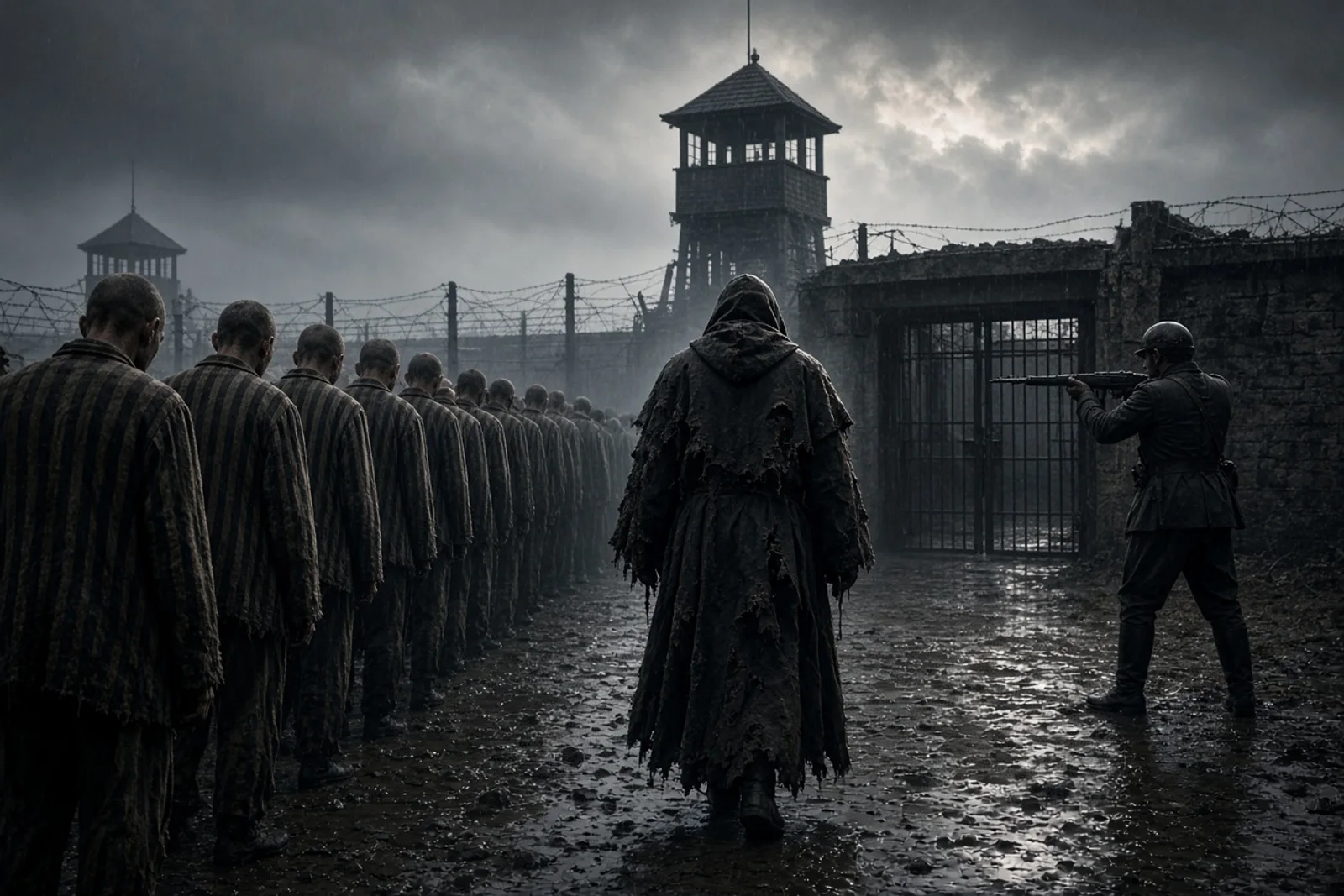
The sun pressed down on the gravel yard outside Block 14 while the count dragged on past midday. Men stood shoulder to shoulder in rows that stretched the length of the block, boots sinking slightly into the loose stones. No one spoke. The only sounds were the occasional scrape of a rifle butt against concrete and the low cough of someone trying not to draw attention.
I kept my eyes on the ground two paces ahead, counting the minutes by the shift of shadows. We had been standing since before dawn after the escape was discovered. The deputy commandant Karl Fritzsch moved along the front rank with Gerhard Palitzsch at his shoulder, both men stopping now and then to point. Each time a prisoner was pulled out of line, the rest of us adjusted our stance by a fraction, closing the gap without being told.
Fritzsch reached the middle of our block and halted. He studied the faces for a moment, then lifted his hand and named ten men. The chosen stepped forward one by one, their numbers called out and written on a sheet by a clerk standing behind the officers. When the tenth name was read, a sudden movement broke the line a few ranks to my right.
Franciszek Gajowniczek, a sergeant from the Polish army, had been among the ten. He took half a step forward and began to plead, voice cracking as he spoke of his wife and two young sons waiting somewhere outside the wire. The words carried across the silent yard. Fritzsch turned, expression unchanged, and waited for the outburst to finish.
From the same row a different prisoner moved. Prisoner 16670, the Franciscan friar everyone in the block knew as Maximilian Kolbe, walked out of formation without hurry. He stopped in front of Fritzsch, stood at attention, and offered to take Gajowniczek’s place. He said he was a priest and older than the man with the family. The request was made in the same tone men used when asking for an extra ladle of soup.
Fritzsch studied him. For several seconds the only movement was the slow drift of dust across the yard. Then the deputy commandant gave a short nod. Gajowniczek was ordered back into the ranks. Kolbe took his position among the ten and the group was marched toward Block 11 under guard.
We remained at attention another hour before dismissal. No one discussed what had happened until the evening meal, and even then the talk stayed low. The ten men had been locked in the basement cells of Block 11, the hunger bunker reserved for special punishments. Water and food were withheld. The doors stayed shut.
Over the following days word reached us through prisoners assigned to clean the corridors outside those cells. They reported singing at night, the sound of voices reciting prayers in Polish and Latin. Kolbe’s voice was the one they recognized most often. The guards on duty sometimes stood at the door listening before moving on.
By the tenth day only a few of the original ten were still alive. The others had died from thirst and weakness. Kolbe continued to lead what remained of the group in prayer. An assistant janitor who passed the cells each morning later described seeing him on his knees or standing upright, eyes open, as if the deprivation had not yet reached him.