




Menno Simons Organizes Peace Churches
Leader chooses nonviolence
FaithTap · Sep 24, 2026 · 10 min read
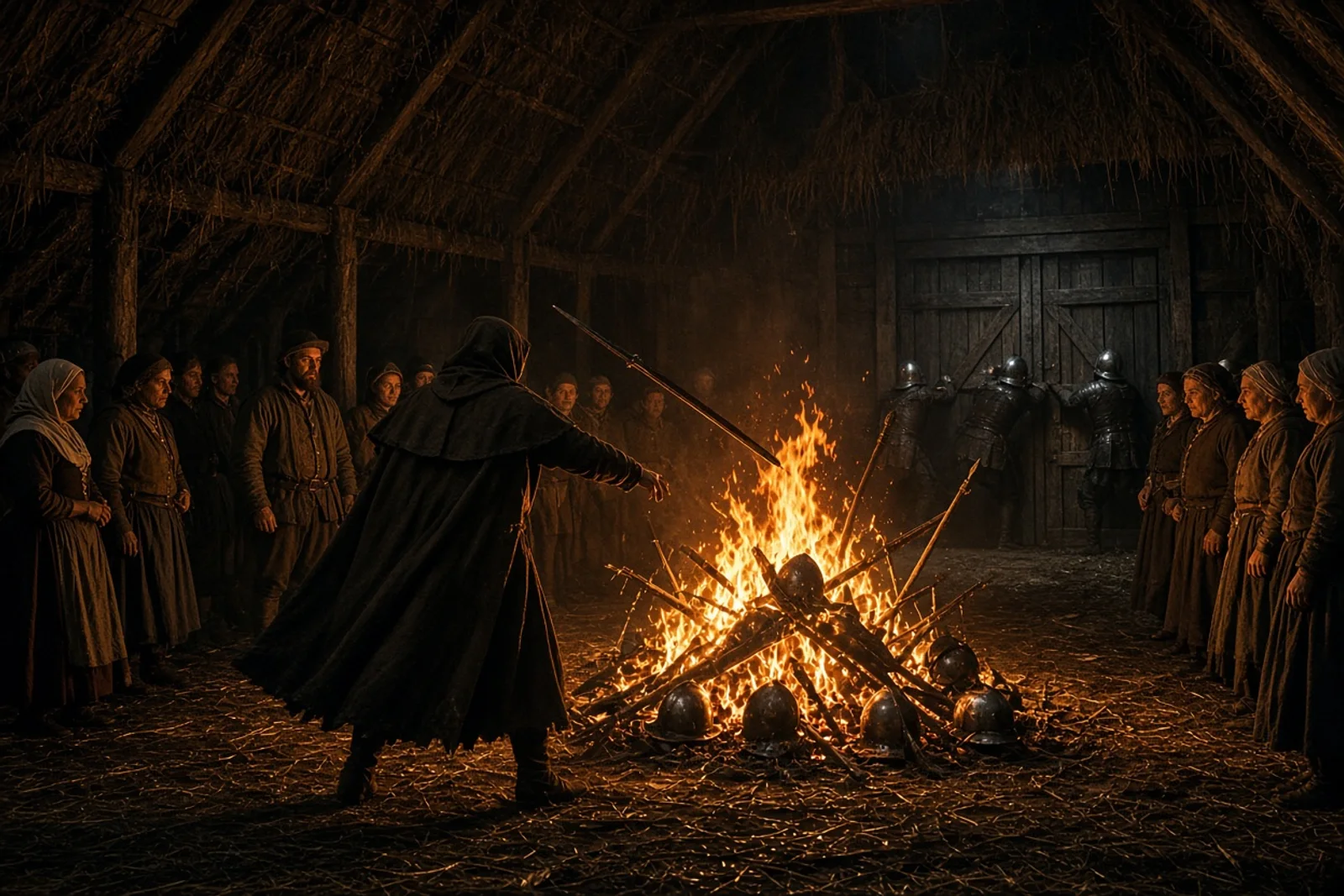
The wind off the Zuiderzee carried the smell of wet thatch and distant smoke the morning I reached Witmarsum. I had walked through two nights after the last raid near Bolsward, my cloak stiff with mud, my mind still fixed on the bodies left in the square. Menno’s brother had been among them. The Münster men had promised a new city of the saints and delivered only swords and fire.
I found him in the back room of a brewer’s house, the shutters drawn though it was midday. He sat on a low bench with a single candle, the New Testament open on his knees. His hands shook when he turned the pages. Two other men waited near the door, one of them the cooper who had hidden me the week before. None of us spoke at first. Outside, a dog barked at the canal.
Menno looked up. His face had thinned since the last time I had seen him say mass in Pingjum. He asked whether I had eaten. I told him the road had offered nothing but turnips. He nodded once and sent the cooper for bread. Then he returned to the book.
Word had already spread that the authorities were searching every farm for anyone who had spoken against infant baptism. The Münster disaster had made every Anabaptist the same in their eyes. Menno had been warned to stay quiet, yet he kept receiving visitors at night. They came from Leeuwarden and Franeker, from villages whose names I no longer remember, asking what should be done now that the prophets had failed.
He answered them the same way each time. No kingdom would be taken by force. No sword would bring the kingdom nearer. The only mark of the true church was the willingness to suffer without striking back. Some left angry. Others stayed and listened until the candle burned low.
One evening a woman arrived whose husband had been taken after the fall of Münster. She demanded to know why Menno had waited so long to speak plainly. He did not defend himself. He said only that he had loved the world too much to risk losing its good opinion. The words hung in the room after she left. I watched him fold his hands and stare at the floorboards until the cooper doused the light.
In the weeks that followed he stopped wearing the priest’s collar. He traveled on foot between scattered groups, always at dusk, always with one companion who knew the back paths. I went with him twice. The first time we reached a farmhouse near Sneek where eight people waited in a barn. Menno read from Matthew, then asked each one what they believed about the water. No one was rushed. When a young man said he wanted to be baptized, Menno led him to the horse trough at the edge of the yard. The water was cold enough to make the man gasp, but Menno’s voice stayed steady as he poured.
News traveled faster than we did. In some places the magistrates had posted notices offering reward for his capture. In others, families opened their doors and fed us without asking names. Menno never stayed more than one night in the same house. He carried no weapon, only the small book wrapped in oiled cloth.
By harvest time the scattered fellowships had begun to call themselves by a single name when they wrote to one another. They spoke of Menno’s letters as though they were maps. In them he repeated the same instructions: stay clear of any plan that promised power, refuse every oath that required the sword, and count the cost before the water touched the head. The letters were copied by hand and passed along the canals.