




Nabeel Qureshi Questions Islam
Medical student debates Christianity with friend.
FaithTap · Sep 29, 2026 · 11 min read
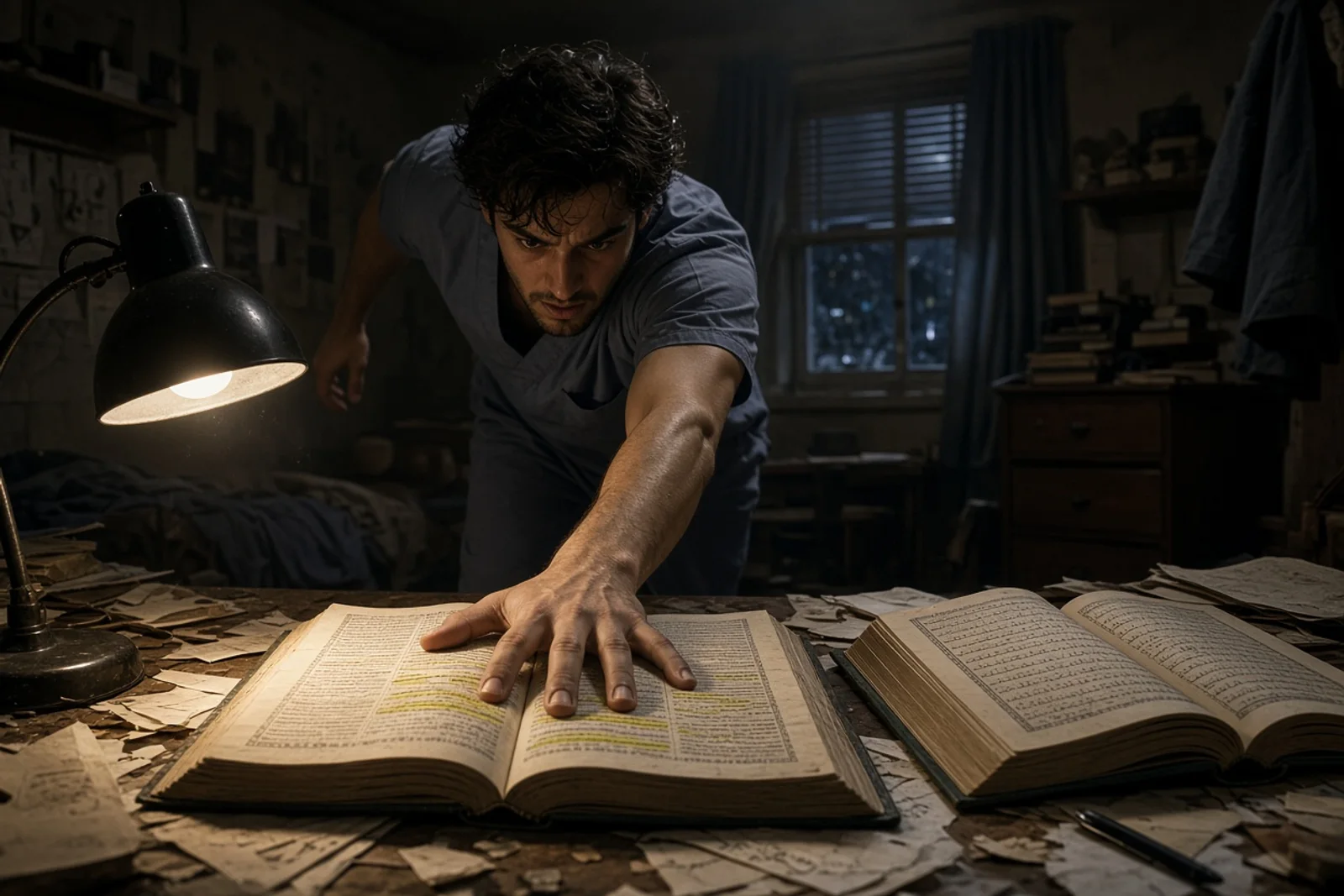
The dorm hallway smelled like burnt coffee and old carpet. I knocked once on the half-open door and stepped in anyway. Nabeel sat cross-legged on the floor, a stack of library books open around him, one finger tracing a line in an English translation of the Qur’an while the other hand held a pencil. David Wood leaned against the desk, arms folded, waiting.
They had been at it for hours again. Nabeel looked up at me, nodded once, then turned back to David. “You keep saying the crucifixion is the best explanation for the empty tomb. I still do not see how the disciples would die for a lie they invented themselves.” His voice stayed even, the same tone he used when leading Friday prayers at the student center.
David answered with another question about the chain of transmission in early hadith collections. I dropped my backpack and sat on the extra chair. This was how most evenings ended that fall. Three of us had started as study partners in a required history seminar. By October the seminar had ended but the arguments had not.
Nabeel’s routine never changed. He rose before sunrise for fajr, recited the morning litany in Arabic while the rest of the floor still slept, then walked to class with his head covered against the wind off the Elizabeth River. I watched him once fold his prayer rug in the common room while two roommates argued about football scores. He never raised his voice at them. He simply finished, rolled the rug, and joined the conversation as if nothing had interrupted it.
By the second year the questions between Nabeel and David grew longer and quieter. They stopped meeting only in the dorm. They signed up for the same upper-level New Testament course. During lectures I sat two rows behind them and watched Nabeel write notes in the margin of his Bible, then cross them out and write again. After class he would walk straight to the library stacks on the fourth floor, the section on early Christian manuscripts, and stay until the lights clicked off at midnight.
One night in our third year he came back to the room with a different expression. He set his bag down, looked at me, and said nothing for almost a minute. Then he asked whether I had ever read the Gospel of John all the way through without stopping. I told him I had not. He nodded, opened his own copy to the first page, and began reading aloud. His voice did not waver on the parts that once made him laugh in middle school.
The dreams started sometime after that. He never described them to me in detail. He only mentioned waking before the alarm with the same sentence repeating in his mind. He stopped leading the Friday prayers. When the student association asked him to speak at the next outreach event he said he needed more time to prepare. The weeks stretched into months.
Spring of 2005 brought warmer air and longer library hours. Nabeel and David sat at the same table every evening, now surrounded by photocopies of Greek texts and Arabic commentaries. Sometimes Nabeel would stand, pace the length of the aisle between the shelves, then sit again without having spoken. Once I found him outside the building at two in the morning, coat open, staring at the empty quad. He did not turn when I called his name.
The day he told David he could no longer defend the Islamic account of the crucifixion, the three of us were standing on the footbridge over the river. Nabeel spoke quietly, hands in his pockets. David listened without interrupting. When Nabeel finished, David asked one more question about the reliability of the earliest sources. Nabeel answered it without hesitation. Then he said he needed to call his parents.