




Nelson Mandela Forgives Apartheid Jailers
New president invites former oppressors
FaithTap · Sep 24, 2026 · 11 min read
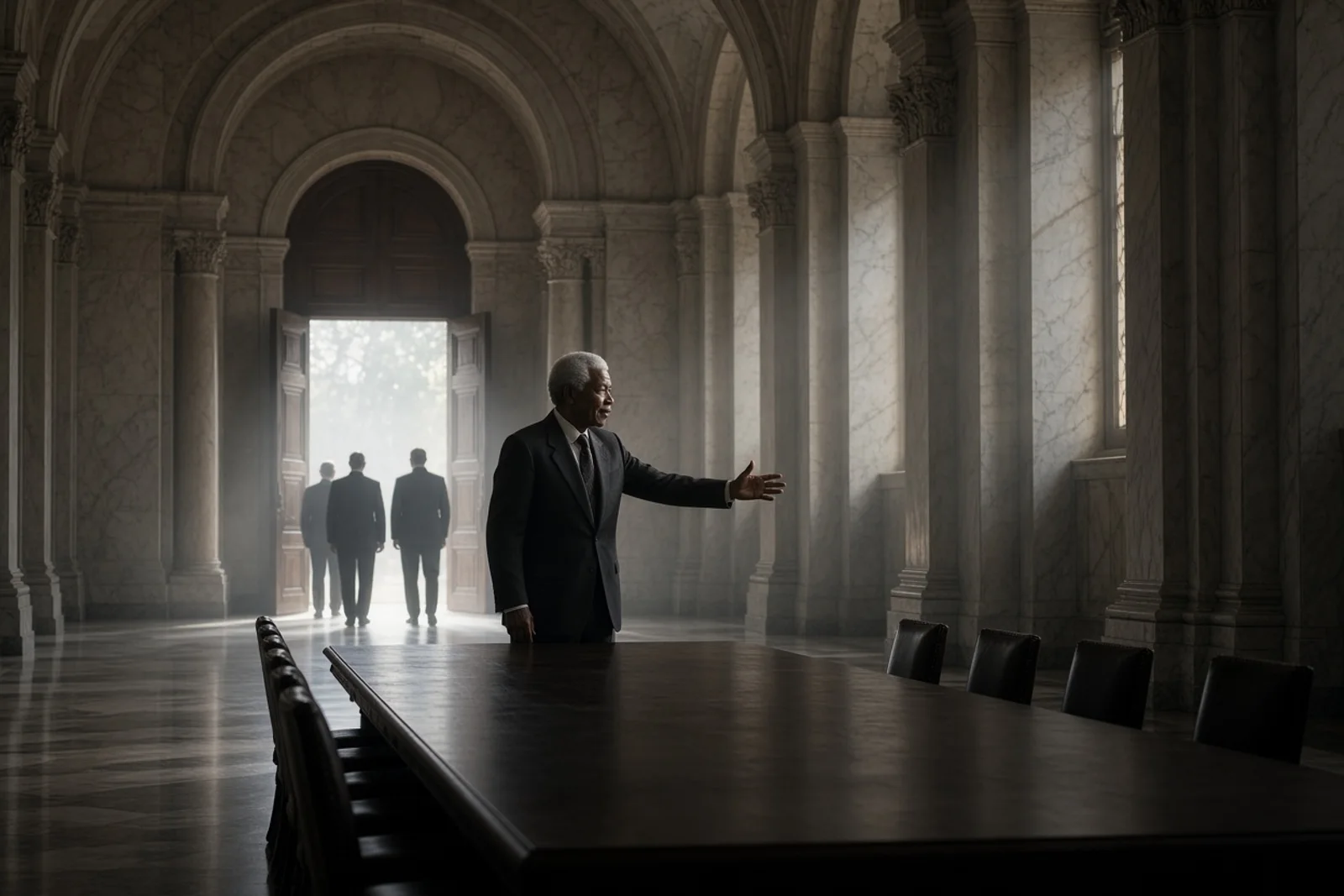
The usher at the side entrance kept waving people through with one hand while clutching the extra name cards in the other. Three cards carried only first names and no titles. I had placed them myself that morning after the committee confirmed the list. Outside the long windows of the Union Buildings the light already sat high and white over Pretoria, and the crowd noise from the lawns came in short bursts like distant surf.
I moved between the tables checking water glasses. The room smelled of polished wood and fresh lilies. At the far end the new president’s seat stood empty for the moment. People kept glancing at the doors. Some of the foreign guests still wore their ceremonial sashes from the swearing-in an hour earlier. The local ministers spoke in low voices and kept their hands on the backs of chairs as if the ground might shift.
A cluster of white men in dark suits entered without fanfare. One of them carried a small folded newspaper under his arm. Their shoes made almost no sound on the carpet. I checked the cards again and stepped forward. The tallest of the three gave his name quietly. I led them to a table near the middle, not too close to the head table, not too far. They sat without removing their jackets. Their hands stayed folded on the cloth.
Mandela arrived last. He moved slowly between the rows, stopping at each table long enough to touch a shoulder or exchange a few words. When he reached the three warders he leaned down and spoke for nearly a minute. I could not hear the words, only the low rhythm of his voice. The men nodded. One of them smiled and shook his head as if correcting a small mistake. Mandela straightened and continued to his own seat.
The meal began. Cutlery clicked against plates. Waiters moved in practiced lines. At the head table de Klerk sat two places from Mandela, his expression steady, his tie perfectly straight. Conversation stayed measured. No one raised a glass yet.
Then Mandela stood. The room quieted without any announcement. He began by naming the different groups that had shaped the country’s path. His voice carried without strain. He spoke of the long years of force and the people it had produced, then of another force that had worked in the opposite direction. He did not raise his volume when he reached the prison years. He simply described the friendships that had formed between prisoners and certain warders, the kind of friendships that made it harder for orders from above to be carried out exactly as written.
He said he had asked the committee to invite three of those warders so they could be present for the day. He looked toward their table as he said it. The three men sat very still. One of them had placed his hands flat on the tablecloth. Mandela continued that the warders had understood something simple about human beings and had acted on it. Their presence here, he said, was part of what made the day possible.
A low murmur moved through the room and then stopped. Mandela turned his attention to de Klerk. He spoke of the personal courage it had taken for certain men on the other side to begin talking. He named the change in outlook that had allowed negotiations to start. The words were direct and without flourish. When he finished that part he lifted his glass and the rest of the room followed.
After the lunch the three warders remained at their table for a while. Other guests approached them. Some shook hands. Others only nodded from a short distance. I collected the unused place cards from the side table and folded them into my pocket. One card still carried a faint crease where it had been held too tightly during the morning rush.