




Oskar Schindler Protects His Jewish Workers
Factory owner bribes officials to save 1,200 lives
FaithTap · Sep 27, 2026 · 11 min read
The truck idled outside the loading dock with its engine coughing diesel into the cold air. I stood at the bench where the enamel pots still cooled from the morning shift, my hands black with grease, and watched the two SS men climb down. Their boots hit the gravel like hammers. One carried a clipboard thick with names. The other kept his hand on the holster at his belt.
Schindler came out of the office wearing the same gray overcoat he always wore on cold days. He walked straight to them without hurry. I could see the way his shoulders sat, loose, as if he were meeting suppliers for a late delivery rather than men who could empty the entire factory before lunch. He offered cigarettes. The taller officer took one.
Inside the main hall the machines kept running because no one had been told to stop them. The women at the polishing tables kept their heads down. I moved closer to the open doorway so I could hear. Schindler’s voice carried easily over the noise. He spoke about production quotas and the need for skilled hands. He mentioned a figure I could not catch, then another. The officer with the clipboard wrote something down and nodded once.
By mid-afternoon the list had begun to take shape on Schindler’s desk. I was sent in with a tray of coffee because the clerk who usually did it had been taken away the week before. The room smelled of paper and the cheap tobacco Schindler rolled himself. He looked up when I entered and told me to stay. Three men already waited on the bench by the wall. One of them was the toolmaker from the night shift whose wife had been sent east in March. Schindler asked each man his trade and the names of any relatives still inside the camp. He wrote the answers in his own hand.
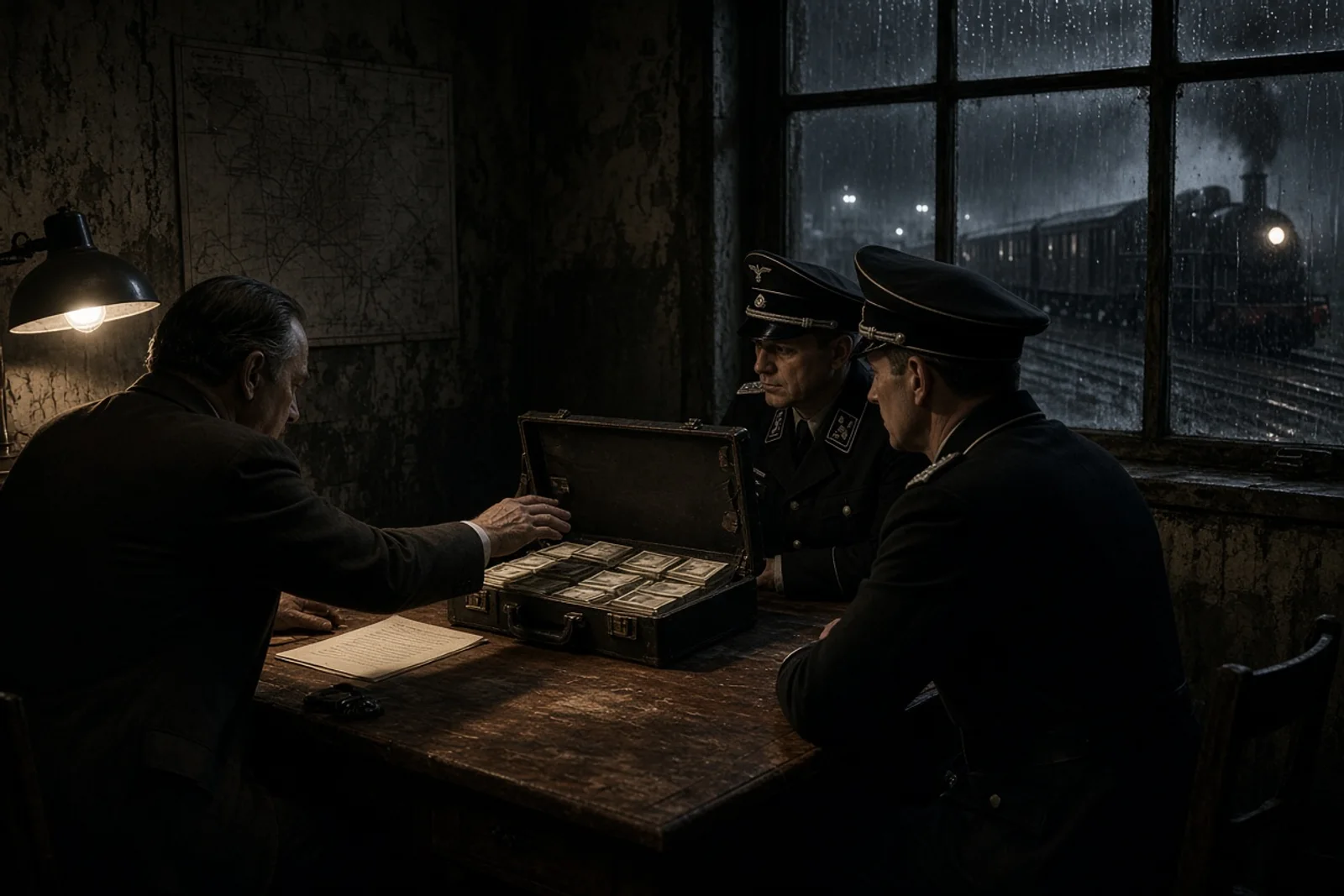
The SS returned at dusk with a different officer, younger, with a scar across his chin. Schindler met them on the steps again. This time money changed hands inside a folded newspaper. I saw the edge of the bills when the wind caught the paper. The younger officer counted without embarrassment, then tucked the bundle into his coat. Schindler asked for an extra day to finish the current order. The officer agreed.
That night the factory stayed lit until after midnight. We worked in shifts moving crates of finished goods onto the rail siding so the next morning’s transport would look legitimate. Schindler walked the floor twice, stopping at each station to ask if anyone needed extra rations or warmer gloves. He did not mention the list. No one asked.
Two days later the train stood on the siding with the doors already open. The SS counted us into the cars by number. Schindler stood on the platform with the final pages of the list in his hand. Whenever a name was called that did not match, he stepped forward and pointed to a different man already inside the car. The guards let it happen after the second correction. By the time the last car was sealed, one hundred and twenty more people than the original quota were on board.
The journey north took three days. We stopped often for troop trains. At one siding an officer demanded to inspect the cars. Schindler climbed down from the passenger compartment and spoke with him for twenty minutes. When he returned he told the nearest guard that the officer had changed his mind. The train moved again before dawn.
At Brünnlitz the new factory sat behind a high fence and a single gate. The barracks were unfinished and the machines still in crates, but the place had walls and a roof. Schindler met the local SS commander on the first morning and again produced a sheaf of papers. The commander read them, initialed the bottom sheet, and left without entering the compound. That afternoon the gates closed behind us and stayed closed for the rest of the winter.