




Otto III and Bolesław the Brave Form Alliance at Gniezno
Emperor and duke reconcile and create new diocese.
FaithTap · Sep 30, 2026 · 11 min read
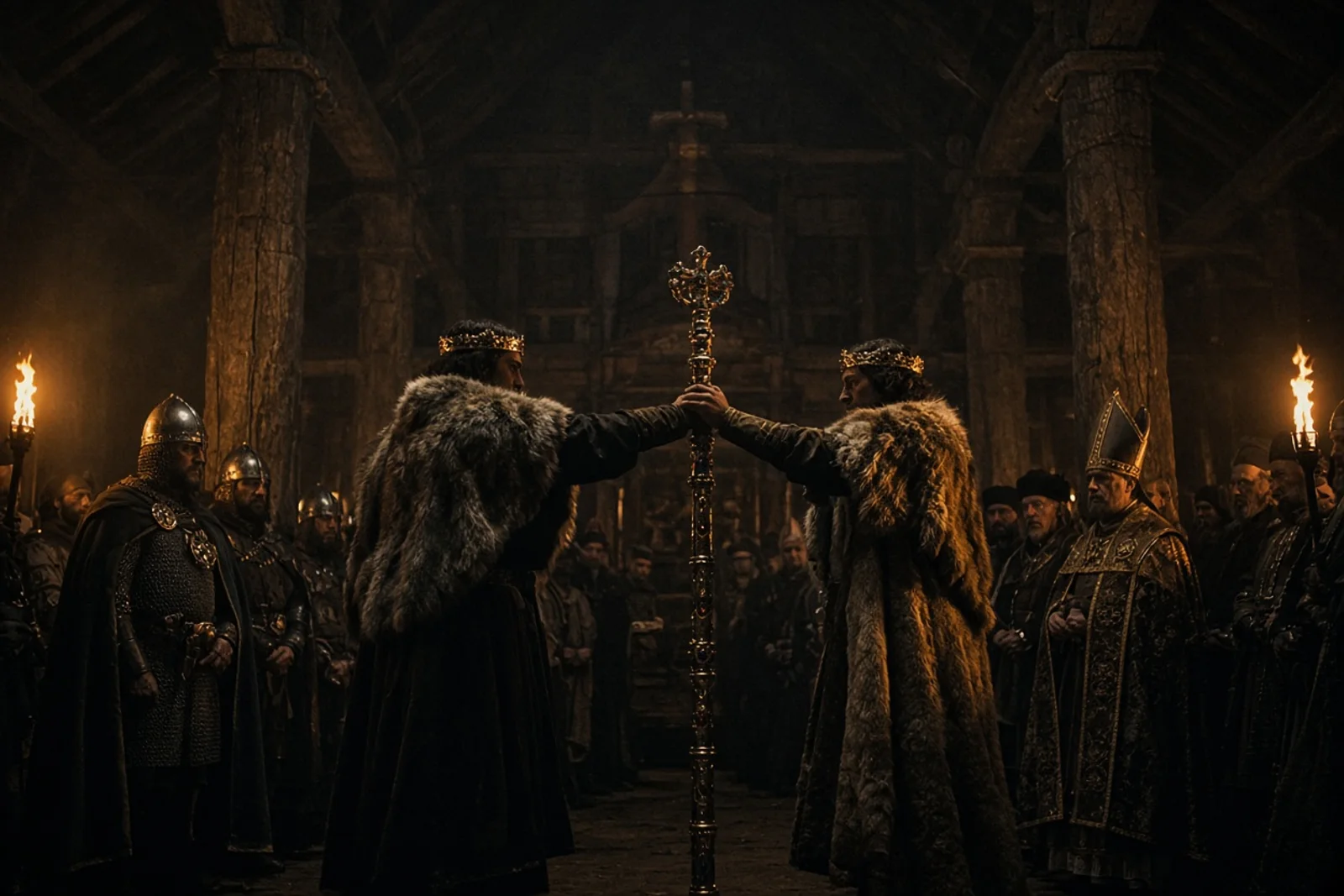
The dust rose in thick ropes from the hooves ahead of me as we neared the gates. I had marched with Bolesław’s men since the first frost, carrying messages between the duke’s riders and the scouts who watched the western roads. Now the emperor’s column stretched behind us, horses breathing hard after days of steady travel, and the city walls of Gniezno stood low against the morning sky.
Otto III had left his mount at the last bend. He walked the final stretch on bare feet, the hem of his cloak dragging through the cold mud. No one spoke. The only sounds were the creak of leather and the soft slap of his soles on the packed earth. Bishop Unger waited at the open gate, his staff planted, his face set against the wind that cut across the plain.
Inside the church the air smelled of old stone and burning tallow. Otto knelt at the reliquary that held Adalbert’s bones. He stayed there a long time, head bowed, shoulders moving with each breath. Bolesław stood a few paces back, one hand resting on the hilt of his sword, watching without moving. When the emperor finally rose, his eyes were red but dry.
The meetings began that same afternoon in the long hall Bolesław had cleared of all but the oldest benches. Otto spoke of a single empire renewed, four kingdoms under one crown: Gaul, Italia, Germania, and the Slavic lands he called Sclavinia. He looked at Bolesław when he said the last name. The duke answered slowly, measuring each word, but his voice carried to the far wall.
I stood with the other guards along the side, close enough to see the emperor’s hands when he lifted the diadem from his own head. He set it on Bolesław’s brow for a moment, then took it back. The gesture was small, yet every man present marked it. Later that evening the same diadem lay on the table between them while they spoke of borders and missions to the north.
Bolesław had spent gold equal to the weight of Adalbert’s body to bring the remains home. The scales had been set up in this same hall three years earlier, the coins counted one by one under the eyes of the Prussian traders. Now the same gold seemed to buy something larger than bone. Otto nodded when Bolesław reminded him of that payment, and the talk turned to the new see at Gniezno.
Unger protested the change in rank. He had been bishop of Poznań for years and saw no reason for a higher chair to rise beside his own. Otto listened, then gave the order anyway. The archbishopric would stand, and Radzim-Gaudenty, Adalbert’s brother, would wear the pallium. Unger left the hall without another word.
Outside, the nights stayed cold. Fires burned in the yard to keep the emperor’s horses warm. I walked the perimeter with two other men, listening to the low voices of German and Polish nobles trading news of harvests and raids. One of Otto’s counts asked how many warriors Bolesław could raise in a month. The answer came without hesitation.
By the tenth day the agreements were set. Otto would return south with promises of support against any who threatened the new arrangement. Bolesław would send men to strengthen the missions in Prussia and keep the roads open. The emperor’s retinue began packing the wagons at first light.