




Peter Abelard and Heloise Reconcile Through Letters
Separated by tragedy, Abelard and Heloise exchange letters of faith and forgiveness.
FaithTap · Sep 28, 2026 · 11 min read
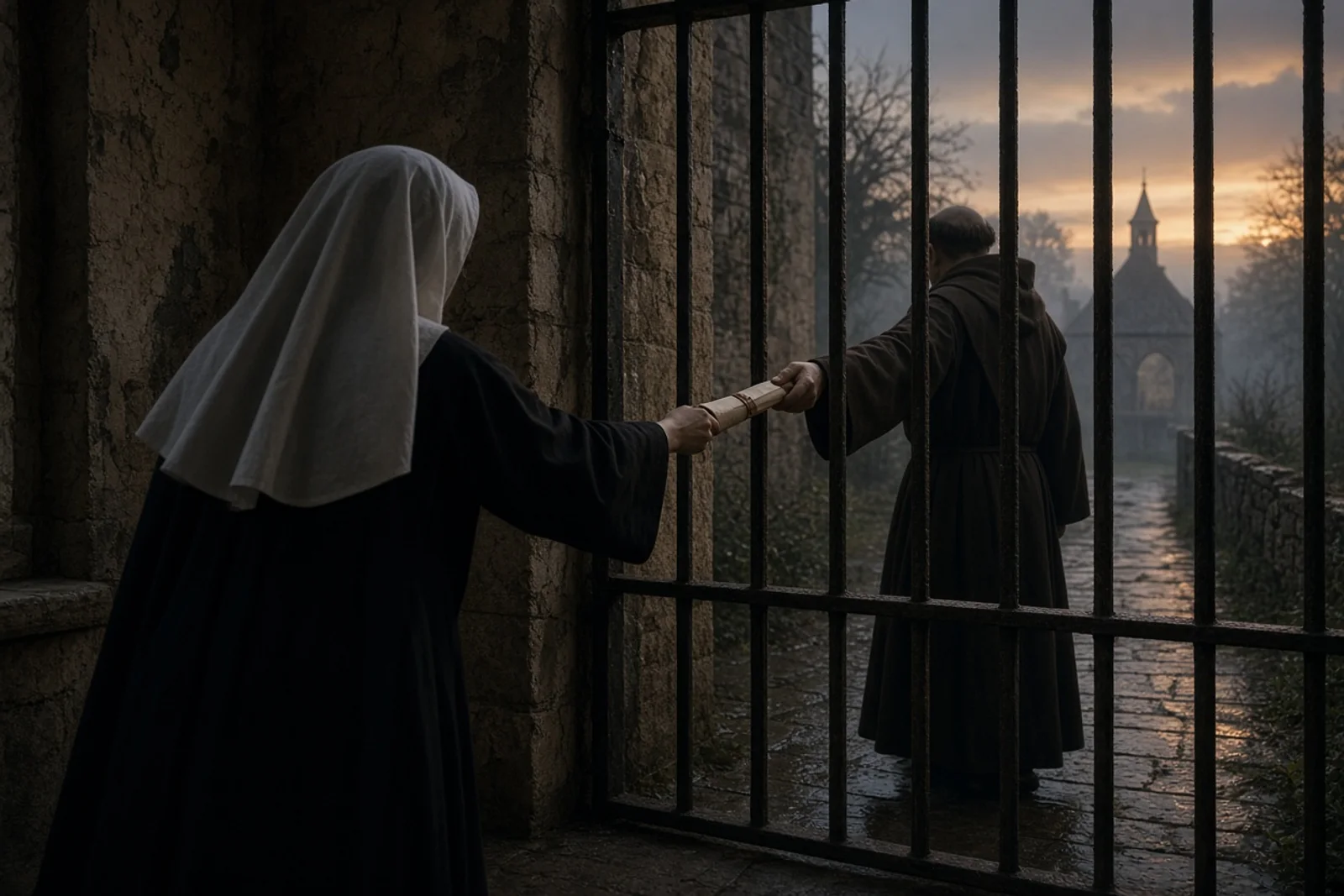
The candle in the scriptorium guttered when the messenger from Brittany arrived. I had been copying a psalter for the sisters and looked up only when the door opened and cold air rushed across the table. The man carried a single folded packet sealed with Abelard’s mark. He placed it in my hands without a word and left again into the rain.
I carried it to Heloise at once. She sat at the long table where the nuns took their meals, a quill still in her fingers from the day’s accounts. When she saw the seal she set the quill down slowly. She broke the wax with her thumbnail and began to read. Halfway through the second page her shoulders tightened. She reached the end, turned the sheet over, and read it again. Then she folded it once and pressed it flat under her palm as though the words might escape.
For three days she said nothing about it. On the fourth she asked me for fresh parchment and ink. She wrote through the night. I brought her bread and water at dawn and found the first letter already sealed. She handed it to me without looking up and said only that it must reach Abelard before the next full moon.
The reply came six weeks later. It was longer than the first packet and carried the same careful hand. She read it standing by the window of her small chamber. When she finished she sat on the bench and stared at the wall for a long time. I waited by the door until she noticed me and asked whether the garden needed weeding. I told her it did. She nodded and said nothing more.
The next letter she wrote herself took four days. She stopped often, staring at the blank space above the line she had just finished. Once she crossed out an entire paragraph and started again on a new sheet. When it was done she gave it to me to carry to the messenger. Her fingers left ink on the edge of the packet.
Abelard’s answer arrived in early spring. It spoke of the rule he was preparing for the nuns of the Paraclete. She read it aloud to me in the evening while the others slept. Her voice stayed even through the sections on authority and dignity, but when she reached the part about the authority of women in the early church she stopped and repeated the sentence twice, as though testing the weight of each word.
She wrote back within the week. This time she asked specific questions about the daily offices and the care of the sick. The answers came steadily after that. Sometimes two letters crossed on the road. I kept the copies in a wooden box under the altar cloth until she asked for them again.
One afternoon she called me into the chapter room and showed me a passage Abelard had written about their old life in Paris. She did not read it aloud. She simply pointed to the lines and waited until I had finished. Then she said the past could not be unwritten but the future could still be ordered. She asked me to fetch more ink.
By midsummer the tone of the letters had changed. They still spoke of the rule and the studies, but now they asked after one another’s health and the weather in each place. She began to keep his letters in a separate bundle tied with a plain cord. When she opened that bundle she did so with both hands, as though the pages were heavier than they looked.