




Peter Damian Founds Hermit Communities
Reformer establishes houses of prayer and care for the poor.
FaithTap · Sep 24, 2026 · 10 min read
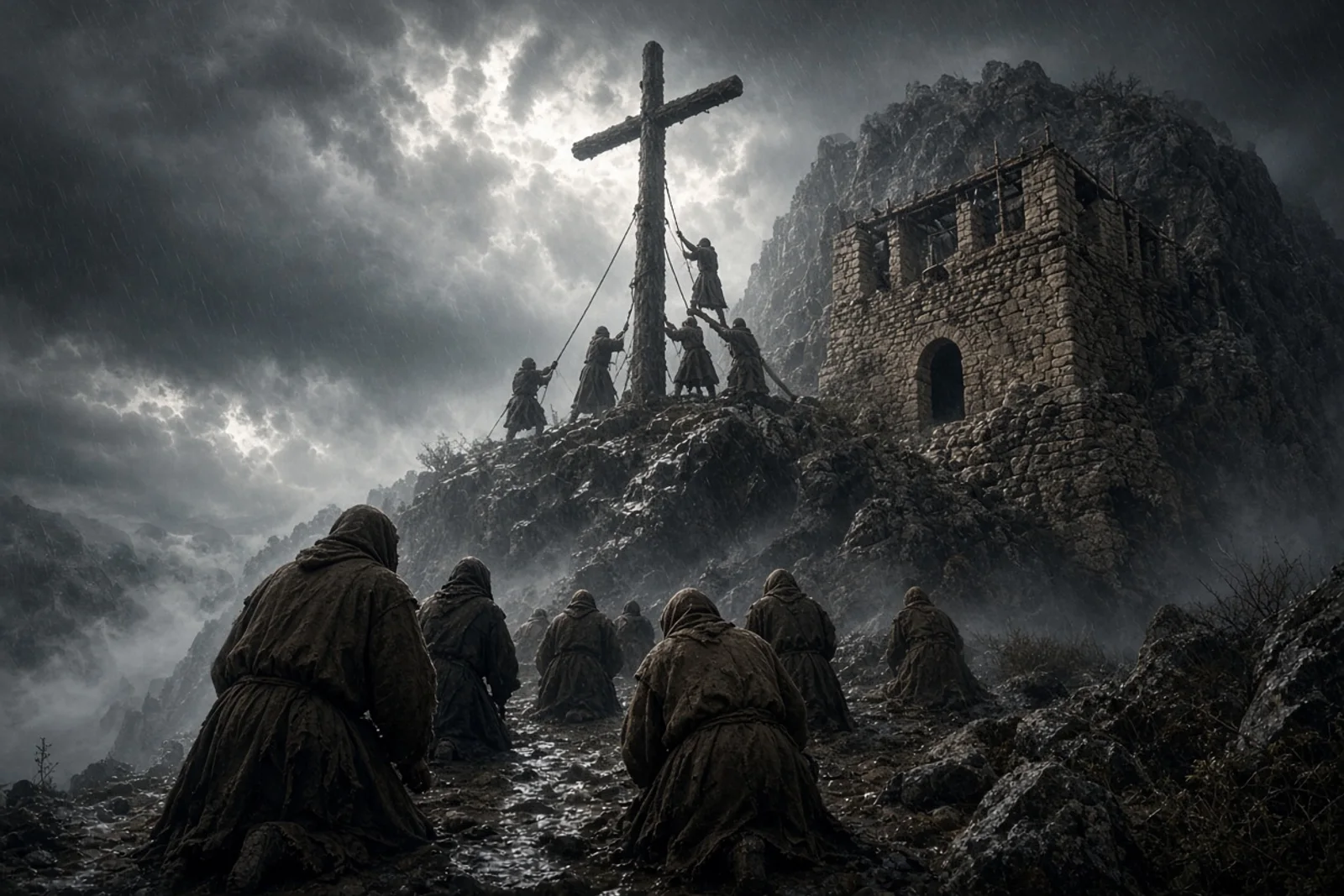
The path up from the valley still carried frost when I reached the clearing. My bundle of tools banged against my hip with each step, and the smell of wet pine needles rose from the ground where the brothers had walked before dawn. Fonte-Avellana sat quiet under the morning light, the wooden cells no larger than a man’s reach, the chapel roof patched again after the last storm. I had come two winters earlier to escape the noise of Parma, and the silence here had already changed the way I breathed.
Damian stood outside the prior’s cell that day, speaking with three of the older men. He held a small board marked with charcoal lines. When he saw me he nodded once and went back to the board. The lines showed places I knew only by name: Gamugno on its ridge, Sitria in the narrow valley beyond the river, Ocri where the road turned south. He spoke of sending men to each, not to preach but to keep the hours and open a door for any who arrived hungry or bleeding.
By the next week two brothers had left for San Severino with a mule and a sack of seed. I stayed to help raise the new cloister wall. The stones came from the slope above us, carried one by one on a wooden sledge. Damian worked beside us until the bell called us inside. At night he read from the psalter by the single lamp, his voice steady even when the wind shook the shutters.
The discipline began that spring. Damian set a rule that each man would take the leather cord after compline, not as punishment but as part of the night’s prayer. Some of the older hermits muttered that the custom belonged to the Camaldolese or to Monte Cassino and not to us. Damian answered that the body needed its own language when words ran out. He demonstrated on his own shoulders first, three measured strokes, then handed the cord to the next man. No one refused. The sound of the leather against cloth stayed with me long after we returned to our cells.
I carried the same cord when we walked to Acerata later that summer. Four of us went, carrying boards for a roof and a small silver chalice wrapped in linen. The site was only a cleared patch of ground and a spring. We slept under the open sky the first nights and rose before light to mark where the cells would stand. Damian remained at Fonte-Avellana, but his instructions traveled with us: keep the rule, receive any guest, send word if sickness came. When the first roof beam was set in place, one of the brothers struck it with the flat of his hand and said the place now had a voice.
News reached us at Murciana that Benedict of the great abbey had agreed to try the discipline in his own house. Damian had written the request himself. The letter came back with the abbot’s seal and a note that the custom would be tested for a year. We celebrated by adding an extra psalm at lauds. The wind off the ridge that evening felt colder than usual, yet no one complained.
By autumn the library at Fonte-Avellana held twelve new volumes. Damian had bought them from a scribe in Ravenna with money sent by a family in the city who remembered him as a teacher. He placed each book on the shelf himself, checking the binding and the ink. One contained the life of Romuald that he had finished the year before. He asked me to read a passage aloud to the gathered brothers. The words about the old hermit’s cave felt close in the small room.
The processional cross arrived the following month, carried by a man on foot from Faenza. It was the first silver object most of us had touched. Damian set it on the altar and left it uncovered for three days so every brother could see the reflection of the lamp flame along its arms. After that it stayed in its cloth until feast days. The weight of it in my hands surprised me when I helped return it to the chest.
Not every foundation lasted. One small group at San Salvatore sent word that the spring had failed and the soil would not hold grain. Damian recalled the men rather than force them to remain. He met them at the gate, embraced each one, and gave them new cells near the chapel. Their failure became part of the story we told newcomers: the rule could bend without breaking.