




Pierre de Rudder's Broken Leg Healed at Oostakker
A Belgian laborer's shattered leg, broken for eight years, instantly mends after prayer at a shrine.
FaithTap · Sep 26, 2026 · 10 min read
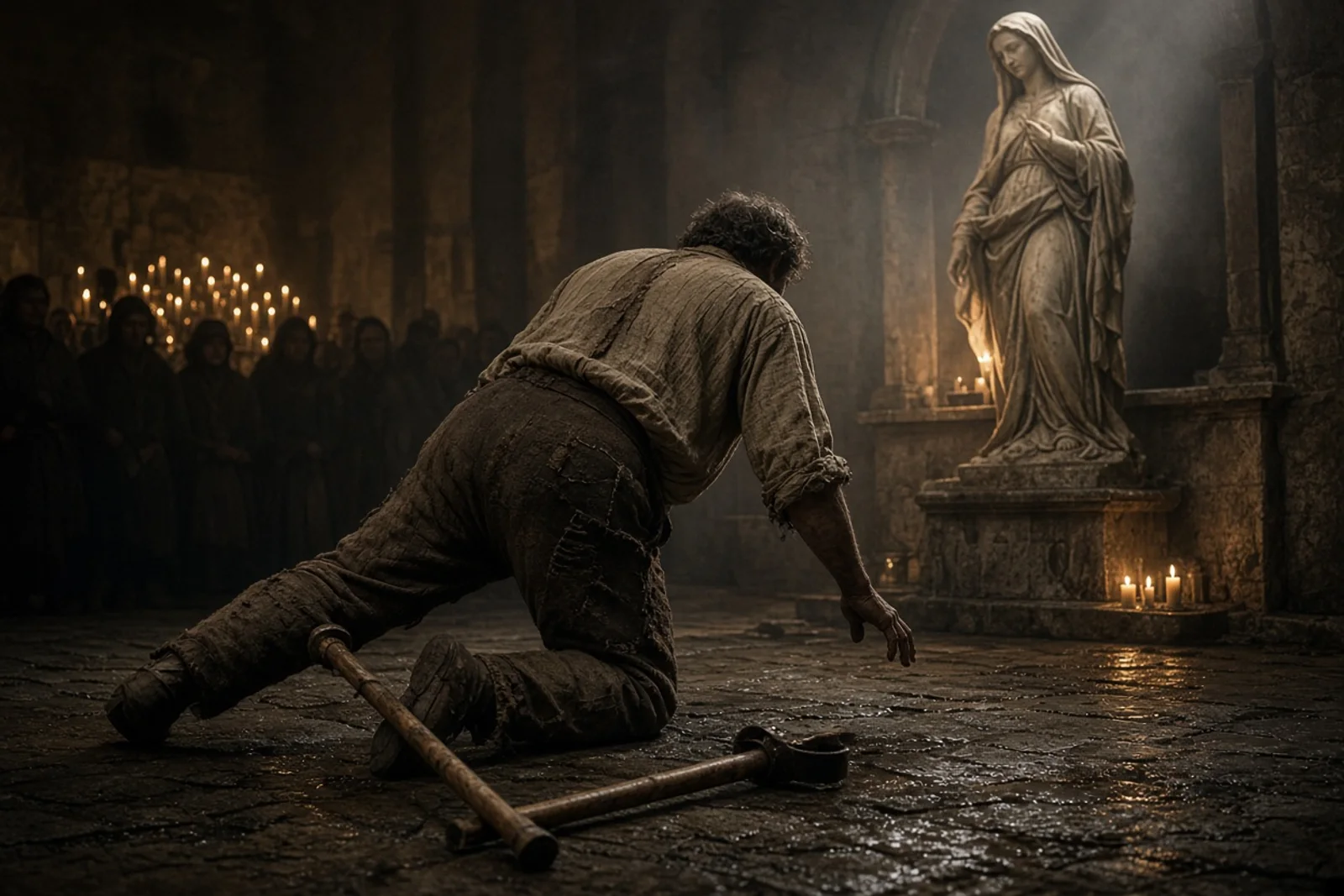
The cart jolted over a rut and Pieter de Rudder gripped the side rail with both hands. His left leg hung wrapped in cloth, the foot turned inward so the heel faced forward. I sat opposite him on the bench we shared with two neighbors from Jabbeke, the father and son who had helped lift him into the wagon that morning. None of us spoke much. The April air carried the smell of wet fields and the faint coal smoke from the engine that had brought us part of the way from Bruges.
We reached Oostakker by mid-morning. The sanctuary stood at the end of a short lane lined with plane trees. People already knelt along the benches inside the small chapel. Pieter asked to be placed on the nearest bench so he could see the statue. His crutches rested against the wood beside him. The wound on his leg still needed the oak-bark plaster he had applied the day before, though none of us mentioned the worms that had appeared in it again.
He closed his eyes and moved his lips without sound. After a time he opened them and looked down at the leg. He reached for the crutches, then stopped. He set both hands on the bench and pushed himself upright. The leg took his weight. He took one step, then another, toward the altar rail. The cloth wrapping slipped and fell away. The scar across the shin was narrow and pale, already the color of old skin.
A woman near the front crossed herself. The father and son who had come with us stood up at the same moment. They had seen the broken ends of bone pushing through the open wound the previous afternoon. Now they watched the same leg bear weight without support. Pieter turned and walked back to the bench. He picked up the crutches and set them against the wall.
Word moved through the chapel quickly. A priest came forward and asked what had happened. Pieter answered that the pain had left while he prayed and that he could stand. The priest examined the scar and said nothing more. Later that same day two doctors from the district were brought to look at the leg. They declined to sign any paper for the parish. They said the case had never been under their care.
I returned with Pieter and the two neighbors to Jabbeke that evening. The wagon ride took longer because he insisted on walking part of the distance to the station. At home his wife met us at the door. She had prepared the same oak-bark plaster for the next morning. She put the bundle away without comment when she saw him cross the threshold unaided.
In the weeks that followed, the Viscount’s successor heard the story and sent no further pension. The new master of the estate had already stopped the payments the previous July after the old Viscount died. Pieter found work again as a laborer. He carried tools and climbed ladders without the crutches that now stood unused in a corner of the shed.
Dr. Van Hoestenberghe wrote two letters to the Bishop of Bruges that spring. He had examined the leg once, more than three years earlier, out of curiosity. In those letters he recorded what he had seen at that single visit. The letters were later misplaced at the bishop’s palace and remained lost until 1956.
Other physicians who had treated the fracture years before offered no written statement in 1875. Dr. Verriest, the last of them whose name appears in the records, died in Bruges in 1891. By then stories of the healing had already traveled beyond East Flanders. Pilgrims on the annual journey to Lourdes in 1892 began to speak of it during the train ride.