




Pope Gregory the Great Sends Augustine to England
Gregory dispatches missionaries to the Anglo-Saxons.
FaithTap · Sep 27, 2026 · 11 min read
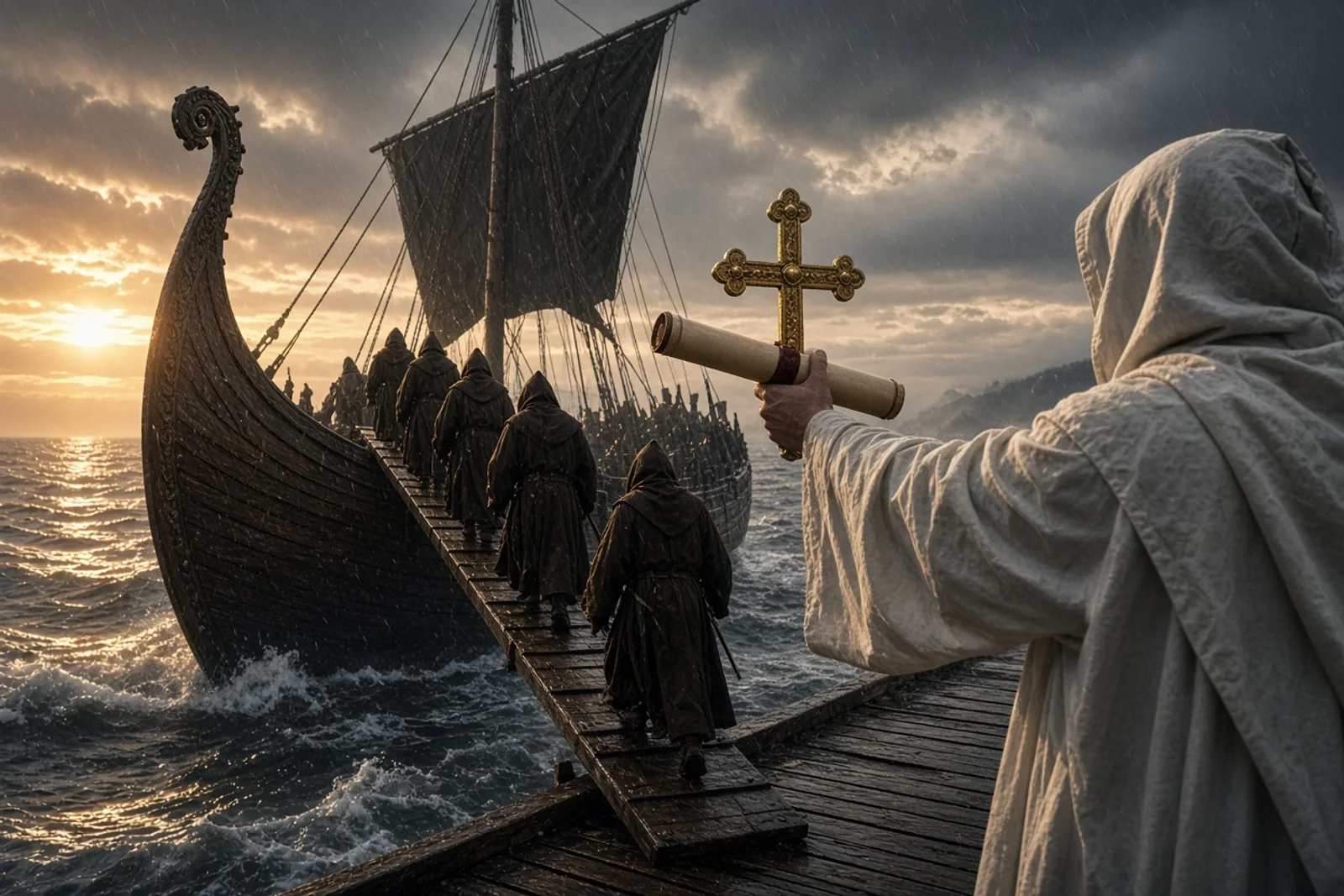
The road out of Rome still smelled of the Tiber at low tide when we set out, packs heavy with the pope’s sealed letters and little else. Augustine walked at the front, his sandals already wearing thin on the stones. I kept pace a few steps behind, watching how he turned every so often to count us. Forty men, most of them younger than he was, none of us sure what waited beyond the mountains.
By the time we reached the passes the nights had grown colder. We slept in abandoned way stations where the wind came through the broken shutters. One brother woke shouting that he had dreamed the English cut out our tongues because we could not speak their speech. Augustine told him to pray instead of dreaming, but the next morning two more said they had seen the same thing.
We argued in whispers after dark. The work was good, we all agreed, yet none of us wanted to die among strangers whose words we could not even beg mercy in. Augustine listened without answering for three nights. On the fourth he said he would go back alone and ask Gregory to release us. We gave him what food we could spare and watched him walk south until the road bent.
We waited in a half-ruined hospice near the Rhone. The days passed slowly. We mended our cloaks and tried not to count how many times the door opened without Augustine returning. When he finally appeared, the seal on the new letter was still soft from the wax. He read it aloud by the hearth while the rest of us stood close enough to feel the heat on our faces.
Gregory’s words did not promise safety. They only said it was worse to turn back than to keep walking. Augustine folded the letter and put it inside his robe. No one spoke against going forward after that.
We crossed into Frankish lands in early summer. The kings Theodoric and Theodebert had been warned we were coming. Their officials met us at the border with horses and an escort of armed men who spoke Latin. They asked no questions about our purpose, only whether we needed fresh bread or a place to wash. We stayed two nights in one of their halls, where the smoke from the central fire stung our eyes but the straw on the floor was clean.
From there the road ran toward Arles. Bishop Etherius received us in the courtyard of his church. He gave Augustine a sealed packet of his own letters and told the servants to fill our sacks with dried fruit and salted meat. One of his priests asked quietly whether we truly meant to cross the sea. Augustine answered that we had already crossed more than water.
The channel was narrow and gray when we finally saw it from the Kentish shore. The island they called Thanet rose low and flat, its fields already cut for hay. We landed on a stretch of shingle where the tide had left long ridges of weed. Forty men stepped onto the wet stones and stood without speaking while the boatmen pushed off again.
King Ethelbert had been told of our coming. He sent word that we could preach, but only in the open air, and that we must not approach his hall until he decided whether our God was stronger than the ones his people already knew. We set up a rough shelter of branches and sailcloth near the landing place. Every morning Augustine stood on a fallen log and spoke while the rest of us translated as best we could into whatever words the listeners seemed to understand.