




Queen Theodolinda Converts Lombard King Agilulf
Queen's faith persuades husband to accept Catholic baptism.
FaithTap · Oct 3, 2026 · 11 min read
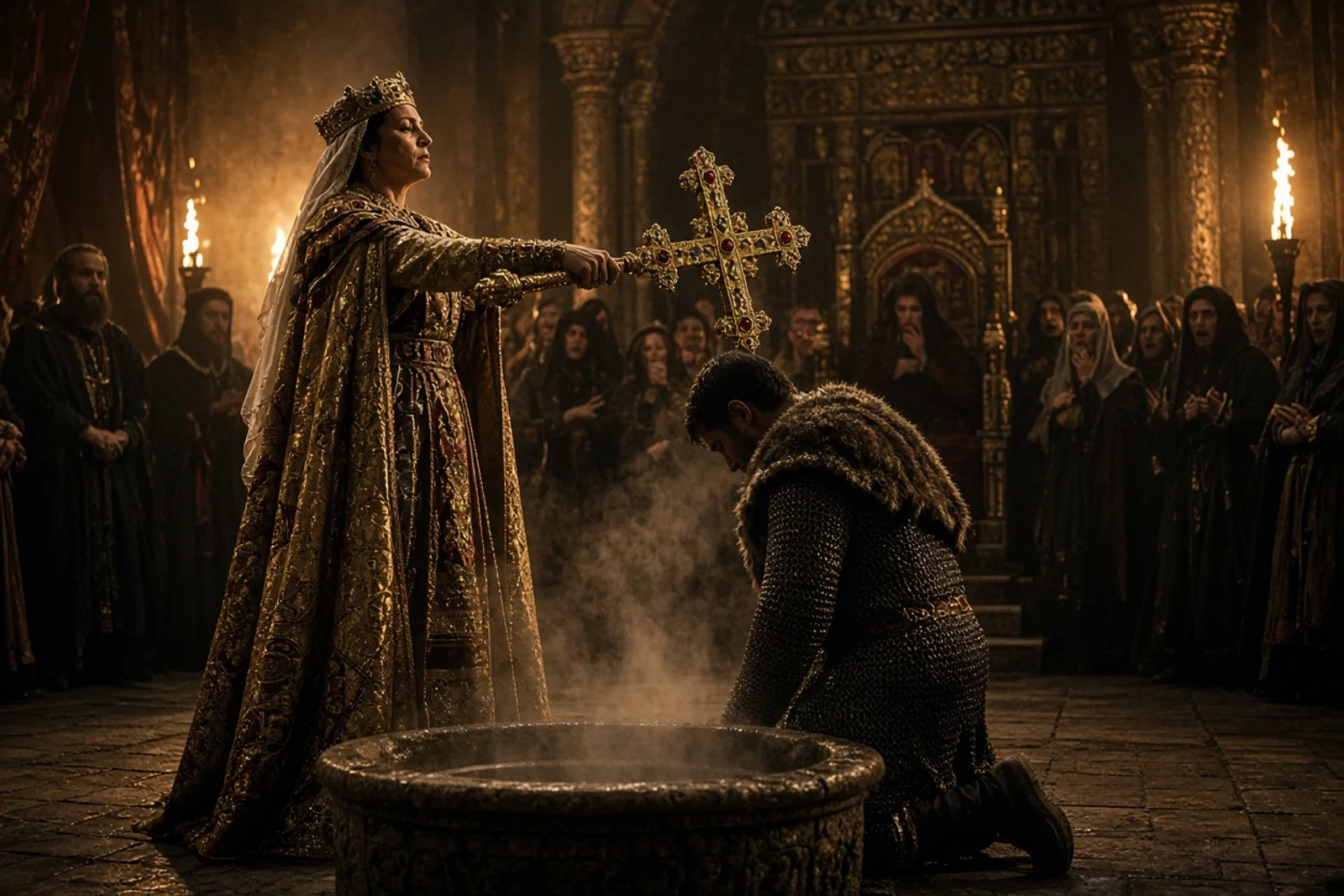
I stood at the edge of the font with the linen cloth over my arm, the water still rippling from the last filling. Sun came through the high slits in the Monza palace chapel and struck the gold threads on the queen’s sleeves. She carried the boy herself, wrapped in the same purple she had worn at her first wedding. Agilulf waited three paces behind, helmet under one arm, the other hand resting on the hilt of his sword as if the room might still need guarding.
The child had been born the summer before, small and loud, and the whole court had waited to hear what name she would give him. She had said Adaloald at once, and then she had said the rest: he would be received into the faith she kept. No one answered her that day. The dukes drank and the Arian priests kept their own counsel. Now the day had come.
I heard the priest’s sandals on the stone before I saw him. He was from Milan, sent under the queen’s protection, and his hands shook once when he reached for the oil. Theodelinda did not look at him. She looked at her husband. Agilulf’s face was the same color as the iron on his belt, and he said nothing.
The water took the boy without sound. When the priest lifted him out, the child’s cry filled the chapel and then stopped as suddenly as it had begun. Theodelinda took him back, kissed the wet hair, and turned so that Agilulf could see the cross the priest had drawn on the forehead. For the first time that morning the king stepped forward. He touched the mark with one finger, then drew the hand back as though the oil burned.
Outside the chapel the Lombard nobles waited in the courtyard. Some had come armed. I carried the basin to the side door and set it down so the water could be poured away. Through the open arch I saw dust rising from the road that led toward Milan. Riders were already leaving with the news. One of them wore the queen’s colors.
That night the king did not eat in the hall. He walked the upper corridor alone until the lamps burned low. I was sent with a cup of watered wine. When I reached the door I heard her voice inside, low and steady, the same tone she used when she spoke to the envoys from Rome. Agilulf answered once, short, then nothing more. I left the cup on the bench and went back down the stairs.
Three days later the first letter from Gregory arrived. It came with a small wooden box sealed in wax. Theodelinda opened it in the presence of the abbot Secundus. Inside lay a cross no longer than a man’s thumb, set with a splinter of dark wood. She held it to the light and the grain showed pale where the relic had been fitted. Agilulf stood at the window and watched the road. He asked only whether the pope had written the king’s name as well. She said the letter was addressed to them both.
By the end of the month the peace messengers had gone out. The dukes who had grumbled at the baptism now rode with the queen’s seal on their saddles. I carried messages between the stables and the scriptorium. One afternoon I passed the king in the corridor. He wore no sword. He asked me whether the boy was walking yet. I told him the child had taken three steps that morning and fallen into the queen’s lap. Agilulf nodded and kept walking.
The basilica foundations were marked before the snow. Theodelinda walked the ground herself, pointing where the altar would stand and where the side chapels would hold the lamps. Agilulf rode out with the surveyors but left the measurements to her. When the first stones were laid he came once, placed his hand on the corner block, and returned to the palace without speaking.