




Rabanus Maurus Shelters Refugees After Viking Raids
Abbot opens Fulda monastery to war victims.
FaithTap · Sep 29, 2026 · 10 min read
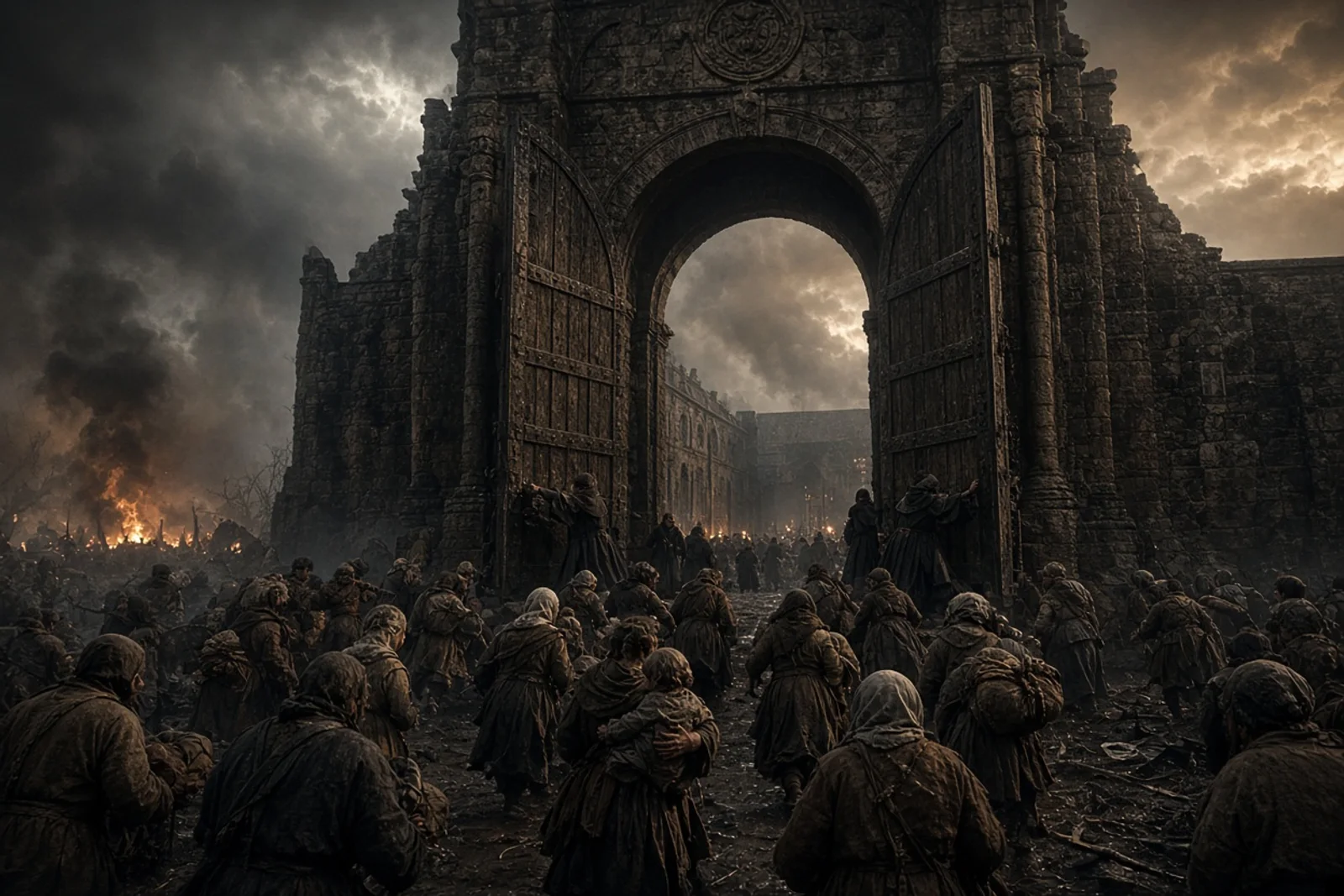
The cart wheels caught on the frozen rut and the ox lowed once, a raw sound that carried up the slope. I steadied the load with one hand and kept the other on the child’s shoulder so he would not slip under the wheel. Smoke from the valley still hung in the air two days after the burning, thin and sour, the kind that clings to wool and hair. We had walked from the river crossing at dawn.
Fulda’s gate stood open when we reached it. No one challenged us at first. Inside the outer court, monks moved between the new stone buildings and the older wooden sheds, carrying blankets and sacks of grain. One of them, a tall man in a patched cowl, pointed us toward the refectory side door. He did not ask names. He only said the abbot had ordered every spare space cleared and straw laid down.
By midday the court held more than two hundred people. Most had come from the lower settlements along the Main, their carts piled with whatever they could drag free before the longships reached the bend. A woman from Hammelburg sat against the cloister wall with a bandaged leg; the wound had already begun to smell. Two brothers from the scriptorium brought her a bowl of broth and clean linen without being told. I recognized the younger one as the boy who had copied Rabanus’s commentary on Matthew the winter before.
Rabanus himself appeared at the church steps near terce. He wore the plain habit of an abbot, no crosier, and moved without hurry among the newcomers. He stopped at each group, asked how many mouths needed feeding, and noted the answer on a wax tablet one of the novices carried. When he reached the cart I had helped unload, he looked at the child first, then at me.
“How many days since they ate?” he asked.
“Three,” I said.
He nodded once and sent the novice for bread. The child took the piece without looking up. Rabanus stayed long enough to see the boy swallow, then moved on to the next family. By the time the bell rang for none, the number on his tablet had reached three hundred and twelve.
The storehouses were already low from the poor harvest. Ratgar’s old building works had left half the cellars unfinished, and the new granary still lacked a roof. Rabanus ordered the doors of the unfinished crypt opened and straw carried down. He sent word to the dependent farms for whatever grain could be spared and told the kitchen to bake through the night. No one argued. The monks who had grumbled under Ratgar’s stonework now moved without complaint.
That evening the wind shifted and brought the smell of distant smoke again. A man from the east gate said he had seen riders on the ridge, but they turned south before reaching the valley. Rabanus posted watchers on the tower and ordered the gate barred at dusk. He himself stayed in the court until the last cart was emptied, then walked the length of the straw pallets, checking that no one lay without a blanket. When he passed the child I had brought, he bent and touched the boy’s forehead, then straightened and continued without speaking.