




Radegund Founds Holy Cross Abbey
Queen turns captivity into convent of mercy.
FaithTap · Sep 27, 2026 · 11 min read
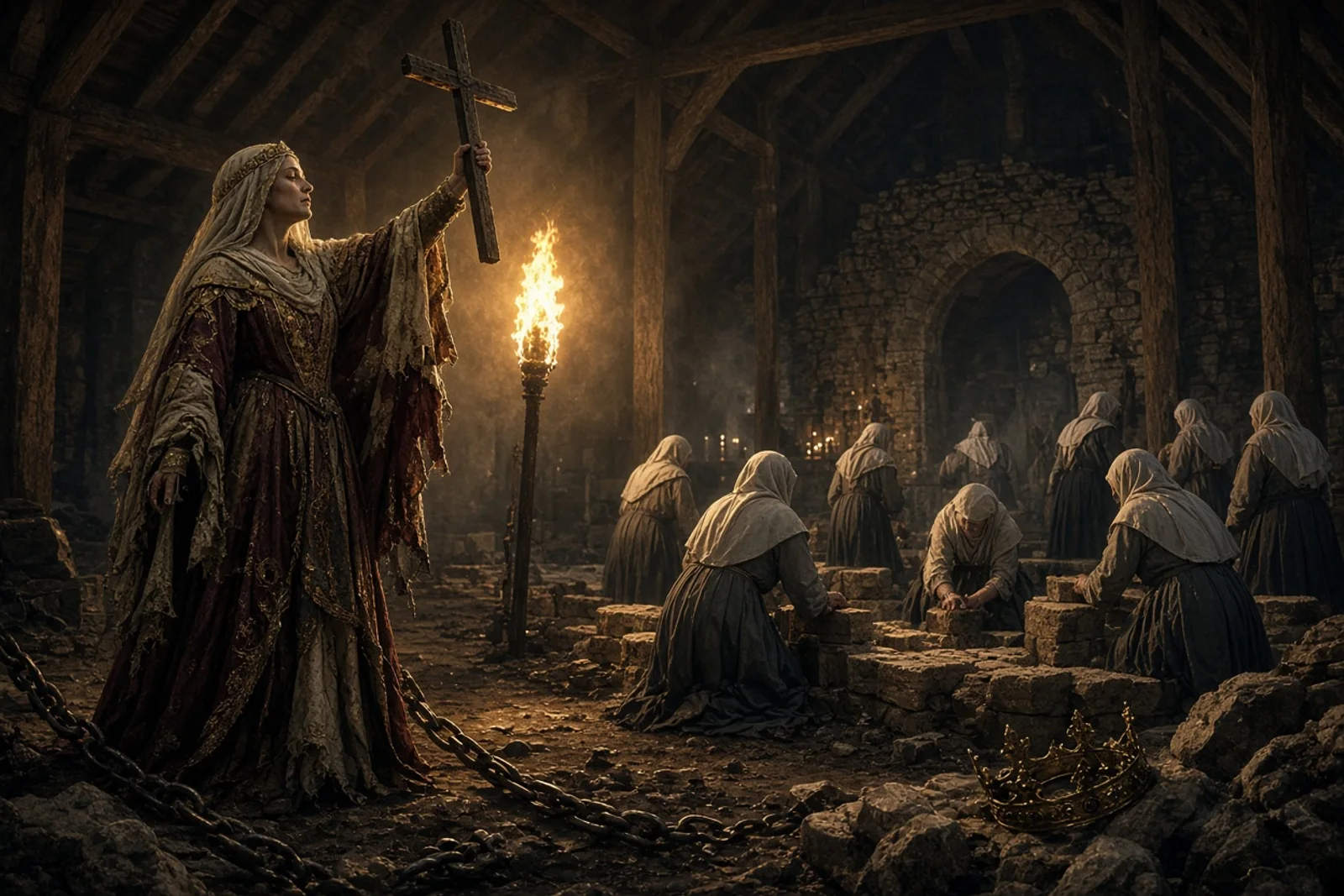
I was hauling water from the river when the wagons rolled in. The sun sat low over Poitiers, turning the stones of the old Roman walls gold, and my back ached from the buckets. I had come up from Saix the month before because the lady said the new house needed hands that knew how to keep the sick clean. My own skin still carried the faint sour smell of the baths I had scrubbed there.
Radegund walked at the head of the line, her veil tied back so she could see the ground. She wore a plain wool gown the color of river mud. Behind her came two carts loaded with timber and the relics she had begged from the bishop at Tours. The bishop himself rode last on a mule, looking as if he already regretted the gift.
We set the first posts that afternoon. The ground was hard from the dry summer, and the mallets rang against the oak until my palms split. Radegund knelt in the dust with us, holding the measuring cord while a carpenter marked the corners. She did not speak of Clothar or of the brother the king had killed. She only asked whether the posts would stand level when the rains came.
By nightfall the outline of the church showed in the trampled grass. We ate barley porridge from a single pot. Radegund moved among the workers, pressing salve into cracked hands. One of the men from the town asked her why a queen would sleep on straw with laborers. She answered that straw kept the fleas off better than silk.
The next morning we dug the drainage trench. The clay stuck to the spades and the smell of wet earth rose around us. Radegund stood at the edge, calling measurements. When the trench reached the place where the altar would stand, she climbed down into it herself and laid the first stone for the foundation. Her sleeves were rolled to the elbows and the mud streaked her forearms.
Word spread through the town that the king’s wife had left him for good. People came to watch. Some brought bread. Others brought questions. Radegund met each one at the gate and turned them away only when they asked for gold. She told them the house would take in women who had nowhere else, and that the doors would stay open as long as the bread lasted.
On the third day the bishop consecrated the ground. The wind blew dust into our eyes during the prayers. Radegund stood with her head bowed, but I saw her lips moving with the words before the bishop spoke them. After the blessing she walked the perimeter alone. I followed at a distance and heard her name each corner for the women who would sleep there.
Basina arrived two weeks later. She came on foot, her face bruised and her cloak torn. Radegund met her at the unfinished gate and led her to the small room already roofed. I brought warm water and clean cloths. Basina did not speak for three days. When she finally asked where she was, Radegund answered that she was inside walls that no man could enter without permission.
We worked through the autumn rains. The roof beams went up slowly because the timber had to be seasoned first. Radegund slept in the open with the rest of us until the dormitory was finished. One night a fever took her. She lay on a pallet by the hearth while I bathed her forehead. She kept asking whether the bread for the morning had been set to rise. I lied and said it had.