




Raoul Wallenberg Issues Protective Passports
Swedish diplomat rescues Budapest Jews
FaithTap · Sep 25, 2026 · 10 min read
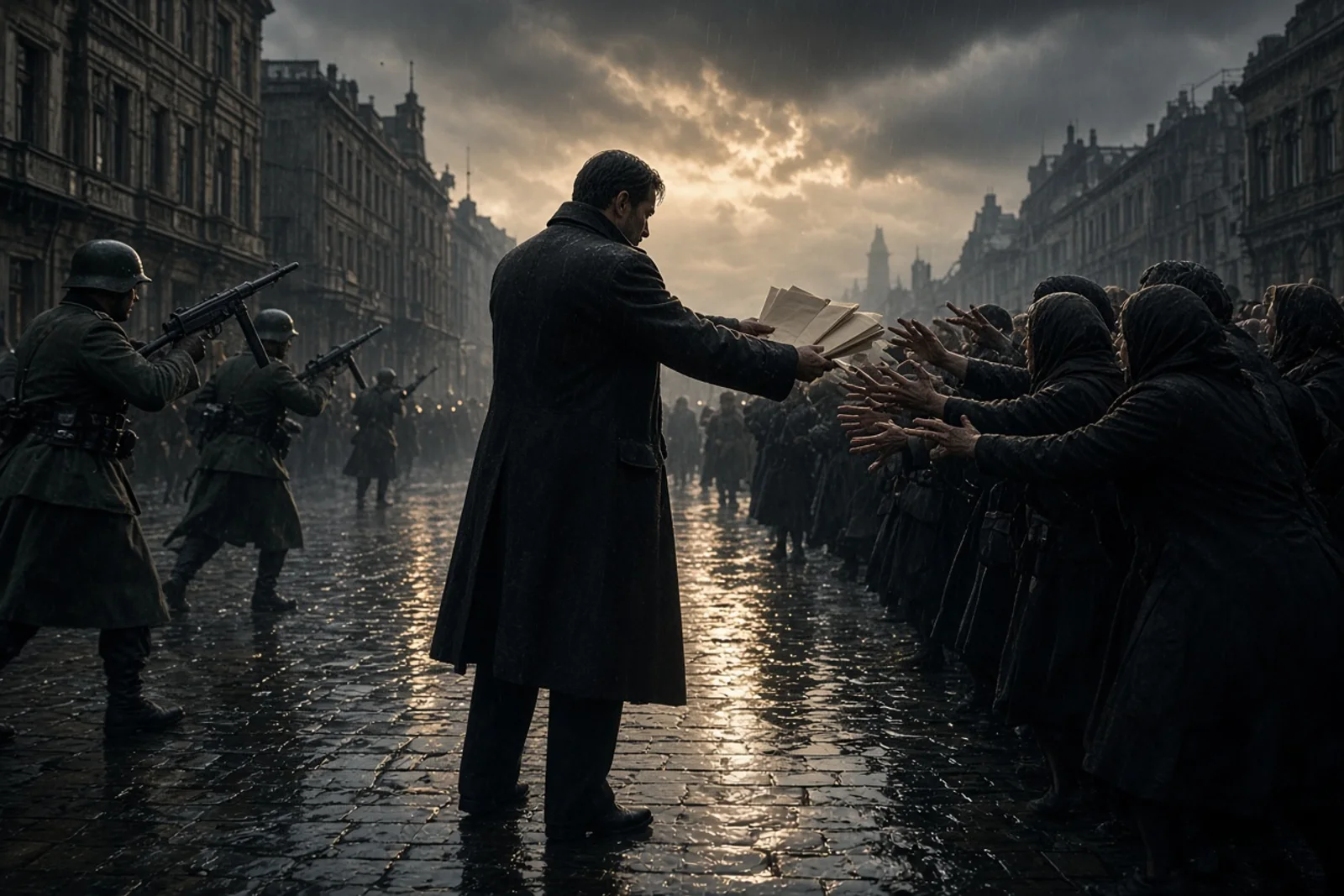
The line outside the Swedish legation stretched past the corner and down the side street toward the river. I stood at the side door with a clipboard, counting heads, trying to keep the names straight while the July sun baked the cobblestones. People clutched whatever papers they had managed to find—old letters, business cards, anything that mentioned Sweden. A woman near the front held her two small boys by the wrists so they would not wander into the street.
Wallenberg came out just after nine. He wore a light suit and carried a leather folder already thick with stamped documents. He moved straight to the table we had set under the awning and began signing. The first man in line gave his name and the name of a cousin who had once shipped goods to Stockholm. Wallenberg listened, asked one short question about the cousin’s address, then wrote the protective letter in his own hand. The man walked away holding the paper against his chest.
By noon the folder was empty and another had replaced it. I took the completed passes and handed them out, checking each name twice so no one left with the wrong document. A girl no older than sixteen asked whether the paper would also cover her mother, who was too ill to stand in line. Wallenberg stepped over, wrote a second letter on the spot, and told her to bring the mother to the legation the next morning if she could walk.
We worked that way for weeks. The safe houses were marked with Swedish flags painted on bedsheets. Thirty-two buildings in all, scattered through the Pest side. Each morning I carried new lists to the caretakers so they would know which families to expect. The kitchens ran on whatever supplies we could buy or barter. One afternoon a truck delivered sacks of flour and tinned meat that had come through the Red Cross; the children lined up with bowls before the flour was even unloaded.
In October the Arrow Cross took the government buildings. The radio announced the change while we were still stamping passes. By evening the streets were loud with boots and shouting. The next day the legation gates stayed closed until Wallenberg himself opened them. He told us to keep working and to say nothing about the new government unless asked.
The first death march left Budapest on a raw morning two weeks later. I stood on the embankment with a stack of blank protective letters and watched the column pass. People stumbled in wet shoes; some had no coats. Wallenberg drove along the route in a car flying Swedish flags. At each bridge he got out, walked into the marching line, and pulled anyone whose name matched a list we had prepared. The guards let him take them. He handed the people to me and I gave them the letters on the spot. We loaded twenty-three that first day into waiting trucks and sent them to the safe houses.
The marches continued for days. Sometimes the temperature dropped below freezing by afternoon. Wallenberg carried extra coats in the car and gave them away when he found someone without one. Once he argued for nearly an hour with a Hungarian officer who wanted to keep a man whose letter had been signed the week before. The officer finally stepped aside. The rescued man could barely stand; I had to help him into the truck.
Eichmann returned to the city around then. The deportations from the train stations had already stopped, but the marches replaced them. Wallenberg kept the same routine: drive the route, stop, argue, collect names. We lost count after the first hundred rescues. The safe houses filled past capacity. Some families slept in hallways. The soup kitchen ran from before dawn until the last pot was empty.
One evening a young man arrived at the legation with a forged Arrow Cross uniform and a stack of false identity cards. He said he had pulled three families off a column by pretending to be part of the escort. Wallenberg took the cards, looked them over, and told the man to keep the uniform but to report to the office the next morning for real work. The man became one of the couriers who carried messages between the safe houses.