




Søren Kierkegaard Encounters the Paradox
Danish philosopher journals decisive faith moment.
FaithTap · Sep 23, 2026 · 10 min read
I caught sight of him on the bridge over the canal, shoulders pulled tight against the wind off the water. He walked the same route most afternoons, past the fish stalls and the printer’s shop where fresh sheets fluttered on the line. I had fallen in step with him a few times that spring, saying little, listening more. He spoke of the city as if it were a book whose pages refused to lie flat.
His father’s house still stood on the corner near the old market. Michael Pedersen Kierkegaard had built it with money earned after the years on the heath, yet the rooms carried the weight of what the old man had once shouted at the sky. Five children already gone. The mother buried two years earlier. Søren kept the journals locked in the desk, but the lines about the great upheaval sometimes slipped out when the talk turned to inheritance and judgment.
We met again on a Thursday in May. He had been reading late, he said, and the words from the upper room would not leave him. The disciples had bolted the door, yet the risen one entered anyway. He repeated the phrase “peace be with you” as if testing its weight on the tongue. I asked what he meant to do with it. He only shook his head and kept walking.
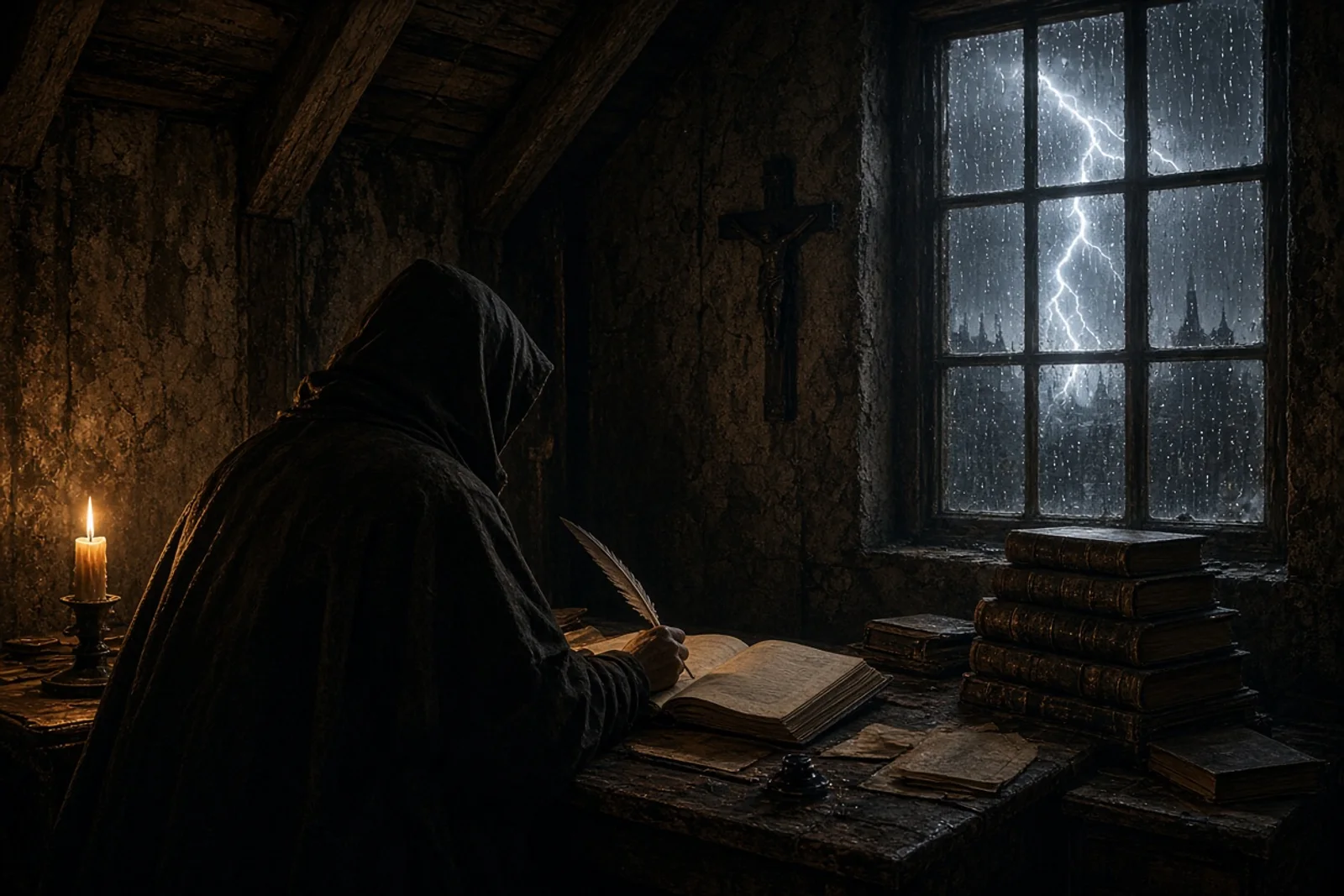
On the following Sunday the streets were quiet. I found him at the small table by the window in the rooms above the bookshop, the Gospel open before him. He did not look up when I entered. The light had already begun to slant across the page. He read the same passage twice, then closed the book and sat with both hands flat on the wood. Nothing in the room moved except the slow drift of dust in the sun.
Later that evening he appeared at the door of the house where I lodged. He carried no papers, only the coat buttoned high against a chill that had not yet arrived. We walked the length of the ramparts without speaking. When he finally stopped he said the joy had come without warning, the way a match flares in a dark stairwell. It made no sense to the part of him that kept ledgers of guilt and blessing. He described it as a glow that simply insisted on being felt.
His father died three months after that Sunday. The funeral procession moved through streets already turning toward autumn. Søren stood at the graveside in the same coat, thinner now at the cuffs. He accepted the condolences with the briefest nod, then returned to the desk where the journals waited. The entries after the burial grew longer, the questions sharper. He no longer asked only what he must know. He asked what he must do with the fact that he had been found.
By winter the walks changed. He still covered the same ground each day, yet he stopped more often to speak with the men unloading coal or the women selling bread. The conversations turned on what it meant to live as though the locked door had already been opened. He wrote of the state church as a comfortable arrangement that asked nothing of anyone. The pamphlets began to appear, each one signed with his own name, each one refusing the safety of distance.
I saw him once more in the spring of the following year, standing outside the cathedral after the service. He did not enter. He watched the crowd disperse and then turned toward the side streets where fewer people passed. The coat was the same, but the set of his shoulders had altered. He carried the weight differently, as if it now belonged to someone who had already been met inside the room.
Years later the attacks on the established order grew louder. He refused the final communion offered by a pastor of the state church. The refusal was quiet, recorded only in the journals that continued until the day he collapsed on the street. The last pages still circled the same question that had begun on the ramparts: what must a man do once the risen one has already spoken peace through the wood and iron of every bolted door.