




Sadhu Sundar Singh Preaches Across Himalayas
Indian Christian sadhu evangelizes Tibet.
FaithTap · Oct 3, 2026 · 11 min read
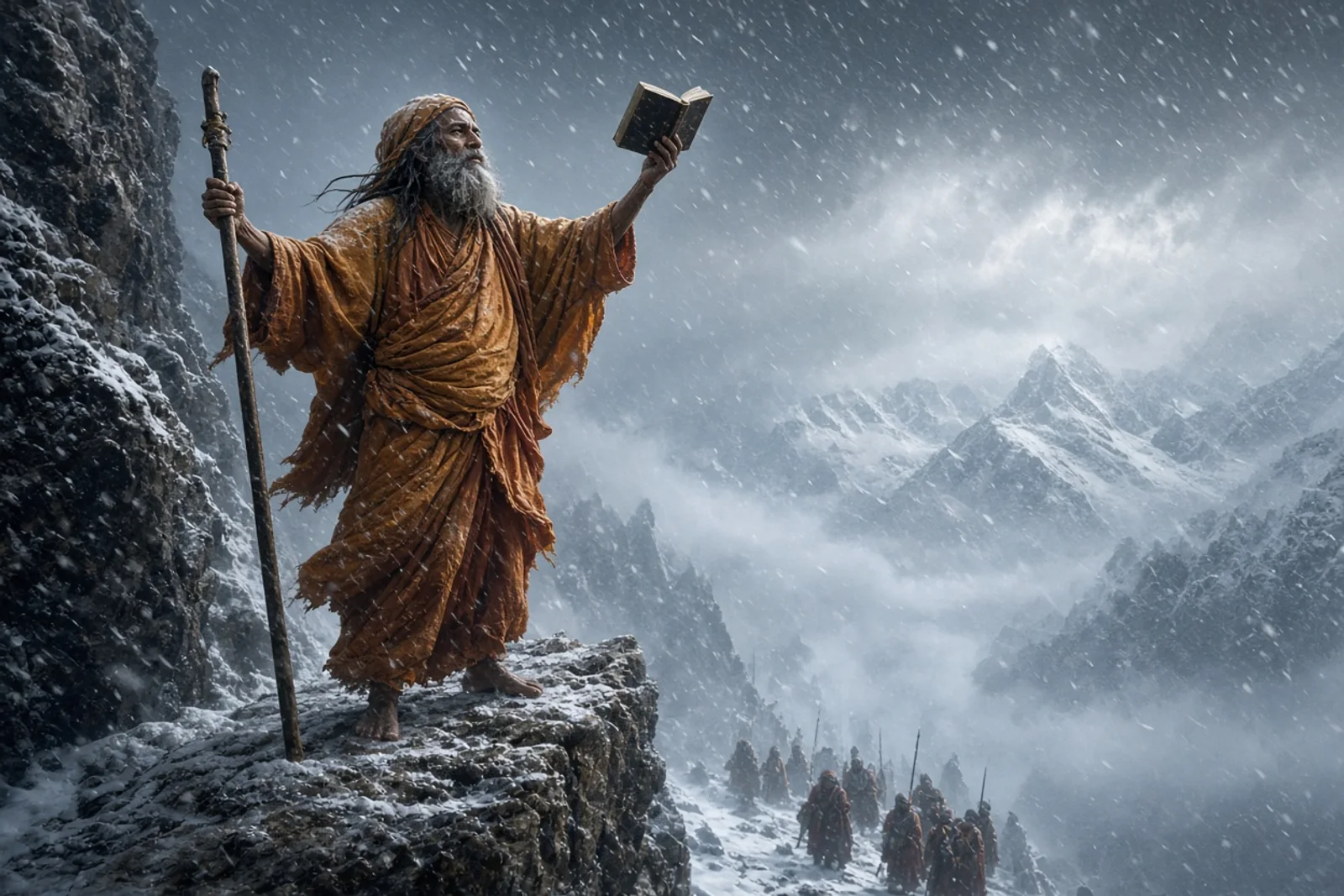
I stood at the edge of the courtyard when Sher Singh spoke the words that ended the family. The boy had already cut his hair. He carried nothing but the clothes on his back and a small bundle of cloth. His father’s voice carried across the dust to the neighbors who had come out to listen. Sundar Singh turned once, then walked toward the road that led north out of Rampur.
I followed at a distance because I had seen the way the village boys had begun to gather stones whenever he passed. Three nights earlier someone had thrown a snake through the window of the house. The boy had swept it out with a stick and gone on praying. Now the road took him toward Ludhiana first, then farther, past fields already turning brown in the late spring heat.
He stopped at the first well outside the village and drank. Two women drawing water moved away. He did not call after them. He simply sat on the low wall and waited until the sun dropped enough to walk again. I kept moving because I wanted to know whether the father’s vow would hold once the boy reached the next settlement.
By the third day he had reached a cluster of houses near the canal. He stood under a neem tree and spoke of the vision that had come to him in the night after he burned the book. The words were simple. He said the marks on the hands and feet had been real enough to touch. A few children stayed to listen. Their mothers pulled them back inside. One old man gave him a handful of millet and told him to keep walking.
We crossed into the first low hills two weeks later. The air cooled at night. Sundar slept on the ground without a blanket. In the mornings he washed at whatever stream we found and continued. He carried no staff. When we met other travelers he asked only for water and offered nothing in return except the same story of the light in the room. Some turned their faces. Others asked him to repeat the part about the voice speaking in Urdu.
At a small market town he was recognized by a man who had known his mother. The man gave him a cup of tea and asked whether the family would ever take him back. Sundar answered that the road itself was the only home left. That night he slept outside the town wall. I stayed near enough to hear if trouble came, but the only sound was the wind moving through the dry grass.
He began to stop at villages where no one knew his name. In one place the headman let him speak in the square after the evening meal. Sundar told them the same thing he had told the children under the neem tree. The headman listened without interrupting. When the talk ended, two men offered him shelter for the night. He accepted and left at first light.
The road climbed steadily. At the foot of the first real pass the temperature dropped enough that I needed an extra layer. Sundar walked in the same thin shirt he had worn from Rampur. He showed no sign that the cold reached him. When we reached a cluster of shepherds’ huts he asked permission to sit by their fire. They let him stay. In the morning he helped carry water before he left.
Word traveled ahead of us in the way word travels in these hills. At one stop a woman brought her child who had been coughing for weeks. Sundar placed his hand on the boy’s head and spoke quietly. The woman waited. The coughing did not stop that day. She gave him bread anyway and pointed him toward the next ridge.