




Sophie Scholl's Final Statement in Court
Young resister affirms conscience
FaithTap · Oct 4, 2026 · 11 min read
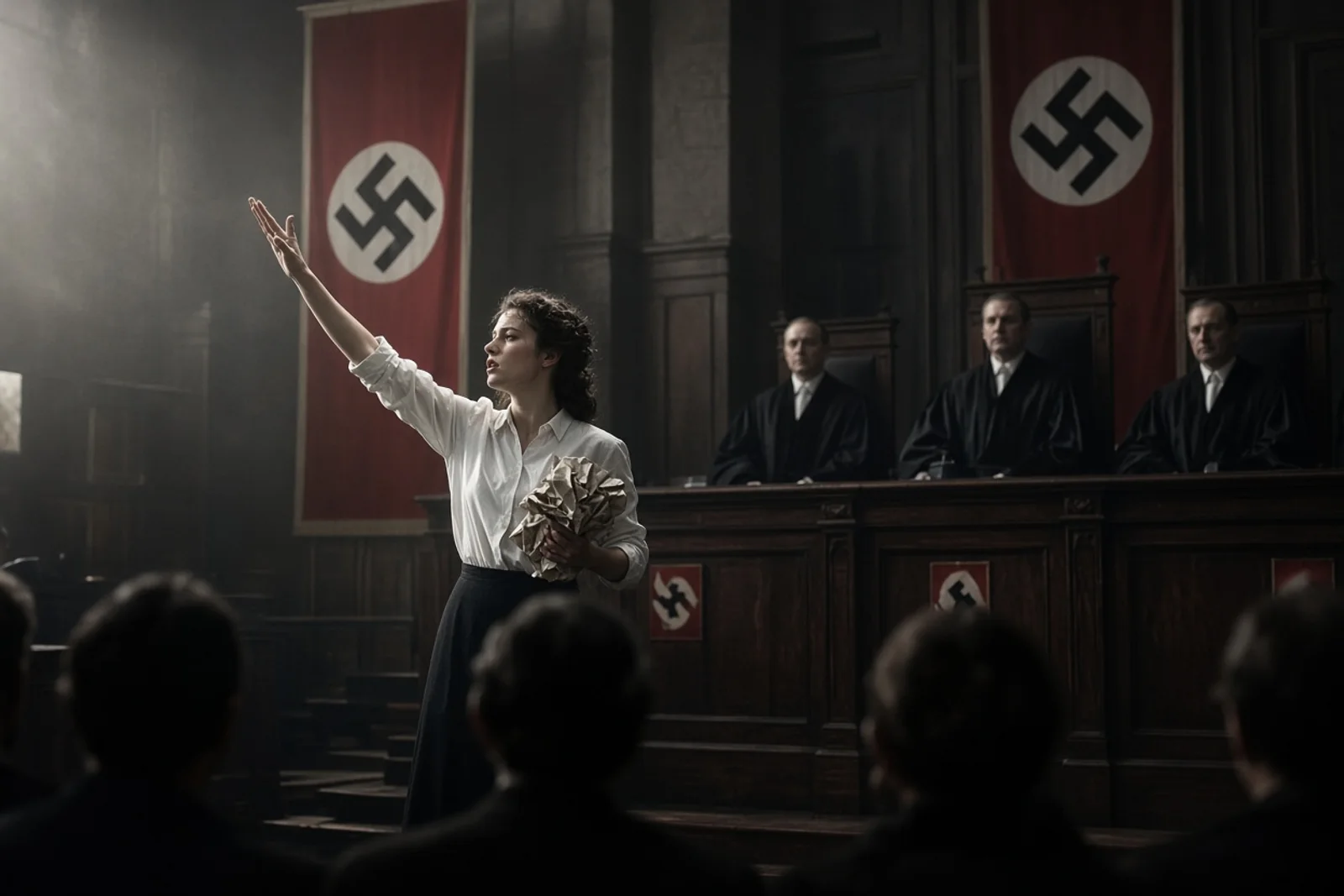
The clerk at the side table kept her eyes on the inkwell. She had been told to note only the formal parts, nothing more. The bench was already full when they brought Sophie Scholl in. The girl wore the same dark coat she had been arrested in four days earlier. Her hair was pulled back tight. She stood between two guards and did not look around.
Freisler began at once. His voice filled the room without effort. He read the names, the charges, the dates. Hans Scholl sat to her left, Christoph Probst on the far end. The three of them looked straight ahead. No one moved when Freisler finished the indictment and asked if they had anything to say.
Sophie rose. The chair scraped once against the floorboards. She placed both hands on the rail in front of her. For a moment the only sound was the radiator ticking under the window. Then she spoke. She said they had known what they were doing. She said they had accepted the consequences. The words came out evenly, without hurry. She did not raise her voice. She did not look at Freisler while she said it.
Freisler cut her off. He leaned forward, the robe bunching at his shoulders. He asked whether she understood that the leaflets had called for sabotage in wartime. She answered that she understood. He asked if she regretted the damage done to the nation’s strength. She said she did not. The exchange lasted less than a minute. When she finished, she sat again. The guards behind her did not shift their stance.
The judges conferred for less than half an hour. The clerk kept her pen still. When they returned, the sentence was read without pause. Death for all three. Forfeiture of honor and rights. The words landed and stayed in the air. Hans Scholl turned his head once toward his sister. She met his look and gave a small nod. Probst kept his eyes on the table.
They were taken out through the side door. The corridor beyond was narrow and smelled of wet wool from the guards’ coats. The clerk remained at her table until the room emptied. She blotted the page, folded the notes, and placed them in the folder marked for the day. Outside, the light had already begun to fade. Snow sat in dirty ridges along the curb.
By evening the three had been moved to Stadelheim. The execution order carried the same date. The guillotine stood in the yard where the prison kept its vehicles. The same machine had been used for the previous political cases that month. The attendants worked without speaking beyond what the procedure required. Sophie was the second to go. She walked the short distance between the holding cell and the machine without assistance. The record lists the time as five o’clock.
Hans followed. Then Probst. The bodies were removed before full dark. The clerk learned the details the next morning when the folder was returned for filing. She copied the times into the margin of the sentencing sheet and closed the cover. No further statements were attached.
In April the second group came before the same court. Alexander Schmorell, Kurt Huber, Willi Graf received the same sentence. Their executions took place over the following weeks. The remaining students and supporters drew prison terms of varying length. The leaflets themselves were collected and burned at the Gestapo offices on Prinzregentenstrasse. The ashes were carried out in standard metal bins.