




St. Boniface Fells the Donar Oak
Boniface chops down a pagan sacred tree without harm.
FaithTap · Sep 25, 2026 · 11 min read
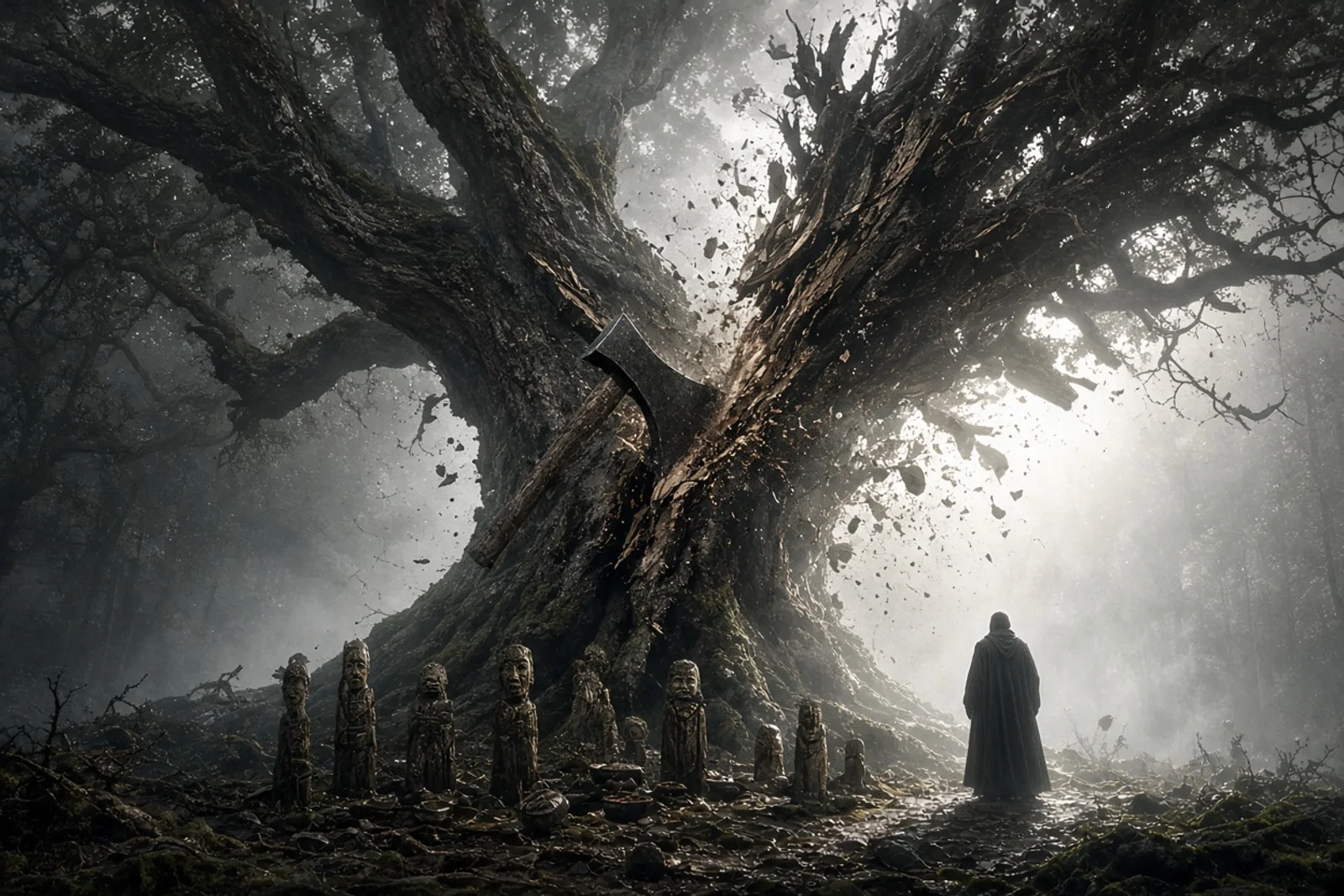
The crowd pressed close around the base of the oak. I stood near enough to see the bark ridges on the trunk, close enough to smell the resin that had seeped from an old scar. Men from the villages on both sides of the Eder had come, some carrying spears they had used in the last raid against the Franks. Women stood farther back with children clinging to their skirts. No one spoke above a murmur.
Boniface stepped forward with two of his own men. He carried only a small axe. The blade looked too light for the work, yet he set his feet and swung once at the lower side of the trunk. The sound was thin, a single bite into living wood. He stepped back and spoke to the brothers who had come with him from Büraburg. They answered quietly. Then he swung again.
A few of the older men near me began to curse under their breath. One spat on the ground. The curses grew louder as more joined in. They named Donar and the other powers that lived in the high branches. The words carried across the clearing and reached the ears of Boniface, but he did not look up. He measured the next cut with his eye and swung a third time.
The notch deepened. Sap ran down the fresh white face of the wood. A small wind stirred the leaves overhead, though the day had been still until then. The curses continued, steady and low, like rain on thatch. I kept my hands at my sides. I had stood under this same tree two winters before when the blood of a bull ran into the roots. The memory sat cold in my stomach.
Boniface paused. He wiped the axe head on his sleeve and spoke again to the men beside him. One of them answered with a nod. The bishop raised the axe once more, not high, only enough to reach the upper edge of the notch. The blade bit and held. He pulled it free and stepped away.
The wind rose without warning. It came down through the branches like a weight. The whole crown leaned, then the trunk itself groaned and began to move. Men shouted and scattered. The oak fell straight, as if pushed from above, and struck the earth with a sound that knocked the breath from my chest. Dust and leaves filled the air. When the dust settled, the tree lay broken into four long pieces, each as thick as a man’s body and longer than any house beam I had seen.
No one cursed now. The silence spread outward from the fallen trunk. I heard a child begin to cry and then stop. Boniface walked the length of one of the split trunks, running his hand along the raw wood. He said nothing for a long time. The brothers stood with him, their faces turned toward the sky where the oak had stood.
One of the village elders stepped forward. He asked what the god of the oak had done to protect its tree. No one answered him. Another man asked whether Donar would send lightning. The sky remained clear. The only sound was the settling of broken branches.
Boniface turned to the crowd. He spoke of the new faith and of the cross that would stand where the oak had stood. He did not raise his voice. Men who had cursed minutes earlier now listened without moving. Some of the women came closer, bringing their children with them. I stayed where I was, watching the split wood. The four trunks lay evenly, as though they had been measured and placed.