




St. Cuthbert Ministers During Plague
Monk cares for plague victims in Northumbria.
FaithTap · Oct 2, 2026 · 11 min read
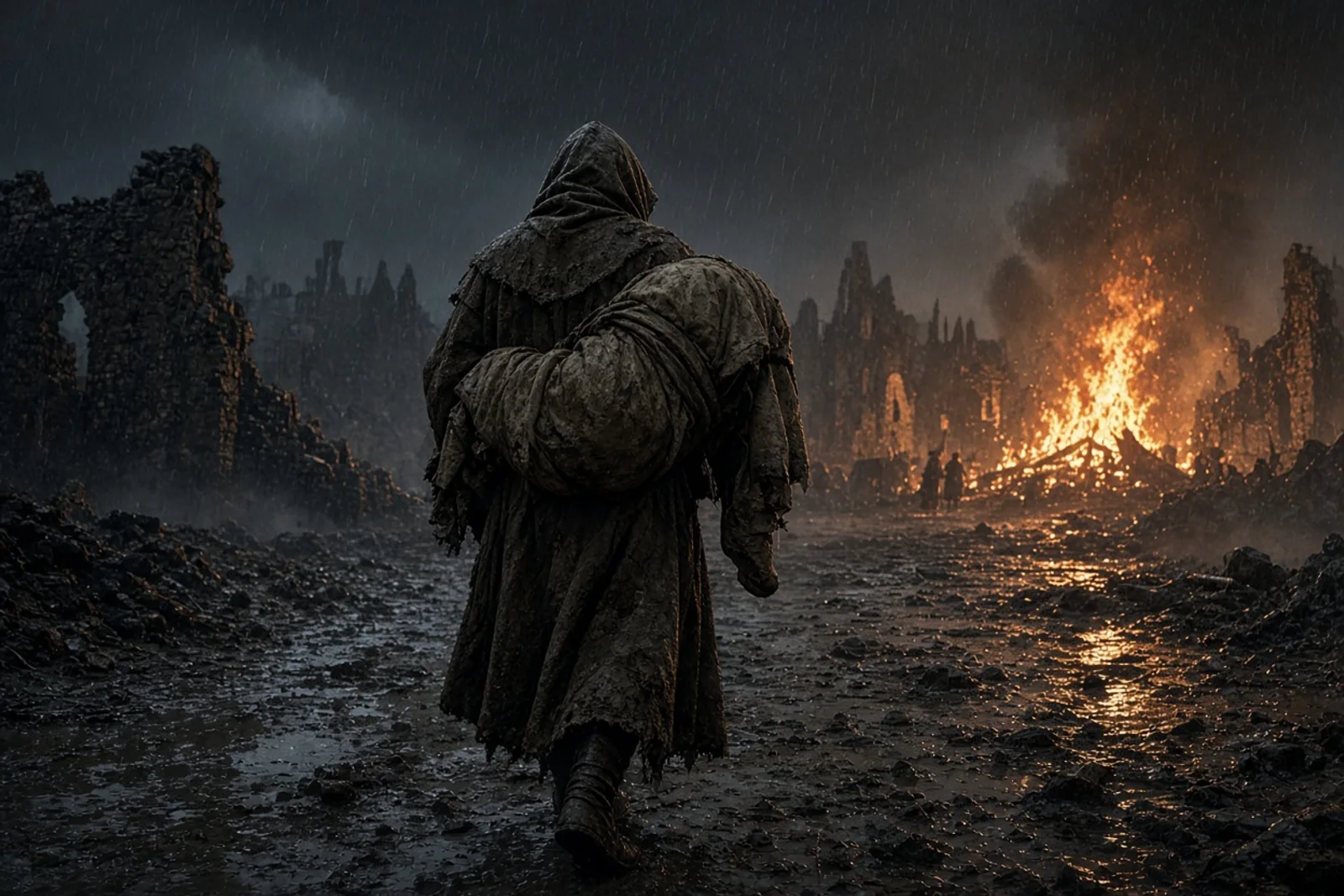
We reached the first cluster of huts just after dawn, the smoke from their fires hanging low and sour in the damp air. Cuthbert dismounted without a word and handed the reins to me. He walked straight to the nearest doorway where a woman knelt scraping at the threshold with a knife. She looked up once, then dropped the blade and began to weep.
Inside, three children lay on the same pallet. Their breathing came in short, wet pulls. Cuthbert knelt between them and laid a hand on each forehead in turn. He asked their names. The mother answered from the doorway, her voice already hoarse from calling for help that never came. He stayed until the smallest one opened her eyes and took the water he held to her lips.
We moved on foot after that. The track between the next two settlements had washed out in the spring rains, and the horse would have foundered. Cuthbert carried the satchel of dried herbs and the small wooden cross Boisil had left him. I carried the bread and the spare cloak. By midday the sun burned through the mist and the flies rose in clouds from the ditches where the dead had been laid.
At the second place a man met us on the path. He carried a staff tipped with iron and kept his distance until Cuthbert spoke his name. Then the staff fell and the man dropped to his knees, babbling about the charms he had hung over his door the night before. Cuthbert lifted him up and walked with him the rest of the way, speaking low. When we reached the huts the man tore the charms down himself and threw them into the fire pit.
That night we slept in the open on the slope above the river. Cuthbert sat awake long after I had rolled into my blanket. He watched the water moving under the moon and once or twice pressed a hand to his side where the old pain still lived. In the morning his face was grey but he rose before the light and started down toward the next township without waiting for food.
The people there had already lost their priest to the same sickness. They stood in a half-circle when we entered the clearing. One woman held a bundle wrapped in sacking. Cuthbert took it from her, unwrapped the child, and carried it himself to the edge of the trees where the ground was softer. He dug with his hands until the hole was deep enough, then laid the body down and covered it with earth and stones. No one spoke until he finished.
We stayed three days. Each morning he walked the paths between the scattered houses, stopping at every door. Some turned away. Most let him in. He heard what they had to say, gave them the bread we carried, and left the herbs with instructions spoken so simply that even the children could repeat them. By the third evening the woman who had carried the bundle came to the fire and asked him to stay longer. He told her the next village needed the same words.
On the fourth morning the pain in his side kept him on the ground until the sun was high. I offered to go ahead alone and bring back word. He shook his head and stood, one hand braced against a tree until the dizziness passed. We walked slowly that day. The track climbed into the hills where the wind cut sharper and the settlements grew farther apart.
At the high pasture a shepherd met us. He had driven his flock to the ridge because the lower ground was already empty. Cuthbert asked after the man’s family. The shepherd pointed to three fresh mounds marked with cairns and said nothing more. Cuthbert stayed with him until the light failed, then continued on foot along the ridge while the shepherd followed at a distance.