




St. Dominic Preaches Against Albigensians
Founder of Order of Preachers begins mission.
FaithTap · Oct 12, 2026 · 11 min read
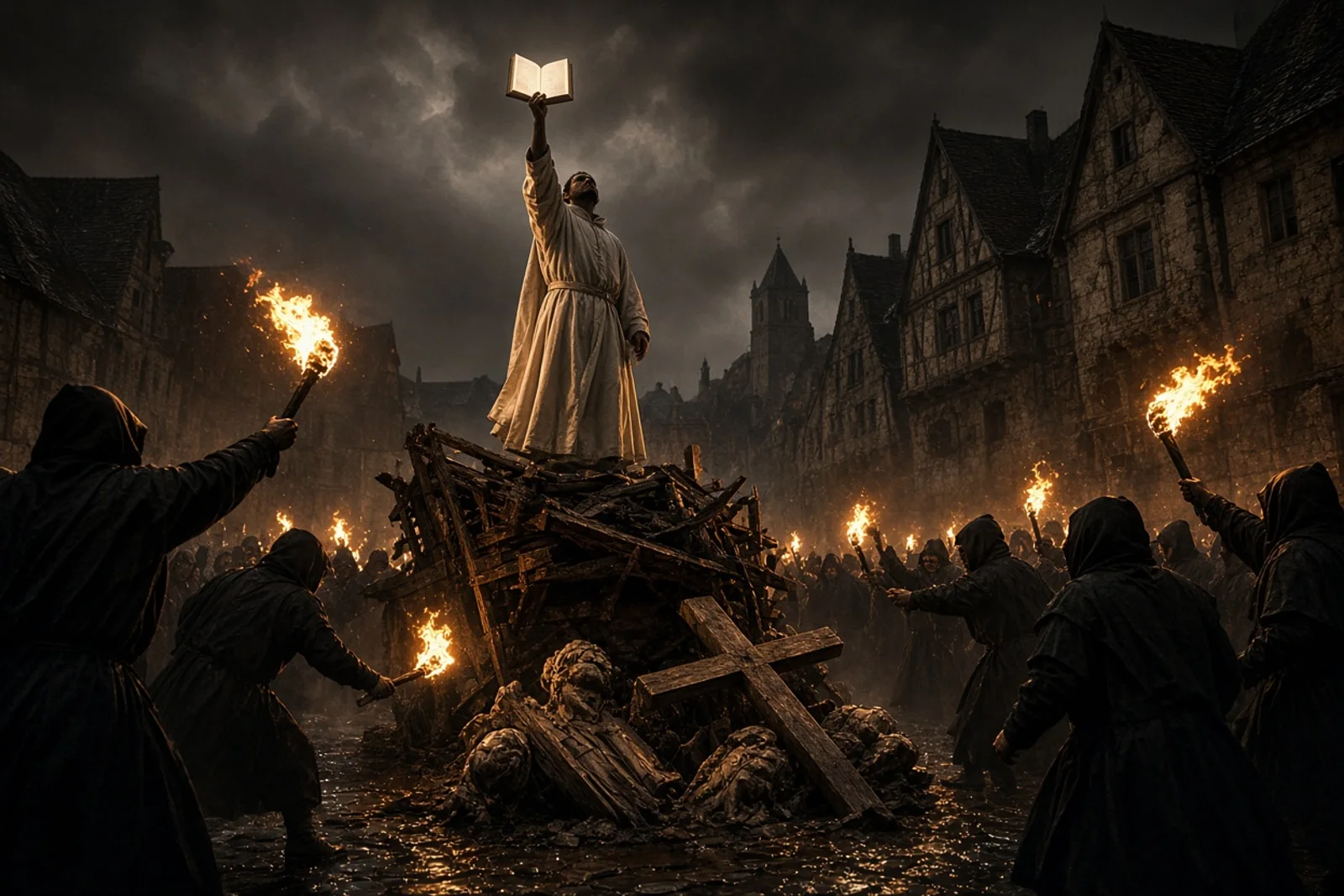
The dust rose thick from the road as I followed the two men on foot. My cart had broken an axle outside Fanjeaux three days before, and I had nothing left to trade anyway. The older one, Diego, wore the bishop’s ring still but walked like any pilgrim. Dominic kept his eyes on the ground ahead, his cloak frayed at the hem, a single book wrapped in cloth under one arm.
We reached the village square at midday. A few Cathar perfecti already stood under the plane tree, their faces clean-shaven, their robes undyed. They had come to listen, or to measure. Dominic stepped onto the low stone where the notary usually sat for contracts. He did not raise his voice at first. He spoke of bread and of the body that had broken it. One of the perfecti answered at once, saying the body was a prison. Dominic waited until the man finished, then asked what prison could hold the word that made the stars. No one clapped. The square stayed quiet except for a child coughing.
That evening we slept in a barn that belonged to a widow whose son had joined the heretics. She gave us black bread and asked nothing in return. Dominic ate slowly. He told her the legates in Toulouse still wore silk when they rode out, and that the people noticed. She nodded but did not promise to return to the parish church.
We moved on the next morning toward Prouille. The road climbed through olive groves already turning silver in the heat. Diego spoke little now. His strength had begun to leave him after the long ride from Rome the year before. Dominic carried both their bundles when the bishop grew short of breath. At each hamlet we stopped, Dominic asked for the names of the dead and the names of the living who still listened to the perfecti. He wrote them on a small tablet with a sharpened stick.
By the third week the pattern was fixed. We rose before light, walked until the sun stood overhead, then Dominic preached wherever people would gather. Sometimes it was only women at the well. Sometimes it was the whole village after the heretics had already spoken at dawn. He never argued the way the Cistercian legates argued. He asked questions instead. What does the good God do with hands that have no flesh? Why would light hide inside bread if it feared the world? The answers he gave were never shouted.
One afternoon a man named Pons brought his wife and two daughters to hear Dominic. The wife had been receiving the Cathar blessing for months. She stood at the edge of the group, arms folded. Dominic spoke to her directly, not about doctrine but about the loom she had left idle. He said the thread still needed hands even when the spirit felt bound. She came forward after the others left and asked whether the Church would take her daughters if she could not feed them. Dominic looked at Diego. The bishop nodded once.
That night we slept in the open. Dominic sat awake, the tablet on his knees, adding names by the light of a stub of tallow. He told me the convent would need a rule stricter than the one the canons kept at Osma. No silk, no meat on most days, and every woman must learn to read enough to pray the hours. He spoke as if the building already stood.
Word reached us that the legates had grown impatient. Peter of Castelnau sent a messenger demanding we return to Toulouse and join the public disputations. Diego refused. He said the people would not trust men who arrived on horses with silver bridles. The messenger left without eating.
We reached the plot of land near Prouille on the feast of the Assumption. It was little more than two stone walls and a roof of branches. The widow from Fanjeaux had already sent her youngest daughter ahead with a bundle of flax. Other women arrived over the next days, some alone, some with children whose fathers had died in the fighting further south. Dominic set them to work clearing the yard. He worked beside them, sleeves rolled, until his hands blistered.