




St. Elizabeth Ann Seton Founds Sisters of Charity
Widow starts first American sisterhood.
FaithTap · Sep 29, 2026 · 11 min read
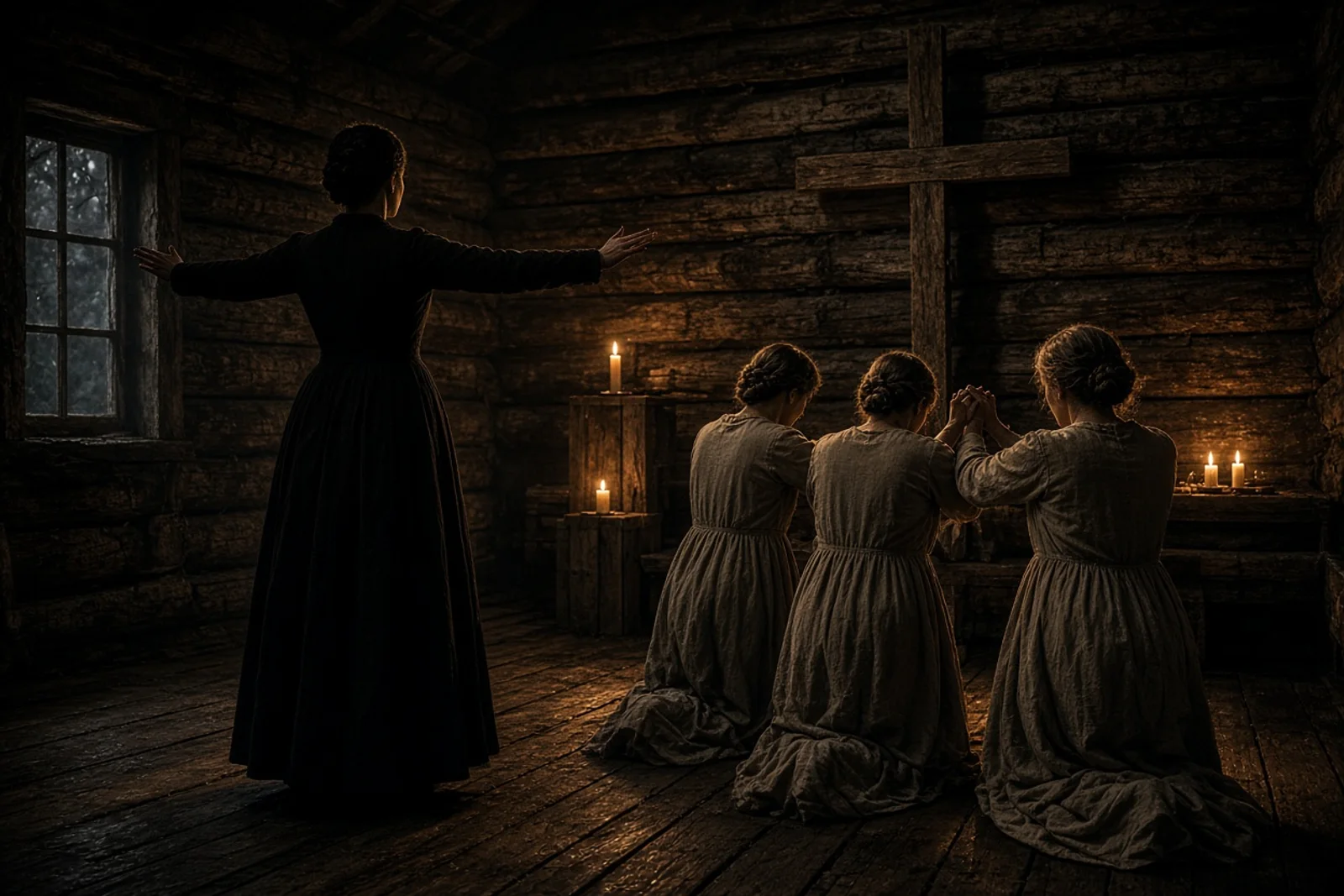
The wagon wheels bit into the mud outside the stone house on the hill. I had come up from Baltimore with two bundles and a letter from Father Dubourg, expecting nothing more than a roof and work with the children. The air smelled of wet pine and the first woodsmoke of the season. Three women already waited on the porch, their black dresses plain against the whitewash. One of them stepped forward and took my hand without asking my name.
Elizabeth Seton stood a little apart, smaller than I had pictured, her face thinner from the years of moving. She wore the same rough wool as the rest of us. When she spoke it was low, almost to herself, about the need for a place where girls without money could learn letters and prayers. She had brought her own daughters with her, and they carried baskets of books up the steps as if they had done the same task a hundred times before.
We slept that first night on straw mattresses in the attic. The roof leaked in two places. At dawn she was already awake, sweeping the main room and marking places on the floor with chalk where desks would stand. No one had told us the exact day the school would open, only that it must begin soon. By the third morning the chalk marks were gone and six girls from the valley sat on benches, their feet not quite reaching the floor.
She took her vows on a Tuesday after Mass in the small chapel the Sulpicians had built. Father Dubourg read the words and she answered without hesitation. The rest of us watched from the side, some of us still unsure whether we would follow. When she rose from her knees she looked at each face in turn and said only that the work belonged to all of us now. That afternoon two more women arrived from Philadelphia, carrying letters of introduction and little else.
The free school began with nine pupils. We taught reading from worn primers and arithmetic on slates passed hand to hand. Elizabeth kept the older girls after the others left, showing them how to stitch and how to keep accounts for the household. She never raised her voice, but the room quieted when she entered. One of the valley mothers tried to pay with a basket of apples; Elizabeth accepted it and sent back half, saying the children needed the fruit more.
Winter came early. Snow reached the windowsills by December. We burned green wood that smoked and made the younger sisters cough through the night. Elizabeth moved her mattress closer to the chimney so she could watch the fire without disturbing anyone. She wrote letters by the same light, asking friends in New York and Baltimore for books and cloth. The answers came slowly, sometimes only a few coins wrapped in paper.
By spring the number of girls had grown to fourteen. We added a second room using boards from an old barn. Elizabeth walked the new space each evening, measuring the distance between benches with her steps. She kept a small notebook in her pocket and marked the names of every child who could now read a psalm without help. The list grew longer each week.
Two of the original women left before summer. One returned to her family; the other found the rule too strict. Elizabeth did not speak of it at meals, but she added their names to her prayers at night. New arrivals took their places. One brought a violin, another a set of medical texts her father had owned. The house began to feel less like a borrowed shelter and more like a place that could last.
She fell ill that autumn with a fever that kept her in bed for eight days. The sisters took turns sitting with her, reading from the psalms she favored. When she recovered she insisted on returning to the classroom the same morning. Her voice was still hoarse, but she corrected the girls’ handwriting as steadily as before. The children noticed the change and worked more quietly that week.