




St. Francis Receives the Stigmata at La Verna
Francis bears Christ's wounds after a vision on the mountain.
FaithTap · Sep 28, 2026 · 12 min read
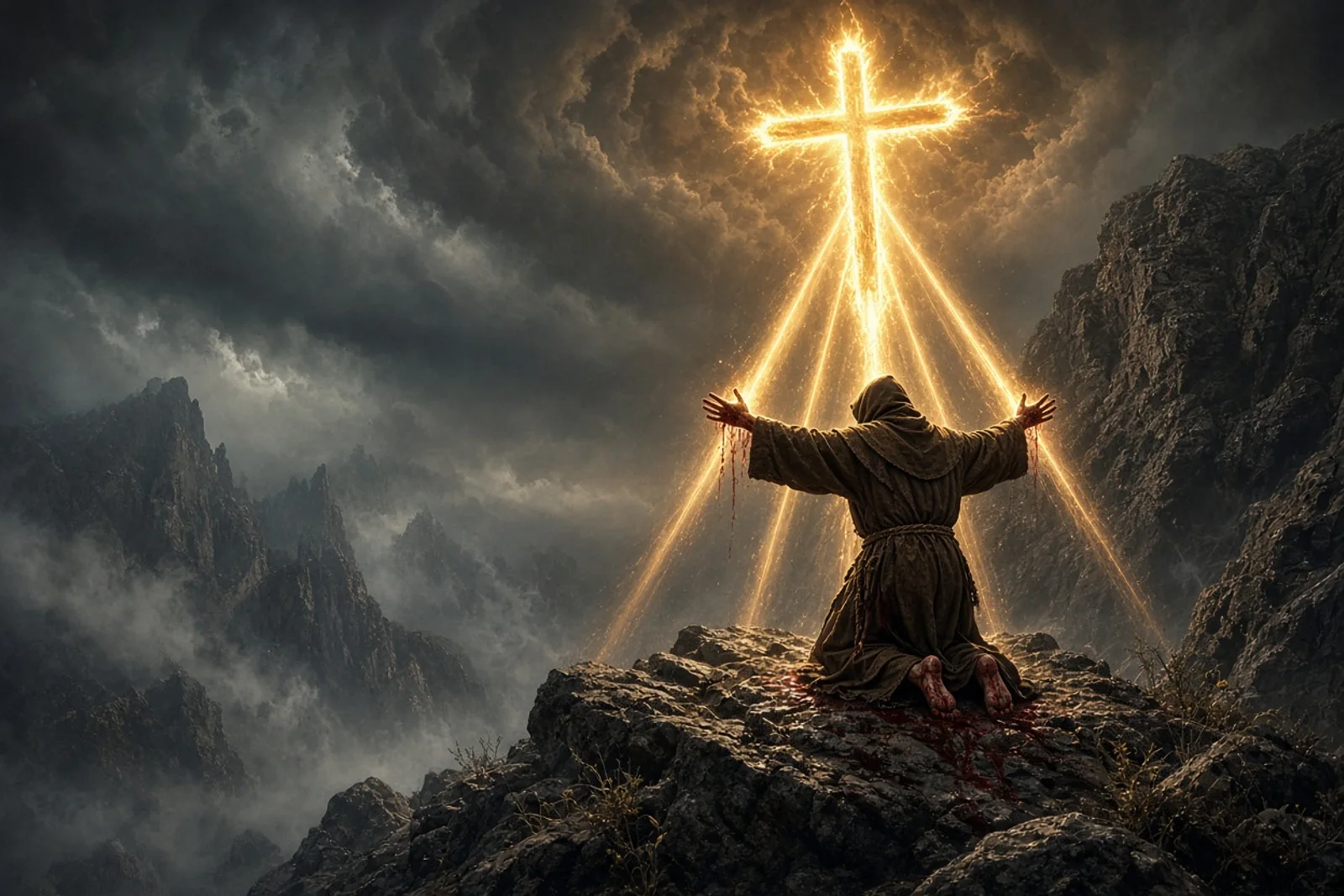
I had climbed with the others the day before the fast began, the path narrow and loose underfoot, our habits catching on the scrub. Francis walked ahead, pausing now and then to rest his hand on a boulder as if asking its permission to pass. At the top the wind cut across the rock shelf where the small huts stood. We set our packs down and he thanked each man by name before turning toward the farthest ledge.
For days the routine held. We kept silence after the midday meal. Francis prayed longer than the rest of us, sometimes through the night, the sound of his voice carrying only when the wind dropped. On the morning he asked for the gospel book I stood near enough to see the altar stone. He had his companion open it three times. Each time the pages fell to accounts of the trial and the nails. Francis said nothing aloud, only nodded once and walked back out onto the rock.
The air stayed sharp even at midday. I carried water to the brothers who stayed closer to the huts and watched the slope below for anyone coming up the trail. No one did. Francis stayed on the higher ground, out of sight for hours at a time. When he returned his feet were scraped and his eyes looked past us as if the ridge line had moved.
On the morning of the feast the light came thin and white across the eastern face. Francis had already gone higher. I heard nothing at first, only the usual scrape of wind against stone. Then a change in the air, a pressure that made the ears ring. I started up the narrow track between the boulders, moving quietly because we had been told to leave him alone unless he called.
Halfway along the ledge I stopped. He knelt with both hands pressed to the ground, head lifted. Above him the shape hung in the air, wings spread so the light broke through them in six separate blades. Between the wings a figure hung fixed, arms and feet stretched to the wood. Francis stayed motionless, his mouth open, breath coming in short pulls. I could not move closer. The light from the wings threw color across the rock that had not been there before.
He made no sound that reached me. After a time the shape thinned and the wings folded inward until nothing remained but the empty air and the ordinary gray of the stone. Francis lowered his head. His shoulders shook once, then he pressed both palms against his sides and stayed very still.
I turned back down the track before he could notice me. At the huts the others were preparing the noon meal. I told them nothing. Later, when Francis came down, he kept his hands inside his sleeves and asked for a needle and thread. He mended a tear in his habit himself, sitting with his back to the wall of the farthest hut. When one of the younger brothers offered to help, Francis shook his head and kept sewing.
That evening he walked with a shorter step. Blood had soaked through the cloth at his side; he had folded an extra piece of linen inside the habit and the stain showed only when he bent. He would not let anyone carry his bowl at supper. When a brother asked why he favored one foot, Francis answered that the rock was uneven and the matter was finished.
For the remaining days of the fast he stayed mostly apart. I saw him once at dawn, standing with his right hand raised against the light as if testing whether the wound would close. It did not. He wrapped both hands in strips of cloth before returning to the huts and told us the cold had reached his fingers. None of us contradicted him.