




St. Helena Discovers Relics of the True Cross
Empress mother travels to Jerusalem and identifies the cross of Christ.
FaithTap · Oct 2, 2026 · 10 min read
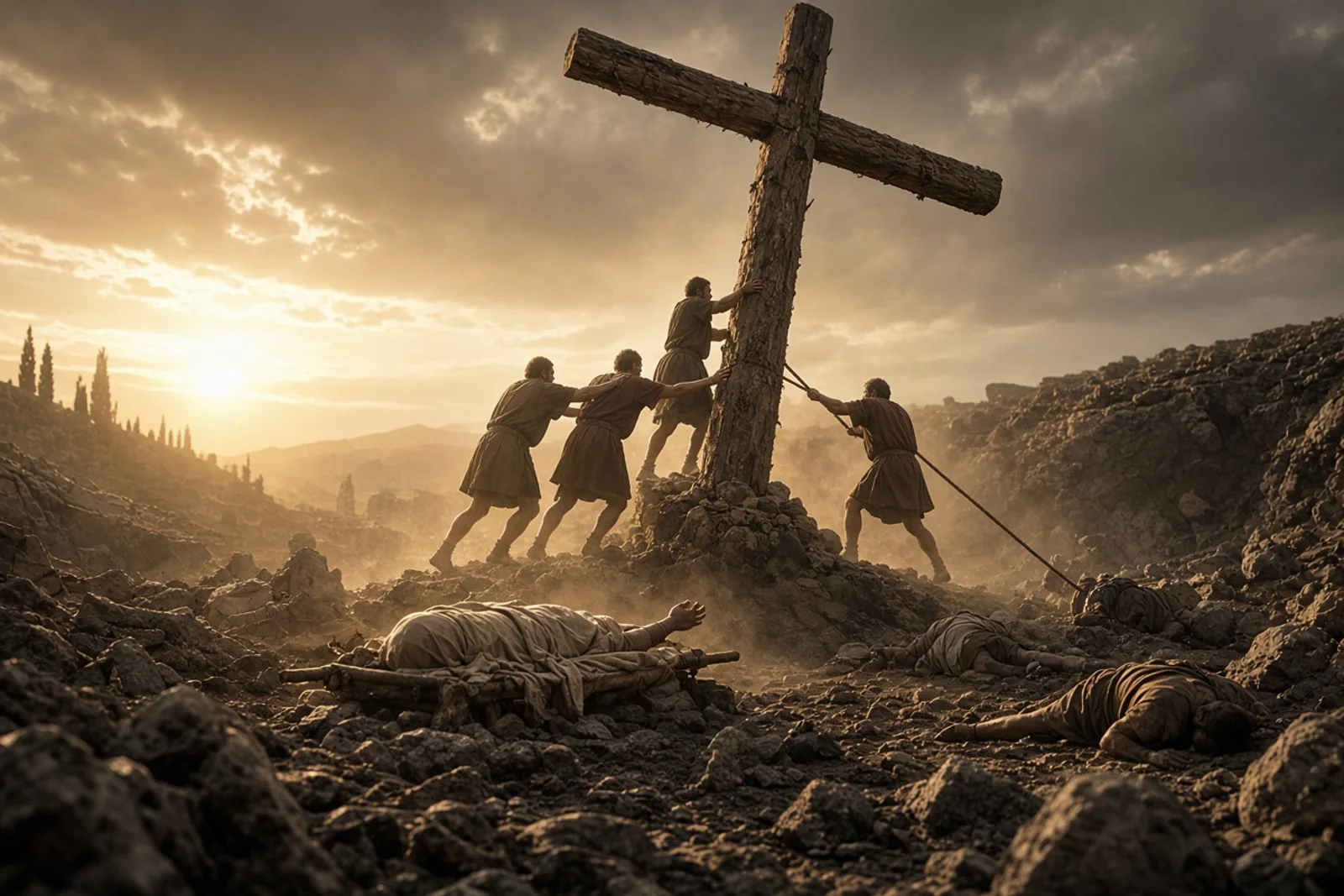
The picks bit into the packed earth before dawn, and I swung with the rest of them. Dust rose in the gray light and clung to sweat on my arms. We had been at this for weeks, tearing down the old temple walls stone by stone, then scraping away the fill that Hadrian’s men had heaped over the place years before. Helena herself walked the edge of the pit most mornings, her cloak drawn close against the wind off the hills. She never raised her voice. She only pointed where the next layer should come off.
The ground gave way slowly. We reached a layer of broken marble and then a cistern cut into the rock. One of the men called out when his iron struck wood instead of stone. We cleared the rest by hand. Three rough beams lay side by side, still dark with age, and a smaller plank lay across the top of the middle one. Letters were cut into the plank in three scripts. Macarius came down into the hole himself to look. He read the words aloud once, then again, quieter the second time.
Helena stood at the lip of the cistern. She asked whether any of us could say which beam had held the body. No one answered. The three crosses looked much the same after so long underground. She ordered them lifted out and carried to the open ground near the remains of the tomb. The plank was set aside on a clean cloth.
By midday the heat pressed down. A woman from a house near the city gate had been brought on a litter. Her skin was the color of old wax and her breathing came shallow. Macarius had sent for her after the crosses were found. He spoke to her attendants first, then turned to Helena. The empress nodded once. The woman was lowered to the ground on a blanket.
They brought the first cross and laid it across her chest. Nothing changed. Her eyes stayed half-closed and the rattle in her throat continued. The second cross was placed the same way. One of her hands twitched but the sound of her breath did not ease. Macarius waited a moment, then motioned for the third.
When the beam touched her, the change was immediate. Color returned to her face in a rush. She drew a full breath and coughed, then opened her eyes and looked around as if waking in a strange room. She tried to sit up. Her attendants steadied her. Macarius stepped back and looked at Helena. The empress did not speak. She only watched the woman breathe.
The nails were found later the same afternoon, still in the earth at the bottom of the cistern. They were handed up one by one. Helena had them wrapped in linen and set aside. She stayed until the light failed, then returned to her lodging. Macarius remained with a few of us to cover the crosses with fresh cloth and set guards.
Work on the new church began before the month was out. Foundations were marked around the tomb and the place where the crosses had lain. Helena gave orders for the best stone that could be brought from the quarries. She left a portion of one cross in a silver case with Macarius and took the rest, along with the nails, when she traveled north again. The woman who had been sick stayed in the city for some weeks after her recovery. She walked without help by the time the first courses of the new walls were set.
Years later, pieces of those beams traveled farther than any of us who lifted them. Travelers carried small splinters in sealed boxes. The rest stayed in the church that rose over the site, shown on certain days to those who came to see. The cistern itself was filled and paved over. Nothing marked the spot where the three crosses had rested except the floor of the building above it.