




St. Hilda Hosts the Synod of Whitby
Abbess Hilda mediates between Celtic and Roman church customs.
FaithTap · Sep 22, 2026 · 10 min read
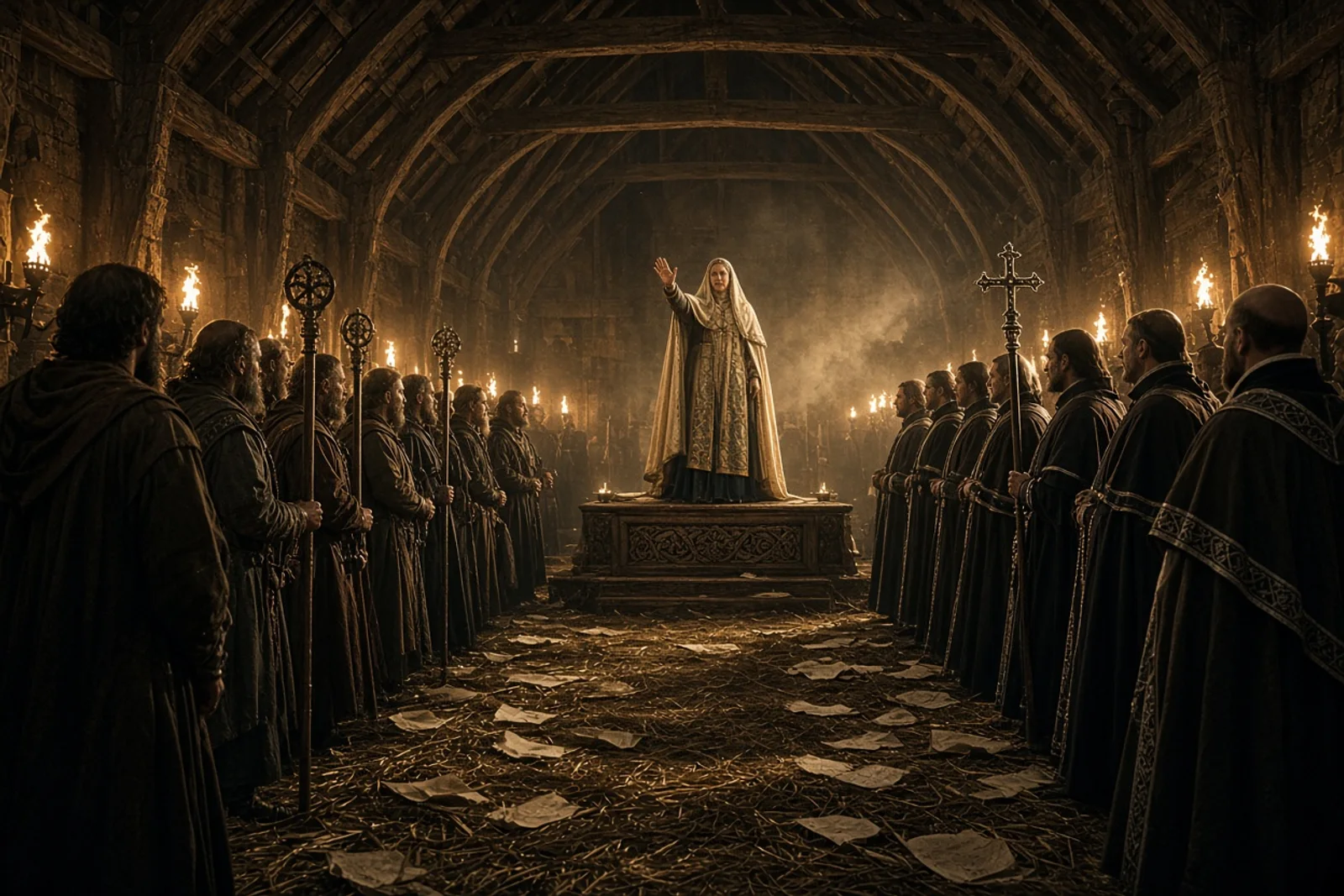
The hall at Streanaeshalch still smelled of new oak and salt when the first voices rose. I stood near the back with a stack of fresh wax tablets, sent there by the abbess to note what needed remembering. Sunlight cut through the high windows in straight bars and landed on the straw between the benches. King Oswy sat at the center with his son Alchfrid beside him. Colman kept his hands folded inside his sleeves, the way he always did when he was listening hard. Across from him Wilfrid already leaned forward, ready.
Hilda moved between them without hurry. She stopped at each man’s shoulder, spoke a few words too low for the rest of us to catch, then took her own place on a low stool to the king’s left. The room settled. Outside the tide was running out; we could hear the long pull of the water against the cliffs.
Colman spoke first. He laid out the custom he had kept since he came from Iona, the count of days that followed the old tables. He said the tradition had come through Aidan and through Finan before him, and that no one had found fault with it while they lived. His voice stayed even, but the knuckles of his folded hands showed white.
Wilfrid answered at once. He had the Roman count and the authority of Peter, he said, and he named the churches that already kept it. He spoke of Gaul and of Rome itself, places he had walked. When he finished he sat back and waited, as if the matter were already settled.
The argument ran through the morning. Men on the benches shifted when one speaker paused. A scribe’s pen scratched and then stopped. Hilda did not interrupt. She watched the faces, and when a point grew sharp she leaned toward Oswy and said something short. The king nodded but gave no sign which way he leaned.
By midday the room had grown warm. Someone opened the doors at the end of the hall, and a cooler air came in from the sea. Servants brought bread and ale. No one ate much. Colman stood again and repeated the names of the saints who had kept the older reckoning. Wilfrid rose after him and asked how a single province could stand against the custom of the whole world. The words hung there.
Oswy asked a question of his own then. He wanted to know which of the two apostles held the greater keys. Wilfrid answered that Peter held them. The king looked at Colman. Colman said nothing for a moment. Then he said the matter had never been put to him that way before.
The afternoon light moved across the floor. Hilda rose once to speak with a monk who had come in from the guest house. She returned and sat again. Her face showed nothing. She had lived under both customs and had taught both, yet she gave no sign which one she favored now.
When the lamps were lit the talk turned to the tonsure. Wilfrid pointed to the circle on his own head and said it was the mark of Peter. Colman answered that the mark he wore had come from the east and had served the northern churches well enough. The two men did not raise their voices, but the space between their benches felt wider than it had at dawn.