




St. Januarius Blood Liquefaction First Record
Bishop's blood liquefies on feast day in Naples cathedral.
FaithTap · Oct 5, 2026 · 12 min read
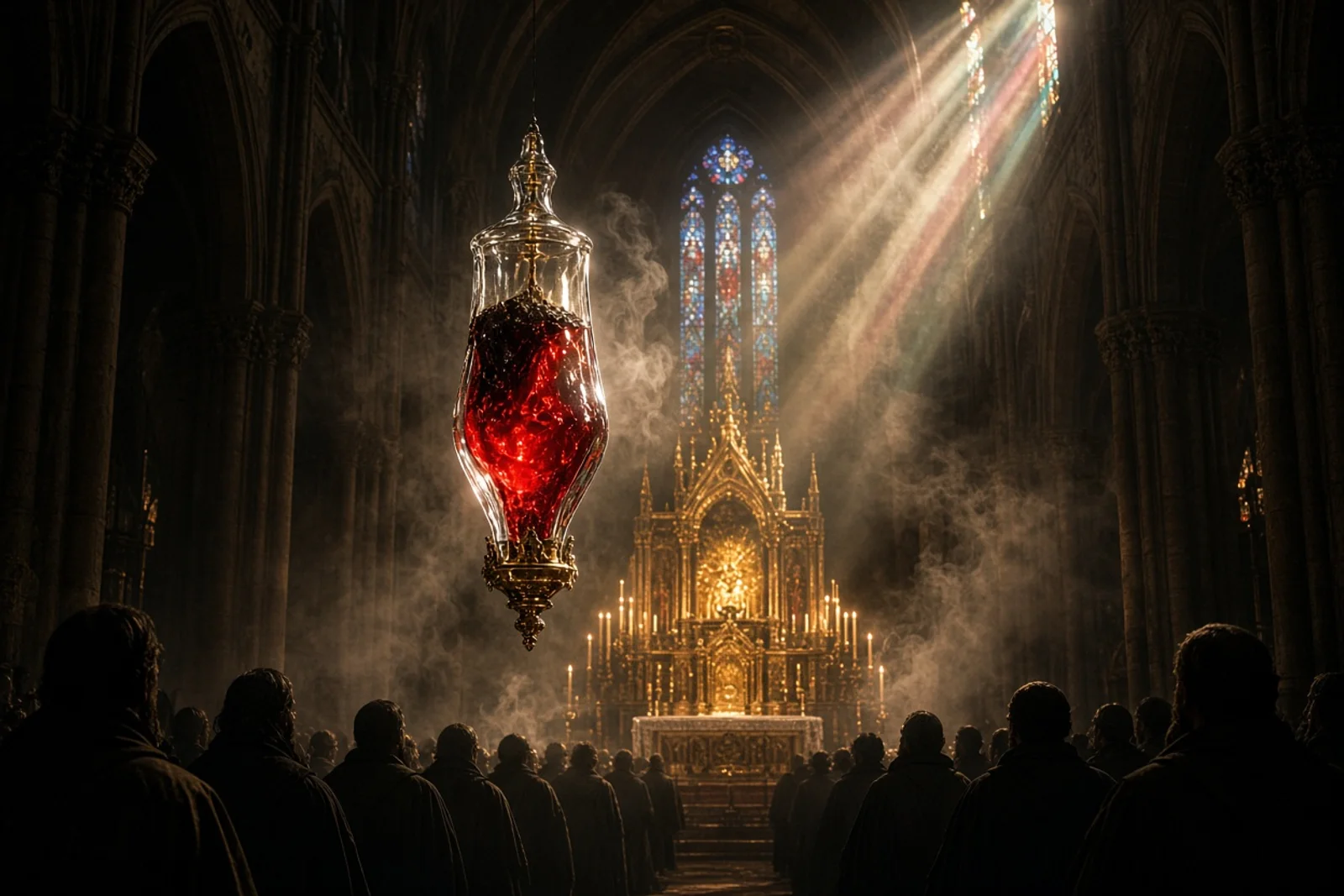
The press of bodies at the cathedral doors gave way only when the canons pushed through with the silver case. I had come early from the port quarter, carrying the small wax taper my wife pressed into my hand at dawn, and now stood three ranks back from the altar rail. Heat rose from the stone floor and from the hundreds already packed inside. Someone coughed. A child cried once and was hushed.
The archbishop lifted the case and turned it so the light from the high windows crossed the glass. The substance inside clung dark and stiff to one side, exactly as it had the last time anyone remembered seeing it. He set the case on the altar cloth and stepped back. The prayers began, the same ones said on every feast of the martyr, though today the voices carried an edge no one named aloud.
I watched the case because there was nothing else to watch. The larger ampoule held most of the matter, almond-shaped, sealed at both ends. A smaller one stood beside it with only faint traces along its walls. The crowd shifted weight from foot to foot. A woman near me kept repeating the name Gennaro under her breath, not quite a prayer, more like a reminder to herself that the day had arrived again.
Hours passed. The light moved across the nave. The archbishop returned, tilted the case once more, and set it down. Nothing had changed. People began to murmur that the blood stayed fast this year as it had stayed fast before. A canon wiped his forehead and looked at the floor. Then another priest, one I did not know, stepped forward and lifted the case without ceremony. He held it level to his eyes.
A thin line appeared along the lower edge of the mass. It moved slowly, the way oil moves when a lamp is warmed. The line thickened. Within minutes the whole contents had dropped and spread, dark red, covering the inner surface when the priest turned the case again. Bubbles rose and broke. The motion was steady, not hurried, as if the substance had only been waiting for the right moment to finish what it had begun.
The priest set the case back on the altar. He did not speak. The archbishop came forward, examined the glass from both sides, and nodded once. Someone behind me shouted the news outward through the doors. The shout was taken up outside and carried down the steps into the square. Inside, the air changed. People pressed closer to the rail, reaching, though the canons kept them back.
I stayed where I stood. The blood continued to move whenever the case was handled. It did not settle again into the stiff shape it had held that morning. A physician who had come with the archbishop’s household approached, asked permission, and looked at the glass without touching it. He said nothing aloud. Later I heard he wrote that the change could not be accounted for by any warmth in the cathedral or any motion of the case itself.
By late afternoon the ampoules were still on the altar, covered now with a linen cloth between viewings. The crowd thinned only a little. Those who remained kept their eyes on the cloth as if it might lift on its own. I left when the bells rang for vespers, walking back through streets already loud with the report that the blood of the bishop had run again after years of remaining fixed.
In the weeks that followed, the same observation was noted whenever the case was brought out. The substance stayed liquid under ordinary handling and only thickened again when left undisturbed for long periods. No one recorded the exact day it first happened in 1389, only that it had been seen and could no longer be denied. The earlier chronicle from seven years before had described the saint’s feast and the processions but said nothing of any blood kept in glass.