




St. Januarius Blood Liquefaction First Recorded
Blood of martyr liquefies on feast day in Naples cathedral
FaithTap · Oct 3, 2026 · 10 min read
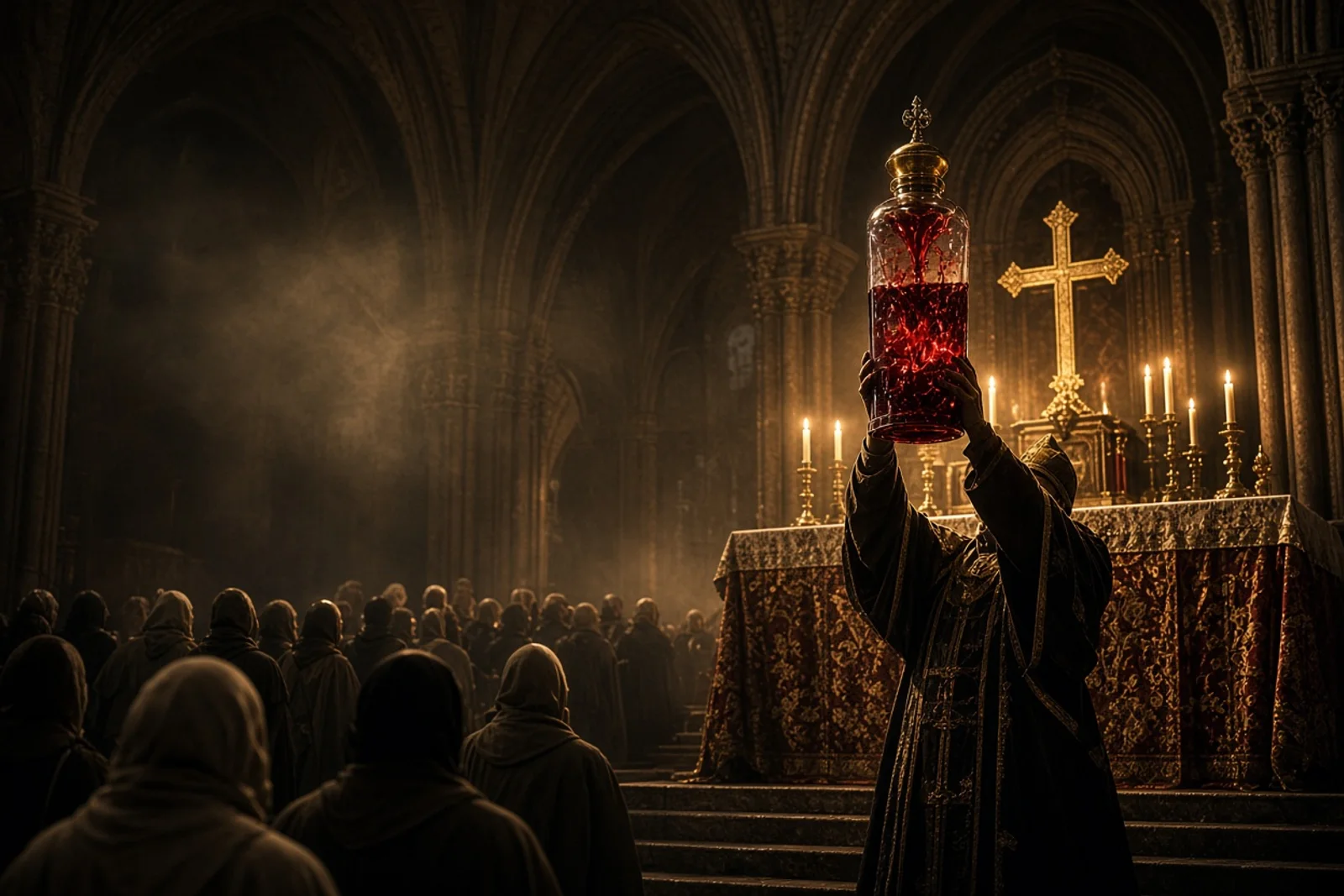
The procession had already turned onto the street leading to the cathedral when the first shouts rose from the front. I pressed forward with the rest, shoulder against shoulder, the smell of sweat and incense thick in the air. The reliquary swung on its poles, carried by six men who moved in step with the chanting. Inside the silver frame two glass ampoules rested, one larger than the other, both sealed tight. The larger one held a dark mass that had not moved in anyone’s memory.
We reached the steps at midday. The sun struck the stone and threw heat back at us. Priests took the case from the bearers and carried it through the doors. I followed the press of bodies into the nave, where the air cooled and the voices echoed higher. The archbishop waited at the high altar. He accepted the reliquary, lifted it once so the crowd could see the solid contents, then set it down beside the other relics brought from the crypt.
The prayers began. They were the same ones used every year on this day, the nineteenth of September. I knew the words by heart from years of standing in the same place. Around me people repeated them, some aloud, some only moving their lips. A woman near the front held a small child on her hip and kept one hand raised toward the altar. The child stared at the glass without blinking.
Time passed. The sun moved across the windows and changed the color of the light on the stone floor. The larger ampoule stayed dark and still. Men near me shifted their weight from one foot to the other. Someone coughed and tried to stifle it. The archbishop turned the reliquary slightly, tilting it so the glass caught the light from another angle. Nothing inside shifted.
A man beside me, a merchant who sold cloth near the port, muttered that the blood had stayed hard the year before as well. He said it under his breath, but the woman with the child heard him and shot him a look. He fell quiet. The prayers continued without pause.
I kept my eyes on the glass. The substance inside looked like old wax or dried pitch, thick against the lower curve of the ampoule. The smaller vial showed only faint traces along its walls. Both had been brought from the bank vault that morning under the eyes of the city officials who kept the keys. No one had touched the seals.
The archbishop lifted the reliquary again and held it level with his chest. He spoke the name of Januarius and asked for the sign. The crowd answered with the same phrase they had used for as long as I could remember. Then he set the case down once more and stepped back.
A low sound moved through the nave, not quite a gasp, more like air leaving many lungs at once. Inside the larger ampoule the dark mass had begun to pull away from the glass. A thin line of red appeared at the upper edge and spread downward. The movement was slow at first, then quicker, until the whole contents slid and settled at the bottom like fresh blood.
People nearest the altar leaned forward. One of the priests reached out and touched the glass with the back of his hand, then drew it away. He nodded once to the archbishop. The archbishop raised the reliquary higher so those farther back could see the change. The liquid now moved freely when the case was tilted.