




St. Joan of Arc Raises Siege of Orléans
Teen leads French to victory.
FaithTap · Sep 27, 2026 · 11 min read
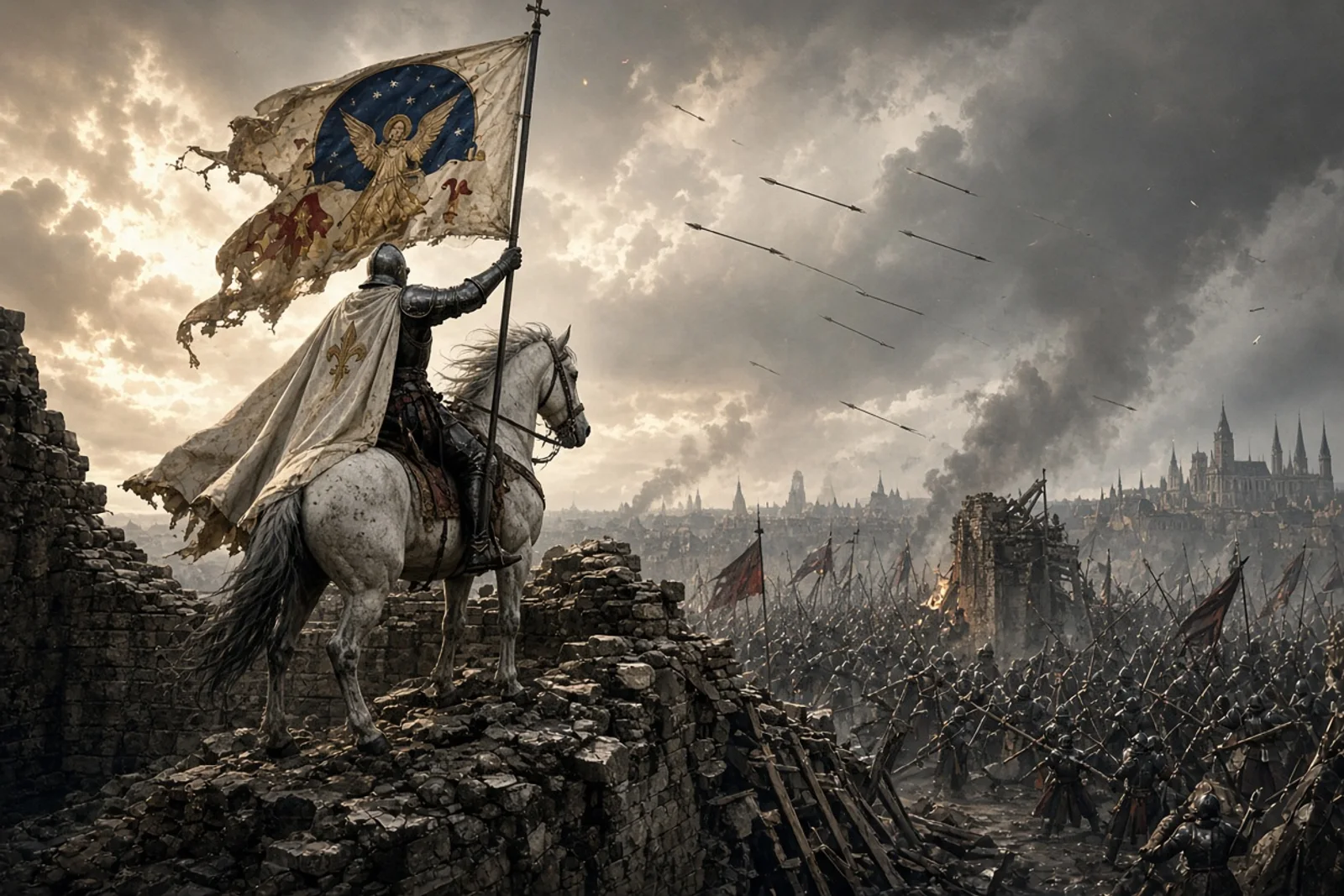
The English patrol passed within a stone's throw of the eastern wall, their horses blowing steam in the cold air. I kept my head low behind the broken merlon and counted the men by the glint of their sallets. Sixteen, maybe seventeen. They rode on toward the Bois d'Orléans without looking up.
We had learned to wait for that moment. When the hooves faded, two of us slipped down the ladder and crossed the open ground to the ditch. The water there was only a hand deep now. We filled the skins and carried them back one at a time, bent double. By the time we reached the gate the sun was already dropping behind the roofs of the faubourgs the English had burned.
Inside the city the streets smelled of wet ash and boiled horse. Dunois had ordered every animal that could still walk brought to the bridgehead for the last defense. The rest had been eaten weeks ago. Men spoke of the convoy from Blois the way they once spoke of miracles, but no one believed it would reach us.
Then the word came that a girl from Lorraine had reached Chinon and spoken with the Dauphin. She claimed the saints had sent her to raise the siege. Most of the garrison laughed. Dunois did not. He sent riders south to meet whatever force the court would spare.
On the twenty-ninth day of April the wind shifted from the river. We heard English horns from the west, answering a French sally at the bastille of St. Laurent. The sound carried across the water like a single note held too long. I was posted on the eastern curtain with twenty others when the gate opened without warning.
She rode in at the head of a small column, wearing a white doublet under a coat of mail. The banner she carried showed the world and two angels. Behind her came wagons loaded with salted meat and powder. The men on the wall stared until one of the captains shouted for them to stand to their posts. She looked up once, then turned her horse toward the Tourelles.
That night the garrison ate fresh bread for the first time in months. No one sang. We listened instead for the sound of English axes on the far side of the Loire.
Four days later Dunois ordered the attack on St. Loup. I went with the second wave across the open fields east of the city. The English there fought from a half-finished earthwork and gave ground only when their powder ran out. She was already inside the work when I reached it, banner planted on the parapet. The English commander was taken alive.
The next morning the captains argued over whether to press the Augustines on the south bank. Dunois wanted to wait for more men from Blois. She said the saints would not wait. The argument ended when she mounted and rode for the bridge that was no longer there. We followed because there was no other choice left.