




St. John Baptist de la Salle Founds Schools
Nobleman educates the poor.
FaithTap · Sep 27, 2026 · 10 min read
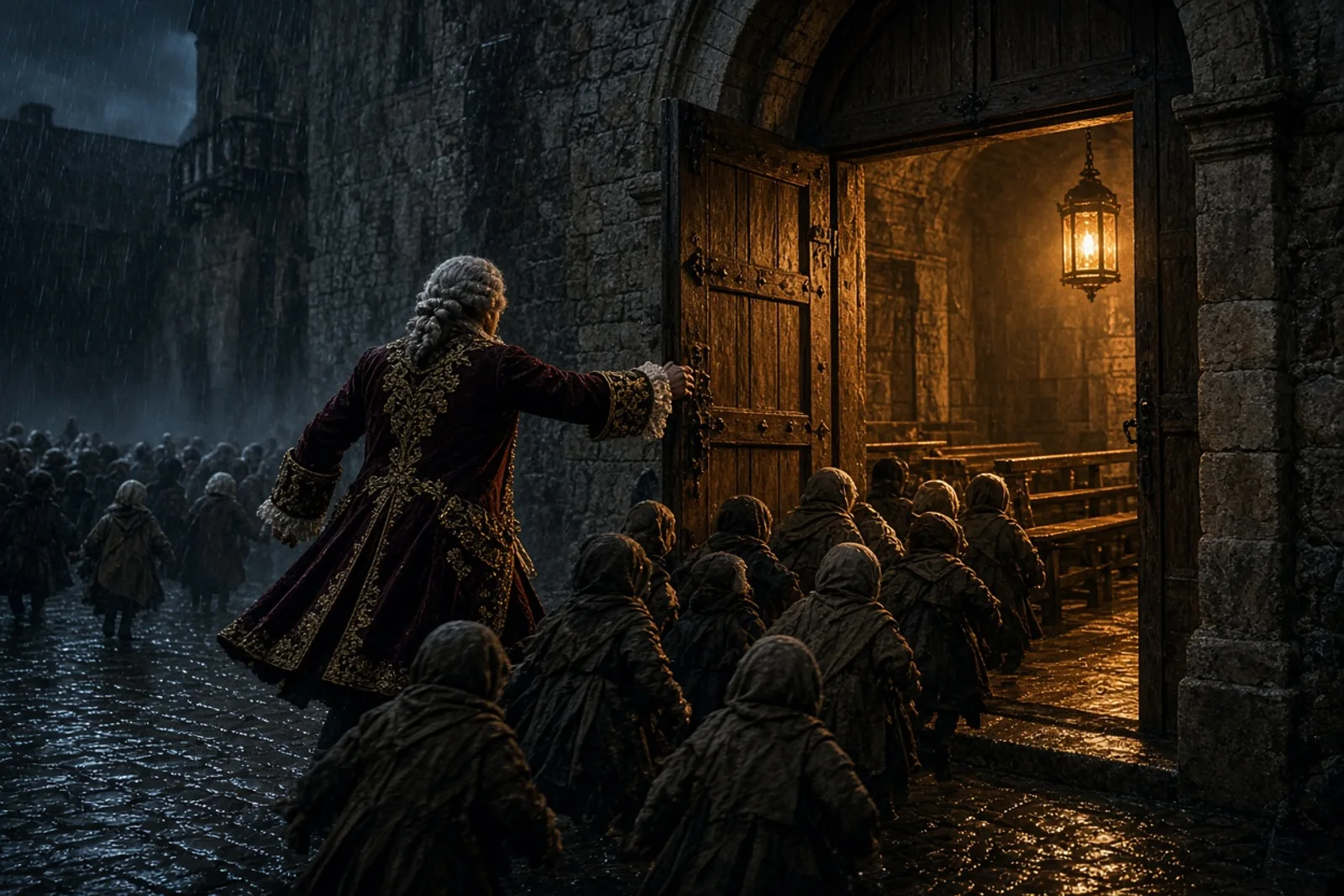
The rain had just stopped when Nyel pushed open the gate to the house on the Rue Neuve. I followed him, my boots heavy with mud from the road out of Rouen, carrying the bundle of slates and primers he had given me the week before. Inside the hall stood a man in the black cassock of a canon, not much older than thirty, with a face that looked as if it had never known hunger. He looked at us both the way a man looks at stray dogs that might still be trained.
Nyel made the introductions. The canon’s name was John Baptist de la Salle. He listened without interrupting while Nyel explained the three schools already running in the poorest quarters and the need for someone to keep the teachers from drinking away their wages. When Nyel finished, de la Salle asked only one question: whether the boys came barefoot in winter. Nyel said they did. The canon nodded once and told us to come back the next morning.
I slept that night on a pallet in the stable behind the house. Before dawn the canon’s steward brought bread and a basin of water. He said the master wanted the new teachers washed and presentable before the children arrived. I scrubbed my face until the water turned brown, then followed Nyel through streets that still smelled of night soil.
The first classroom was no bigger than a storeroom. Twenty boys sat on benches made from broken shutters. Most of them had no shirts. One kept coughing into his sleeve. I tried to show them how to hold the slate, but my own hand shook from nerves. De la Salle stood at the back, saying nothing, only watching. When a boy threw a piece of chalk at another, the canon stepped forward, took the chalk, and placed it gently back in the boy’s palm. He did not raise his voice. The room grew quiet without anyone telling it to.
By the third week two more teachers had joined us, both younger than I was. De la Salle brought them into his own dining room after supper and made them practice writing their letters by lamplight. He corrected their spelling himself, then asked each man what he had eaten that day. When one admitted he had gone without, the canon sent the steward for bread and cheese. He ate nothing himself until the others had finished.
The work grew heavier once the weather turned cold. We opened a second room in Rethel and sent two men there. Letters came back saying the children arrived with frozen feet. De la Salle read each letter aloud to the rest of us at the long table. He never offered pity, only asked what extra clothing we could spare from our own bundles. I gave a spare shirt I had been saving. The others followed.
One evening he called us together and said he would no longer live apart from the work. He had already begun selling pieces of furniture. The next morning his carriage stood empty at the door. He walked with us to the rented house near the tannery, carrying his own books in a sack. The rooms smelled of hides and wet straw. We slept four to a bed that first winter, our breath visible in the morning.
The boys noticed the change before anyone else. They began to wait outside the door before lessons, pressing against the wall to stay out of the wind. De la Salle made it a rule that no child would be turned away for lack of shoes. He kept a stack of wooden clogs by the threshold and replaced them when they split. I never saw him count the cost.
By spring the number of teachers had reached twelve. Some of the first ones left, saying the life was too hard and the food too plain. De la Salle did not argue. He simply asked the remaining men whether they would stay another month. All of them said yes. On Trinity Sunday he had us kneel in the small chapel behind the house. We promised obedience to one another for three years. The words were simple. No one wrote them down that day.