




St. John Bosco Founds Salesians
Priest rescues street boys of Turin.
FaithTap · Oct 3, 2026 · 10 min read
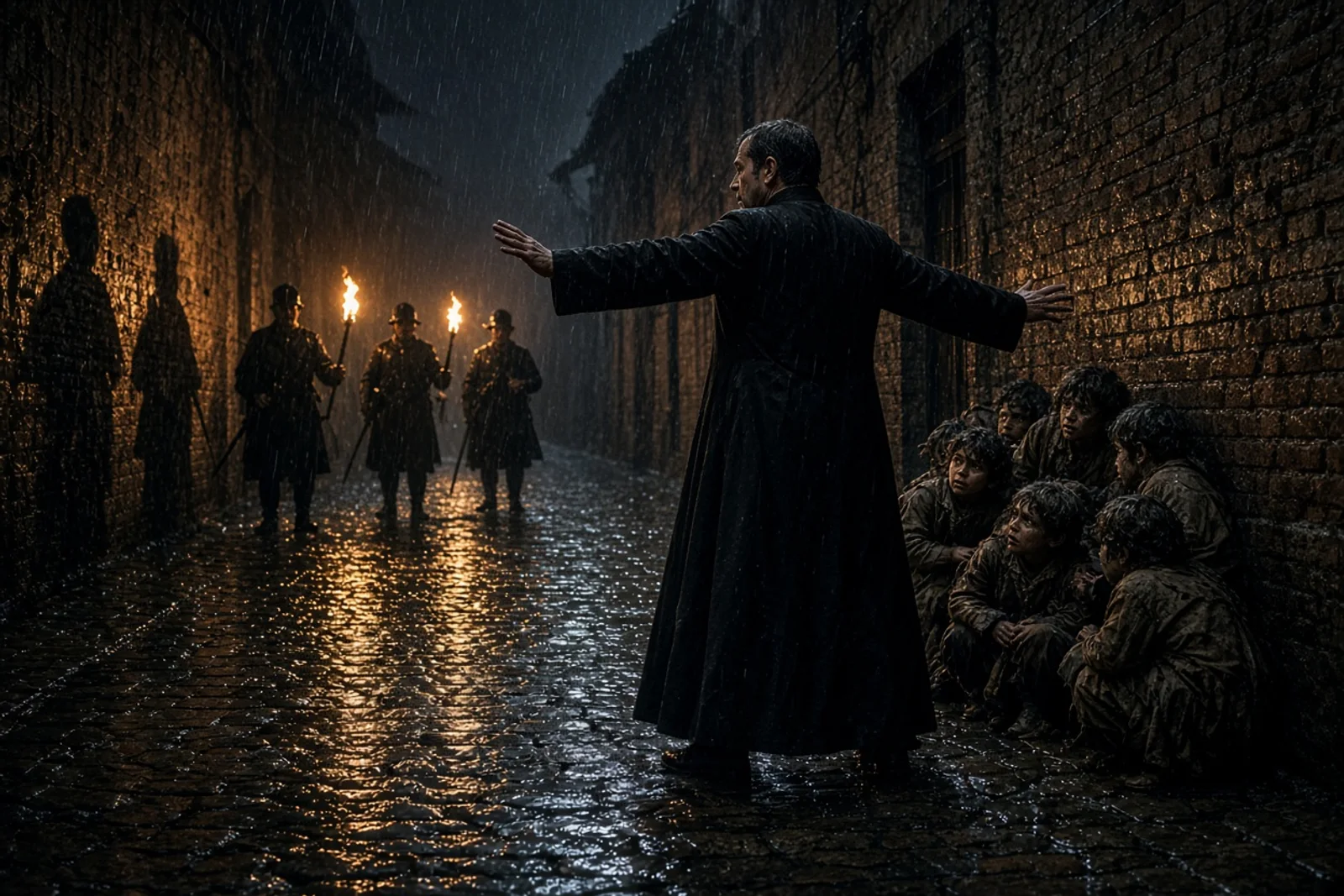
The sacristan’s boot caught the boy square in the ribs and sent him sprawling across the threshold. I was already inside, half-hidden behind the pillar where Don Bosco had told me to wait with the cassock, when the shout echoed off the stone. The ragged figure scrambled up, eyes wild, and bolted straight toward the vestry door. I stepped out without thinking and caught him by the sleeve before he could disappear into the street.
Don Bosco came out still tying his cincture. He spoke low to the sacristan, then turned to the boy and asked his name. Bartolomeo Garelli. Fourteen, no trade, no home that night. The priest listened, nodded once, and sent me for a piece of bread from the sacristy cupboard. By the time Mass ended the boy was still there, sitting on the bottom step, crumbs on his knees.
We walked him back to the rooms Don Bosco kept near the church. Two other lads were already sleeping on straw under the window. I spread an extra blanket for Bartolomeo and showed him where the bucket stood for washing. He said nothing, only watched the door as if it might open again with another kick.
Within a week the number had reached twenty. They came after work, after the factories closed, after the market stalls were dragged away. Some brought younger brothers by the hand. Don Bosco kept a slate on the wall and marked each new name with chalk. By March the count stood at thirty. We met in the open when the weather allowed, and when it rained we crowded the two small rooms until the plaster on the ceiling showed cracks.
Don Borel arrived that autumn and took charge of the arithmetic lessons. He brought a stack of old primers and set the older boys to teaching the younger ones their letters. The nights grew cold, but the rooms stayed full because the candlelight meant warmth and because no one asked where the boys had slept the night before. Don Bosco walked the length of the benches each evening, stopping to correct a sum or to listen to a whispered trouble.
The move to the Rifugio came after the landlord at the first place refused another month. Two rooms beside the chapel of St. Francis de Sales were cleared and whitewashed. We carried the benches ourselves on a Sunday morning before the bells rang. The chapel was small, yet the boys filled it twice over. Don Bosco said the oratory would keep that name because prayer was its first work.
By the following spring the count reached four hundred. On feast days we walked out of the city gates in columns of four, a brass band at the head playing whatever tunes the old instruments could manage. Lunch was bread and cheese spread on the grass near the river. The younger ones chased one another through the trees while the older ones sat with Don Bosco and talked about what they might do when they found steady work.
The night schools began the same year the factories shut for winter. Boys who could not read crowded the tables after dark. Don Borel taught the first class while Don Bosco moved among the rest, showing how to hold the pen so the ink would not blot. The room smelled of wet wool and lamp oil. When the last boy left, we swept the floor by the light of a single candle and stacked the slates for the next evening.
The landlord at the Rifugio gave notice in the spring. We carried the benches again, this time to St. Martin’s, then to St. Peter’s when that door closed as well. Each time the number of boys stayed the same or grew. Complaints reached the city officials that the oratory disturbed the neighborhood. One afternoon two men came with papers ordering Don Bosco to appear before a magistrate. He went alone and returned before supper with the papers still in his hand.