




St. John of the Cross Writes Dark Night Poetry in Prison
The reformer composes his greatest poems while jailed by his own order.
FaithTap · Sep 27, 2026 · 11 min read
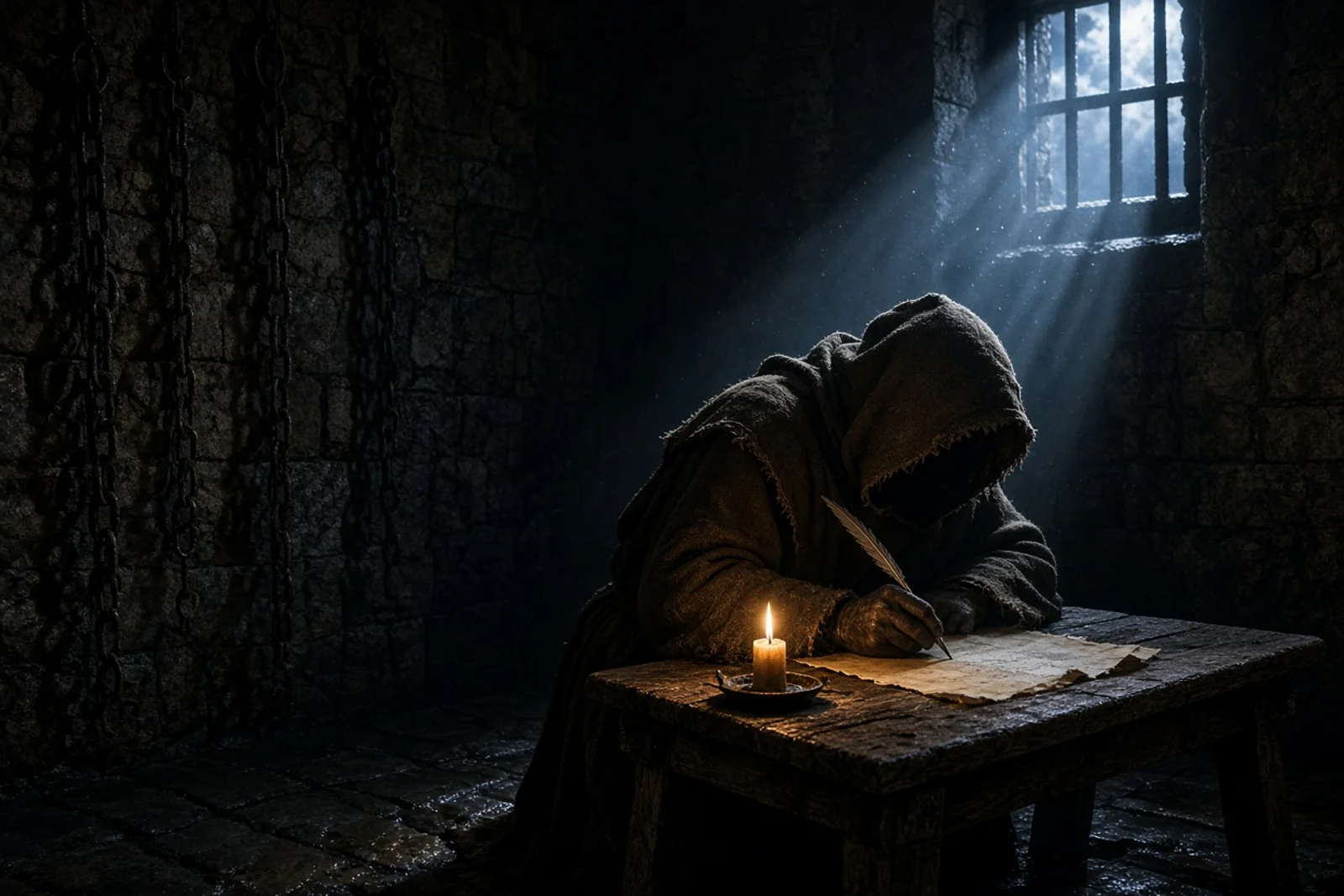
The stairs to the cell smelled of damp stone and old bread. I carried the tin bowl down each morning, the water sloshing against my wrist, and stopped at the iron door before the turnkey lifted the bar. Inside, the slit near the ceiling let in one blade of light that moved across the wall as the hours passed. Fray John sat on the floor with his knees drawn up, the same position every day.
He never asked for more food. The first weeks he only nodded when I set the bowl inside. Later he began to speak, not to me but to the air in front of him, testing lines under his breath. I stood outside the door longer than the rule allowed, listening. The words came slow at first, then faster, as if he were reading from something already written behind his eyes.
The cell measured six feet across and ten long. Heat gathered there by noon and stayed until the next dawn. Fray John’s habit had been taken; he wore a coarse shirt the color of dust. When the light reached his face I saw the beard had grown in patches and the skin under his eyes had gone dark. He kept his hands folded most of the time, but sometimes he lifted one and traced a shape in the air as though measuring the length of a line.
One afternoon the prior came down with two others. They stood in the doorway and told him again to give up the reform and return to the house at Medina. Fray John answered without raising his voice. He said his place at the Incarnation had been given by the nuncio and could not be taken by the provincial alone. The prior ordered the door barred tighter and the food cut to bread and water only. After they left, Fray John remained still for a long time. Then he began again, the same low voice shaping words against the wall.
I started bringing an extra crust when the turnkey looked away. Fray John never thanked me. He ate what I gave him and went back to the lines. Sometimes he asked for the stub of a candle. I brought one once, wedged into a crack in the floor. The flame lasted until the middle of the night. By morning he had scratched marks on the wall with a piece of charcoal from the wick. The marks looked like the start of verses, crossed out and rewritten.
The summer heat pressed harder. Flies gathered at the slit and fell into the cell. Fray John brushed them from his face without looking up. He spoke the stanzas aloud now, testing the rhythm against his own breathing. One line he repeated until it held: the soul that walks in darkness toward the hidden beloved. He changed a word, tried it again, then let it stand. I heard it through the door and carried it with me up the stairs.
In the eighth month the order came to move him to another room. They said the new cell would have a window. Fray John refused to stand when the guards entered. They lifted him by the arms and carried him out. I followed with the bowl still half full. The new room was smaller and faced an inner courtyard where no light reached the floor. That night the turnkey told me the prisoner had begun to cough.
Three weeks later the door stood open when I arrived with the morning bread. The cell was empty. The slit showed a square of gray sky. The turnkey said Fray John had been taken away in the night by men who claimed orders from the provincial. No one saw him leave the building. The prior ordered the cell scrubbed and the door left open so the smell would clear.
I kept the charcoal stub in my pocket for several days. The marks on the wall had already been whitewashed. In the refectory the older friars spoke of the escape as a scandal that would reach the general chapter. They did not mention the verses. I heard them later from travelers who had passed through Andalusia, carried in the mouths of Discalced brothers who knew the author only by the name he had taken at Duruelo.