




St. Louis IX Ransoms Prisoners in Egypt
King pays for Christian captives.
FaithTap · Sep 30, 2026 · 12 min read
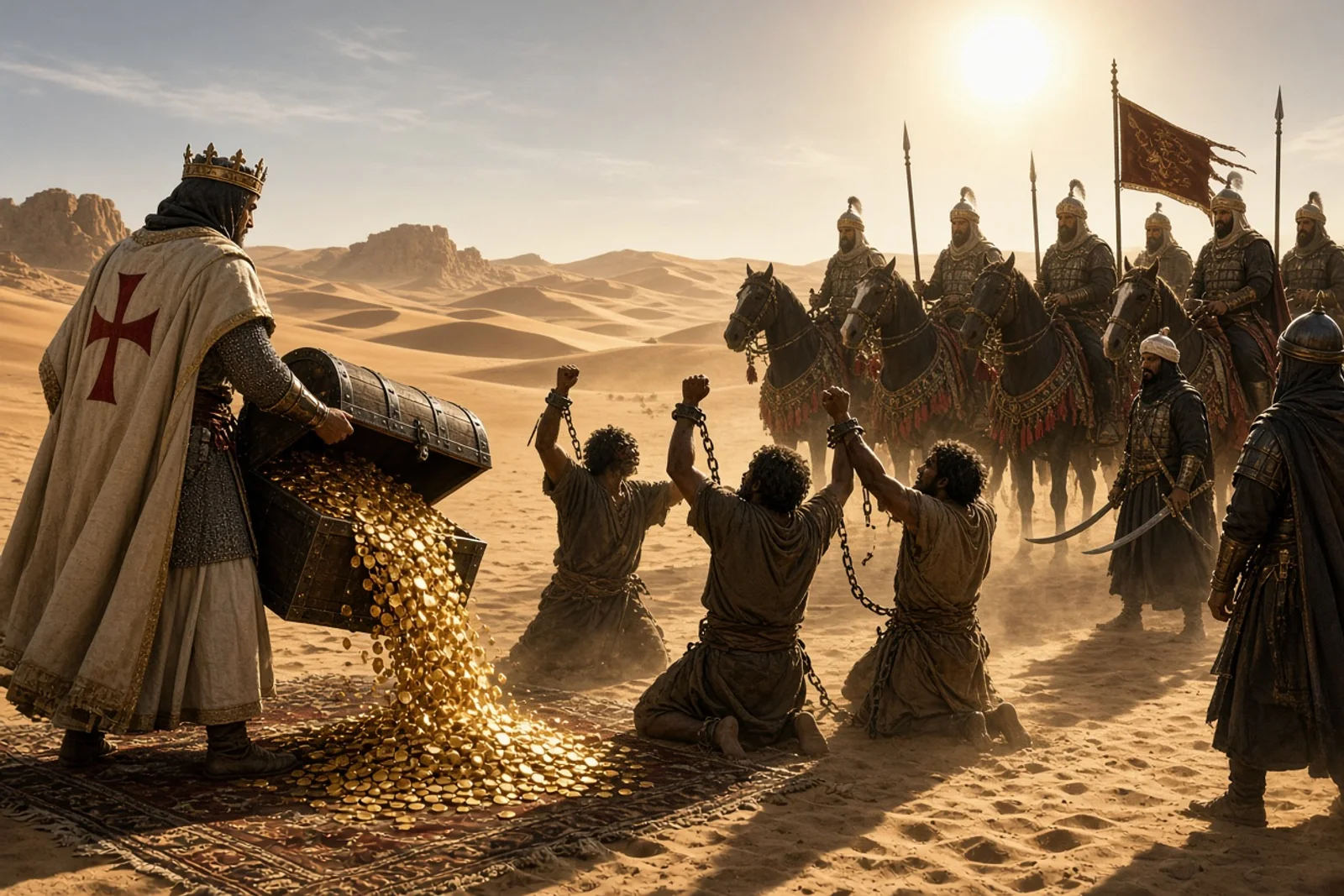
The oars of the Egyptian boat scraped against the mudbank at dawn. I stood among the other chained men on the shore, our feet sunk in the silt, watching the rowers haul the chests ashore one by one. Each chest carried the same weight in silver that the king had pledged the day before. The guards counted the pieces aloud, their voices flat against the river noise. No one spoke among us until the last chest was opened and the coins poured into leather sacks.
Four hundred thousand livres. That was the sum they demanded for the king and his brothers and the twelve thousand men still alive. I had heard the number repeated through the camp for weeks, passed from mouth to mouth like a rumor that might still turn false. France’s yearly income was said to be little more than three times that amount. The men around me did not discuss the cost. They watched the sacks disappear into the waiting carts.
The pledge came next. Louis stood before the Egyptian emirs with his brothers Charles and Alphonse beside him. He swore he would not return to Egypt and that Damietta would be given up at once. The words were translated twice, once into Arabic and once back into French to be sure nothing had changed. When the last phrase was repeated, the king nodded and the chains on the nearest prisoners were struck off. The iron rang against the stones.
I was among those released that morning. The guard who unlocked my wrists did not look at my face. He moved down the line, key turning, key turning, until the sound became ordinary. Twelve thousand men walked free in groups of fifty under the eyes of mounted archers. We were told to keep moving toward the river. No one ran.
Further along the bank the executions had already begun. The men who held no noble title and brought no ransom were led out in batches. They were made to kneel facing the water. The swords rose and fell without hurry. I kept my eyes on the path ahead and counted the steps between each body. The count reached twenty-seven before the line turned inland.
By midday the last of the noble prisoners had been ferried across to the waiting ships. The king remained on the Egyptian side until every chest had been checked a second time. He spoke quietly with his barons, who urged him to sail at once for France. He answered that he would go to Acre instead. The queen had already left Damietta days earlier with their newborn son. No one argued further.
I boarded one of the smaller vessels with the released men from my company. The river smelled of dead fish and wet rope. We sat packed shoulder to shoulder, still in the clothes we had worn through the winter. No one removed the stained linen. The motion of the boat made some men sick; others slept where they sat.
We reached the open sea by evening. The Egyptian fleet kept pace for a time, then dropped back. Louis’s ship led the line. From where I stood at the rail I could see the king on the afterdeck, speaking with the master of the vessel. He pointed once toward the horizon and the ship changed course slightly. The wind held steady from the north.
In Acre the queen’s household received us in the lower courtyard. Marguerite had not slept through a full night since the news of the capture reached her. The women who attended her said she woke crying out that the room was full of armed men. They had moved her bed three times already, yet the dreams followed. When the king arrived she met him at the gate without ceremony. Their son was placed in his arms for the first time since the birth.