




St. Margaret Reforms Scottish Court
Queen Margaret brings Benedictine practices to Scotland.
FaithTap · Oct 5, 2026 · 11 min read
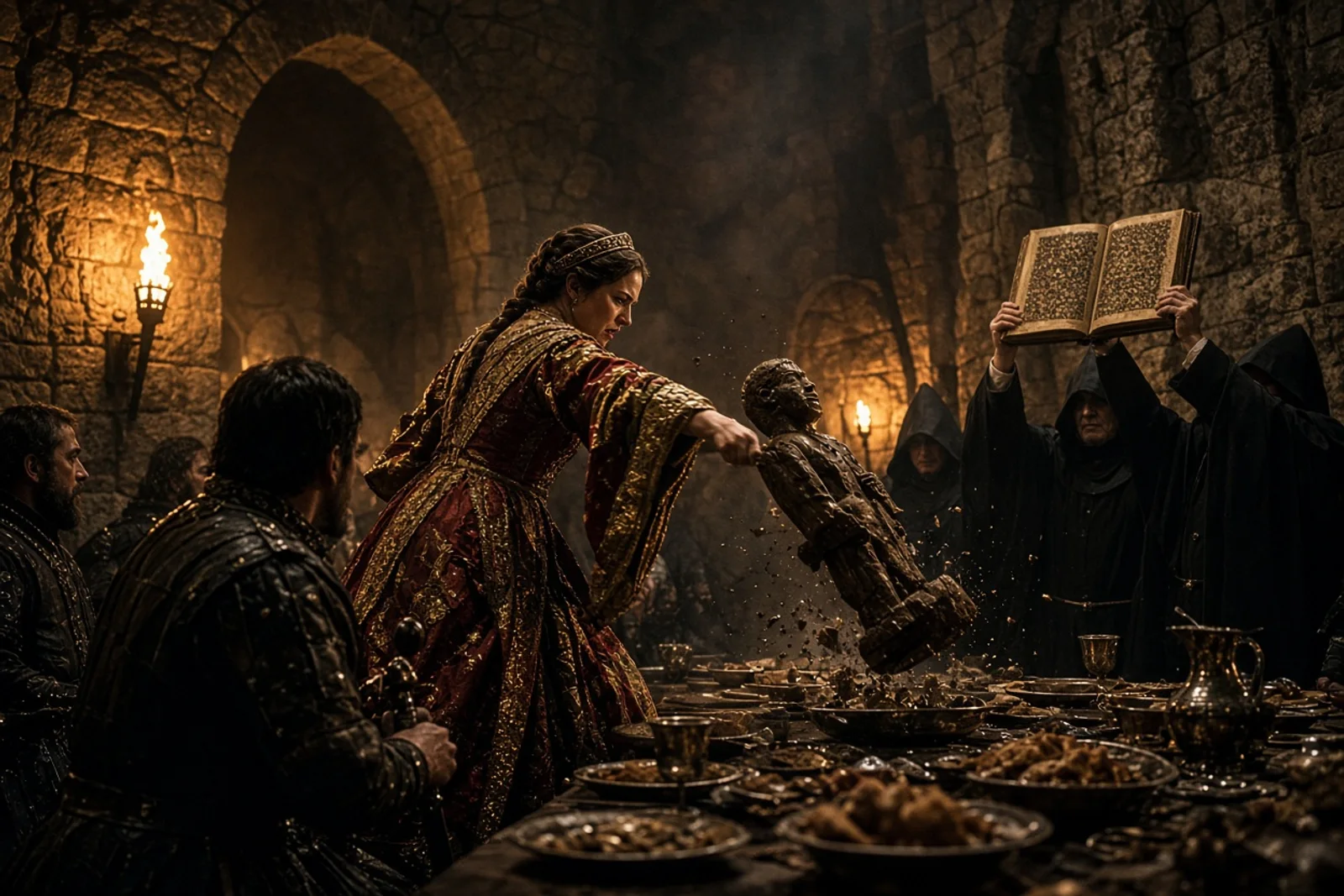
The wind off the firth still carried salt when they brought her into the hall at Dunfermline. I was holding the torch for the king’s steward that evening, close enough to see the water still dark on the hem of her cloak. Malcolm sat on the carved bench with both sons beside him, Donald already tall enough to rest a hand on his sword. She stood without flinching while the interpreters spoke. Her voice was low and even when she answered, and the hall fell quiet around it.
Malcolm had been a widower nine years. He asked her straight out why she had not stayed with her own people. She said the sea had decided otherwise. He laughed once, short, then told the cooks to bring meat. She ate only bread and drank water that first night.
I slept on the bench outside the king’s chamber those first weeks. Through the door I heard her reading from a small book bound in leather. The words were Latin. Malcolm would stop her sometimes and ask what a line meant. She would explain in the Scots he used with his men. After a few nights he stopped interrupting and simply listened until the fire burned low.
By the third month the priests who came for the morning blessing began to notice the change. The old custom had been to begin the fast of Lent on the Monday after the first Sunday. She told them the Roman way started on Ash Wednesday itself. One of the older monks argued that the custom had stood since the time of Columba. She answered that the rest of the Christian world kept the stricter rule and Scotland could do the same. Malcolm backed her at the next gathering of the thanes. The change was announced before Easter.
She rose before the bell every morning. I carried the basin when she washed the feet of the beggars who waited at the gate. She did it herself, kneeling on the stones, and would not let anyone else pour the water. Malcolm watched once from the upper walk and said nothing. After that he ordered extra blankets kept for the same men.
The question of the Sabbath came next. Some still rested on Saturday as the old law required. She asked the bishop to gather the clergy and decide. The meeting lasted two days. When it ended, Sunday was named the day of rest. Malcolm had the proclamation read in every hall he held. A few of the older priests grumbled that the change would confuse the crofters, but they kept their grumbling quiet after that.
She sent for masons in the summer. They began work on a small stone church inside the wooden palisade. Malcolm gave them timber from the royal store without asking the cost. When the roof was raised she placed a relic of the true cross above the altar herself. The court attended the first mass there on the feast of the Assumption.
Her books were few but carefully kept. One evening Malcolm picked up the gospel book she used for reading and turned the pages slowly. He could not read the letters, yet he asked her to show him where the story of the loaves and fishes was written. She pointed with her finger. He ran his thumb along the edge of the vellum and said nothing more, but after that he had a silver cover made for the volume.
The children came one after another. Edward first, then Edmund. Each time she recovered she returned to the same round of prayer and work. Malcolm grew used to finding her in the cave by the burn when he came back from riding. He would sit on the rock outside and wait until she finished. The men who rode with him learned not to ask why the king was late for supper.