




St. Martin Shares Cloak with Beggar
Soldier divides cloak and later converts.
FaithTap · Sep 21, 2026 · 11 min read
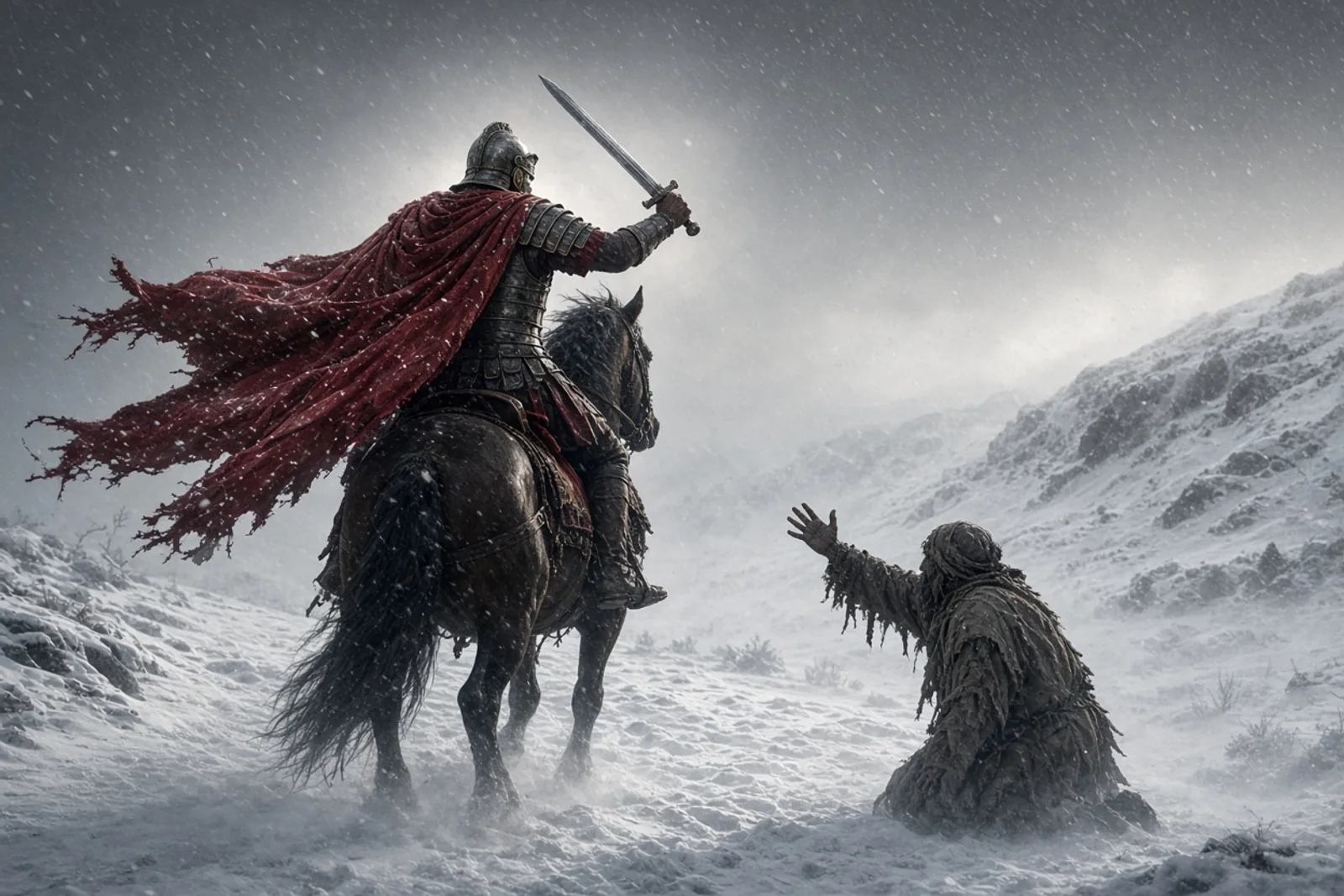
The wind cut straight through the gate that afternoon, the kind that finds every seam in a cloak and turns leather stiff against the skin. I stood posted with two others just inside the arch, watching the road from the north where the fields ran flat and white. Martin rode in alone on the dun horse the century had assigned him. He had the reins in one hand and the other tucked under the edge of his cloak for what little warmth it gave.
A beggar had taken shelter against the outer wall. The man wore nothing above the waist and his legs were wrapped in rags that had frozen into boards. He held out both hands to every rider and every foot soldier who passed. Most looked away. One laughed and kicked snow at him. Martin reined in ten paces short of the gate and sat still for a moment, studying the figure.
He swung down. The horse stamped once and stood. Martin drew the short sword he still carried on campaign duty, though he had already sold or given away every other piece of kit that would fetch a coin. He spread the heavy military cloak across the snow with one hand, set the point of the blade at its center, and cut. The wool parted with a clean rip. He folded one half, crossed the remaining distance, and laid it over the beggar’s shoulders without a word. The beggar clutched the fabric and stared. Martin wrapped the other half around himself again, the cut edge hanging loose past his knees, and remounted.
A pair of merchants who had been waiting to enter the city began to laugh. One pointed at the uneven hem and said the Roman looked like a half-dressed scarecrow. A woman selling bread from a basket near the wall turned her face aside and made the sign against the evil eye. Two of our own men who had come out to meet the patrol muttered that a soldier who could not keep his own cloak would be no use when the real cold set in. Martin did not answer any of them. He rode through the gate, the horse’s hooves loud on the frozen stones, and the cut edge of the cloak flapped against his leg with every step.
I followed at a distance because my relief had not yet come. Inside the barracks yard the talk had already started. Someone said Martin had done the same thing with a pair of boots the month before. Someone else said he kept nothing now except the arms the army required. The centurion on watch only grunted and told us to see to the horses.
That night the frost came down hard enough to split wood. I lay on my pallet listening to the beams crack and thinking about the beggar still outside the gate. Near dawn Martin’s tent mate came looking for me. He said Martin had woken shouting and would not speak of what he had seen. I found him sitting on the ground outside the tent, the cut cloak still around his shoulders, staring at the stars that showed between the clouds. He told me, after a long silence, that Christ had stood before him wearing the half he had given away. The voice had been clear enough that the angels with him turned to look.
He asked for baptism the next morning. The priest at the small church inside the walls set the date for Easter. Martin continued to ride patrol and stand watch until the season changed. He never asked for a new cloak. When the snow melted he mended the cut edge himself with coarse thread and wore the shortened thing as it was.
By the time the first green showed on the willows along the river he had already begun to give away the small pay that reached him. Men in the century started leaving their extra rations on his kit when they thought no one watched. He never commented. At Easter he stood in the river with the others who had prepared. The water still carried ice from upstream. When he came up he looked the same as before, only quieter.
He served out the remaining years of his enlistment without complaint. When the discharge came he walked south toward Poitiers with nothing but the mended cloak and the sword he had used to divide it. I stayed with the century another two winters. Every St. Martin’s Day after that the men who remembered would set an extra portion at the table and leave the seat at the end empty. The beggar, whoever he had been, never reappeared at the gate. The cloak itself was gone with Martin, carried into whatever country he chose next.