




St. Norbert Founds Premonstratensians
Nobleman turns from riot to preaching order.
FaithTap · Sep 26, 2026 · 11 min read
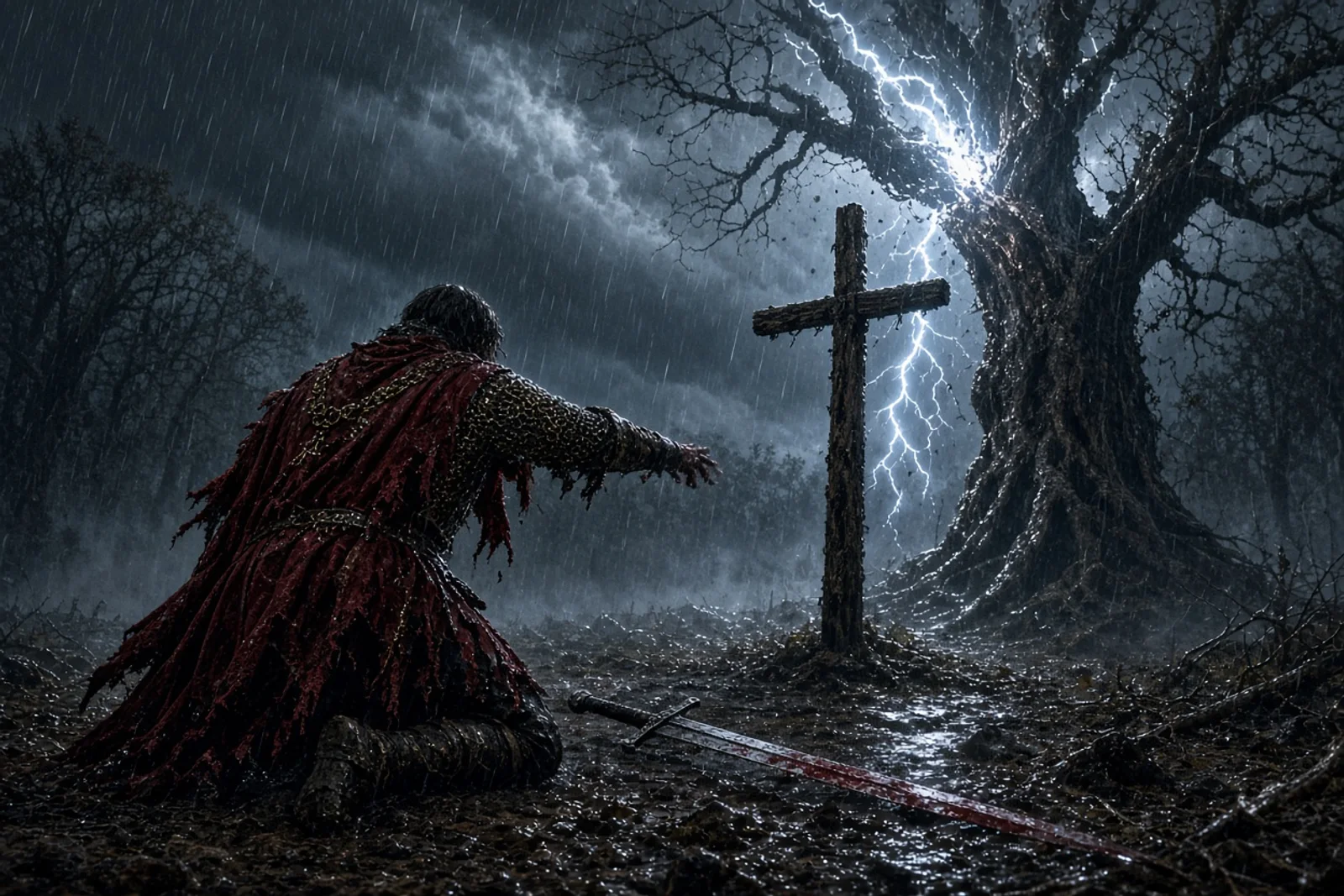
We reached the valley at first light. The ground sucked at our boots where the reeds grew thickest. Norbert walked ahead with his staff, testing each step, and the rest of us followed without speaking. Thirteen of us that morning, counting the bishop’s men who had come only to see the place and would leave before noon.
The shape of the land surprised me. Two shallow arms of marsh crossed at the center, and the low ridge between them ran straight enough to look deliberate. Norbert stopped where the lines met and drove his staff into the mud. “Here,” he said. No one argued. We set down the axes and the ropes we had carried from Laon.
By midday the first hut stood. Its posts were green saplings cut from the edge of the wood. We wove hazel between them and packed the gaps with clay dug from higher ground. The clay was cold and heavy. It clung to our hands and dried in gray streaks on our sleeves. Hugh of Fosses worked beside me without pause. He had the look of a man who had already decided this place would be home.
Norbert spent the afternoon marking the ground for the chapel. He wanted it dedicated to John the Baptist. He walked the outline himself, using the length of his own stride. When he finished, the rectangle lay across the crossing of the two marsh arms exactly as the valley itself lay across the forest. He said nothing about the likeness. We saw it anyway.
That first week the nights were sharp. We slept on pine boughs under the open sky until the roof was finished. Rain came on the third night. Water found every seam in the clay and ran down the inside walls. We moved the sacks of meal to the driest corner and sat awake until the sky cleared. No one complained. The silence after the rain felt like agreement.
Norbert rose before the rest of us each morning. He walked the perimeter of the valley once, then returned to the chapel site and prayed alone. When we joined him for the first office, his voice carried across the open ground without effort. The words were the same we had heard in churches all our lives, yet here they sounded newly placed, like tools set out for work that had not yet begun.
Evermode kept count of the days on a notched stick. On the twenty-second morning he cut the last notch and broke the stick. We had agreed to stay until the chapel walls reached the height of a man. That evening we raised the last course of wattle. The clay we packed around it was darker than the first batches, taken from deeper in the marsh. It smelled of roots and standing water.
Norbert sent two of the younger men back to Laon for more rope and for news. They returned three days later with word that Bishop Bartholomew had approved the site without reservation. They also brought a sack of salt and a small iron cross that had belonged to a priest in the city. Norbert set the cross above the door of the chapel before we ate that night.
The work changed after that. We no longer spoke of returning to our old places. Instead we began to clear a patch of higher ground for a second building, larger than the first. Antony of Nivelles marked the corners with stakes cut from the same hazel we had used for the walls. He drove each stake with the flat of an axe, careful not to split the wood.