




St. Patrick Writes His Confession
Former slave returns to Ireland as missionary after vision
FaithTap · Sep 22, 2026 · 9 min read
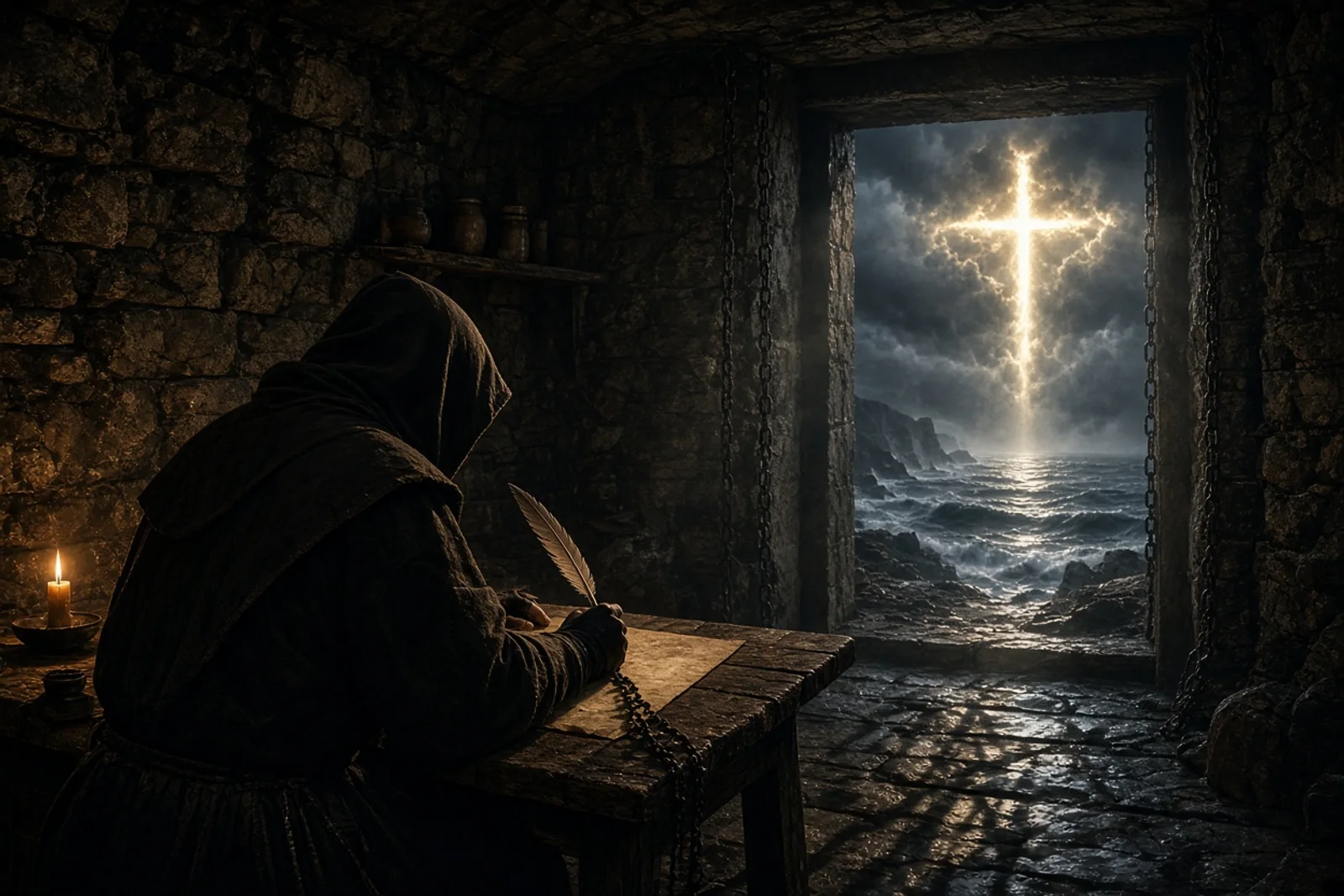
The fire had burned low in the hut when he set the quill down. Outside, rain tapped the thatch in steady lines. I sat on the bench across from him, the only other man awake in the settlement, and watched the ink dry on the first lines he had managed that night. He rubbed his wrist, the same motion he had used for years after long days on the road.
He had come back to this island as a bishop, yet the weight of the place never left his shoulders. The fields where he once herded sheep still lay within a day’s walk. Men who had once owned him now listened when he spoke in their gatherings. He never mentioned those years without first drawing a breath, as if the memory still needed room.
I had traveled with him since the early journeys inland, carrying the chrism and the small wooden cross he set at each new well. He rarely spoke of his own past unless someone pressed him about his right to teach. When they did, the answer always came the same way: he would open the scroll he kept in his satchel and read the verses he had learned in captivity.
That night he began again. The lamp flickered each time the door leather moved in the wind. He wrote the name of his father, Calpornius, and then the name of his grandfather, Potitus. Both had served as clergy in the old country across the sea. He paused after the second name and looked at the flame as though it held the village he had left at sixteen.
He had been taken with thousands from the same stretch of coast. The ships had sailed under a sky the color of iron. I had heard him describe the crossing only once, on a night when storms kept us inside another hut farther north. The oars had been manned by men who spoke no British tongue. Salt spray had soaked the ropes until they stiffened.
In the fields beyond the settlement where he was sold, he tended animals through winters that left his hands cracked. Hunger taught him to pray without words. He told me the prayers came first as counting, then as simple asking, then as the only sound that kept the nights from swallowing him whole. No priest stood near him then. The God he found arrived without ceremony.
Years passed before the voice came in the night. It told him the ship was ready. He walked until his feet bled, reached the coast, and found men willing to take him aboard. The same wind that had carried him away carried him back toward Britain. He never claimed the escape as his own doing.
After he reached home the dreams returned. A man named Victoricus stood before him with letters from Ireland. The plea in those letters stayed with him when he woke. He studied, received ordination, and crossed the sea again, this time carrying the authority of the church in Gaul. The same shores that had held him as a slave now received him as a messenger.
I first met him on the western coast the year the chieftains began to listen. He carried no sword, only a staff cut from blackthorn. When he preached he used the names of their own gods and then set them aside for the name he had learned in bondage. Crowds gathered at fords and on hilltops. Some came to argue, others to be freed from old debts of fear. He baptized until his voice gave out, then rested against a rock while I handed out the bread we carried.