




St. Paul of the Cross Founds Passionists
Mystic emphasizes Christ's sufferings.
FaithTap · Sep 25, 2026 · 11 min read
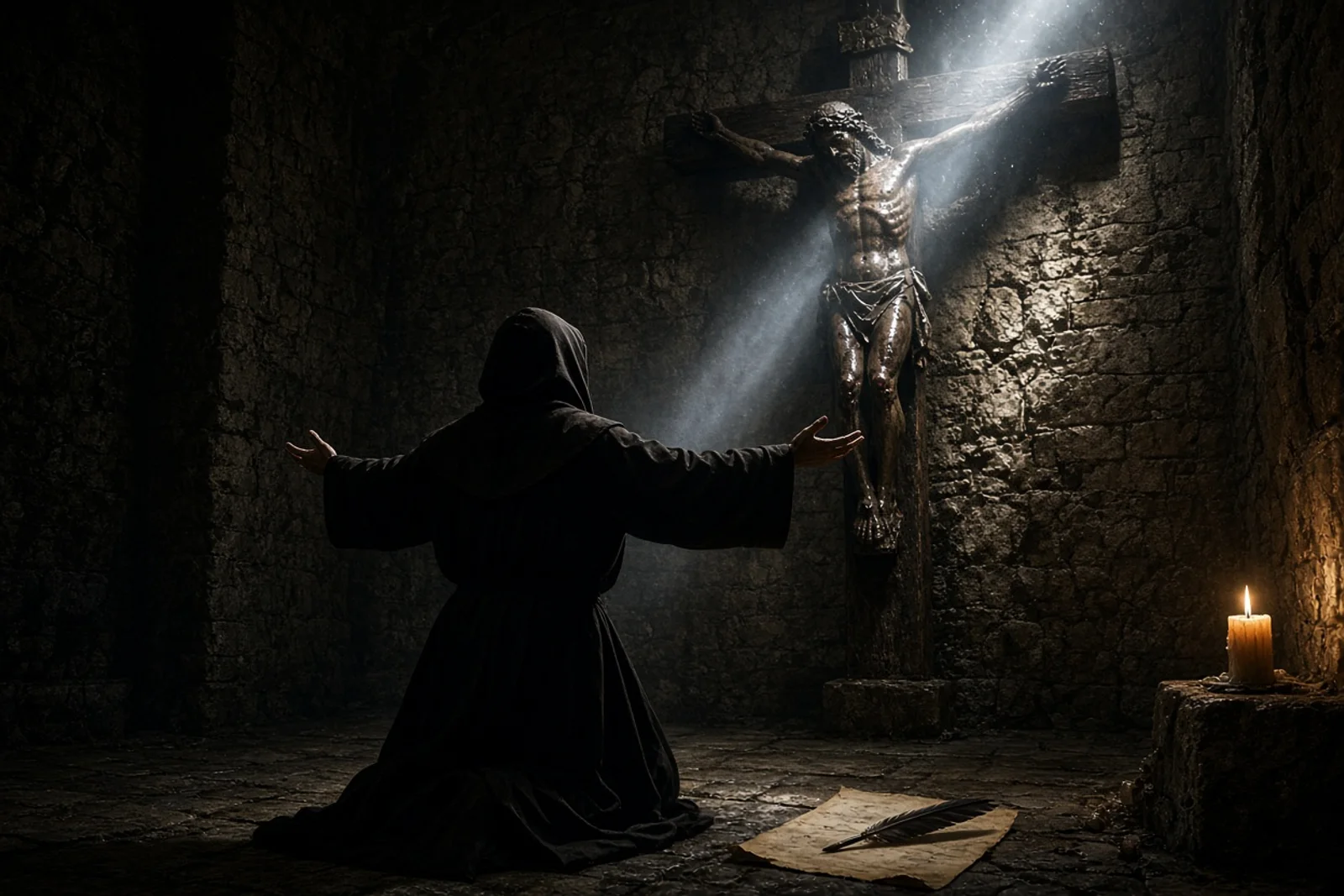
The bishop’s carriage rattled over the stones outside St. Charles just after dawn. I stood by the side door with the sacristan, holding the folded black tunic across my arms. The cloth smelled of new dye and the iron that had pressed the white emblem of the cross and nails into the breast. Inside the church the air was still cold from the night. Paul Danei walked in alone, bareheaded, his shoes already left on the threshold. He looked thinner than when he had left for the hills the month before. His eyes moved once across the nave, then settled on the crucifix above the altar.
Bishop Gattinara met him at the foot of the steps. The two men spoke quietly. I could not hear the words, only the low tone of the bishop and the shorter answers from Paul. Then the bishop took the tunic from my hands and held it up. Paul stripped off his old coat and shirt without hesitation. The November air raised gooseflesh on his arms. The bishop slipped the black garment over his head and tied the cord at the waist. Paul stood a moment in the new habit, feet still bare on the stone, then knelt. The bishop laid both hands on his head and spoke the blessing. No one else moved. The sacristan crossed himself and went back to the sacristy.
Afterward Paul asked for the key to the small room behind the choir. It had once been used for storing vestments. Now it held only a straw mattress, a wooden bench, and a single narrow window high on the wall. He carried nothing with him except the breviary he had kept from his uncle. I watched him step inside. The door closed. The key turned from within.
For the first days I brought water and a little bread at the hour the sacristan said was allowed. Paul took the bowl without looking up. His face was already marked by the nights without sleep. He wrote on loose sheets spread across the bench. Sometimes the pen stopped and he remained still for a long time, eyes fixed on the small crucifix he had fixed to the wall with a nail. The only sound was the scratch of the nib or the occasional cough from the street outside.
On the tenth day the fever came. I heard it in his voice when he asked for more water. The skin around his eyes had darkened. He kept writing. The sheets grew into a stack that he weighted with the breviary at night. Once, near midnight, I passed the door and heard him speaking softly to the crucifix, not prayers I recognized, but names and places and the word “memory” repeated until it blurred into the sound of breathing.
John Baptist came on the twenty-second day. He stood in the nave for a long time before he knocked. When the door opened he went in without speaking. I heard their voices through the wood, low and steady. John Baptist stayed until the lamps were lit again in the church. When he left he looked older than when he had arrived. He told the sacristan that Paul would not come out until the forty days were finished.
The rule took shape in those weeks. Paul wrote it in one long movement, stopping only when the ink ran dry or when the fever made his hand shake. He read each page back to himself before he set it aside. The words centered on the sufferings of Christ and on the men who would keep that memory alive by their manner of life. He left spaces for later additions but never crossed out a line once it was written.
On the morning the fortieth day ended, the bishop returned. The door opened. Paul stepped out carrying the bundle of pages. His habit was stained at the knees and cuffs. He walked to the altar, placed the manuscript on the stone, and knelt again. The bishop read the first pages where he stood. No one spoke until he finished. Then he signed the document and gave it back to Paul. The new congregation had its rule.
Paul did not leave Castellazzo at once. He stayed another week, sleeping in the same cell, eating what was brought to him, and copying the rule once more in a cleaner hand. On the day he finally walked out he wore the same black tunic and the same bare feet. He carried only the breviary and the folded sheets. John Baptist met him at the church gate. They turned together toward the road that led south.