




St. Philip Neri Founds Oratory
Roman priest revives joyful faith.
FaithTap · Oct 1, 2026 · 12 min read
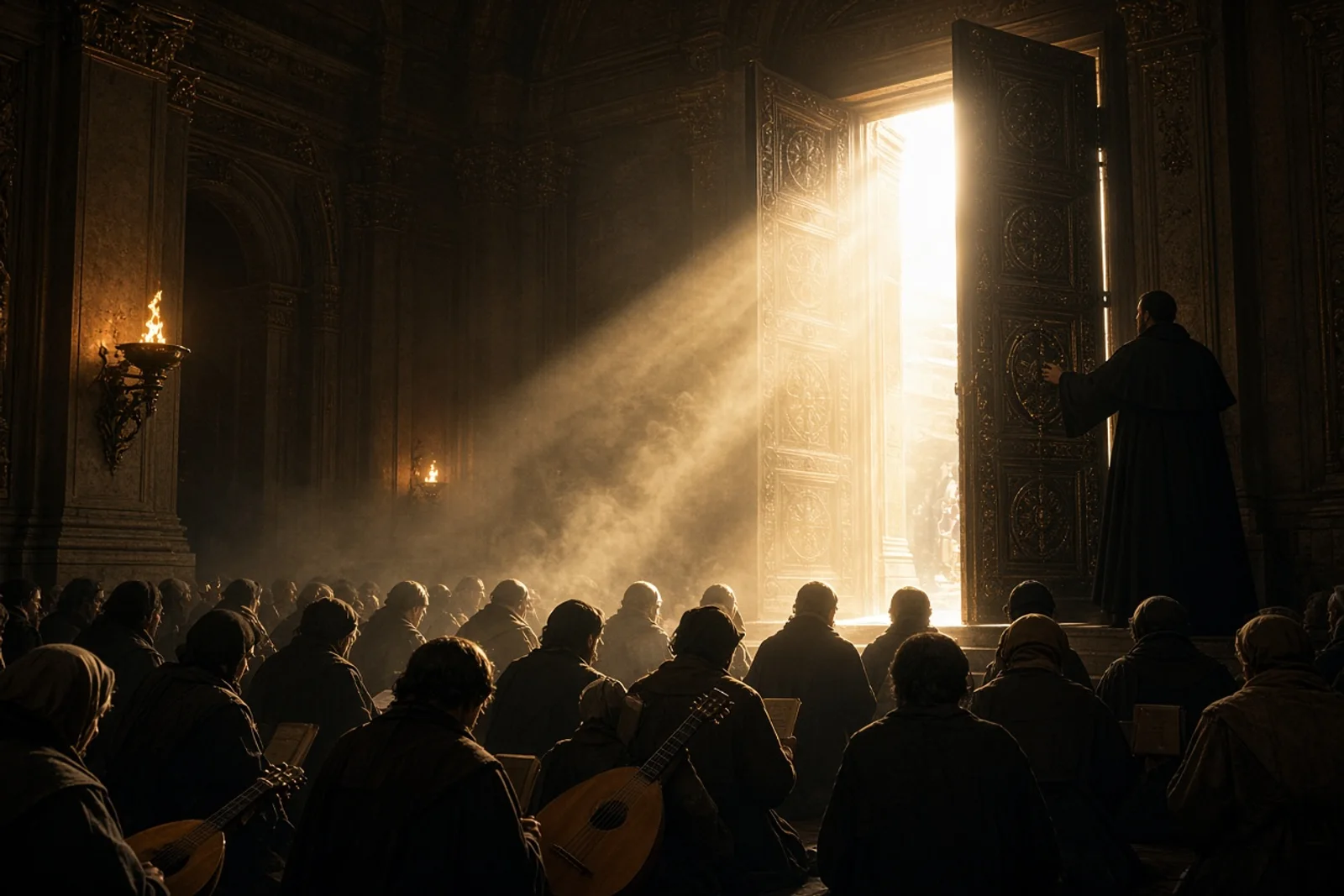
The afternoon heat pressed against the shutters of San Girolamo when I first stepped inside the small room where the men met. Philip sat on a low bench, sleeves rolled past his elbows, listening to a baker from the next street argue about grace. The baker’s voice rose, then broke. Philip waited, then answered so quietly that the others leaned forward. I had come only to return a borrowed cloak, yet I stayed through the bell for vespers.
We walked the markets together after that. Philip stopped at every stall, asked after the children, tasted the bread, and left coins when the seller turned away. One evening he led us down to the Incurables hospital. The air smelled of vinegar and old straw. He washed a man’s feet while the rest of us carried basins. No one sang yet. The singing began later, after we returned to the church steps and the night cooled the stones.
By the time Gregory became pope the gatherings had grown too large for the single room. We spilled into the corridor and out onto the street. Philip never raised his voice to quiet anyone. He simply began speaking where he stood, and the talk moved with him. Men who had spent their days counting ledgers or hauling crates now stayed until the lamps burned low, asking what it meant to live as if God were already present.
The letter from the Vatican arrived on an ordinary Tuesday. A messenger in the pope’s livery handed it to the sacristan and left without waiting for an answer. Philip opened it at the table where we had been sorting alms. He read without changing expression, then passed the sheet to the man beside him. The words granted us the church of Santa Maria in Vallicella and the right to form a congregation under the name Oratory. Someone asked whether we should celebrate. Philip said we should keep the doors open as we always had.
We moved the meetings to the new church the following week. The nave still smelled of fresh plaster and wet lime. Benches were carried in from the old room and set in a half-circle. Philip stood at the center, not on any platform, and began with the same questions he had always asked: what had each man seen that day that reminded him of mercy. The answers came slowly at first, then faster, until the sound of voices filled the space the way water fills a basin.
One of the younger men, a notary’s son, asked whether the formal approval changed anything. Philip looked at him for a long moment. “We still rise when the bell rings,” he said. “We still visit the sick before we eat.” The notary’s son nodded and wrote nothing down.
Winter came early that year. Snow lay on the steps of the Vallicella for three days. Philip insisted the doors stay unbarred. A woman from Trastevere arrived one morning with bread still warm from her oven; she had heard we fed anyone who came. Philip took the loaves and set them on the table without comment. By noon the table was empty again.
The first formal constitutions were read aloud in the spring. Philip listened from the back bench, eyes half-closed. When the reader finished, Philip stood and said only that nothing in the pages should ever stand between a man and the person who needed him most. The reader folded the sheets and placed them in a plain wooden box that stayed under the bench thereafter.
Men began to arrive from other cities. Some came with letters of introduction, others with nothing but the dust of the road on their sandals. Philip met each one at the door, asked his name, and sent him to help in the kitchen or the sacristy before any further questions were asked. Within a month two of the newcomers were leading the afternoon talks themselves.