




St. Scholastica's Final Prayer Answered
Benedict's sister prays for one last night of spiritual conversation.
FaithTap · Sep 29, 2026 · 11 min read
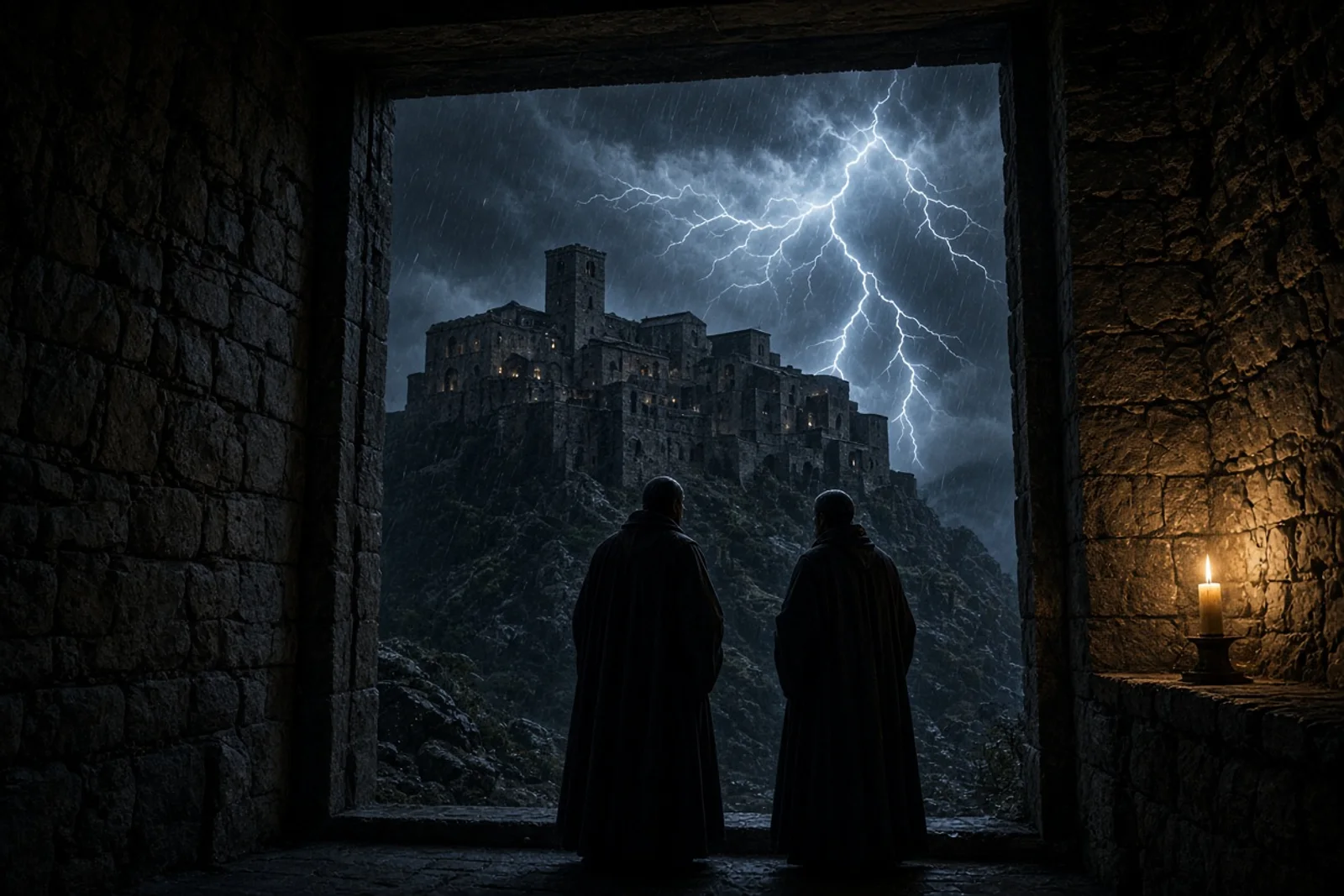
The path from the gate wound through scrub oak and turned sharp at the little stone house the brothers kept for guests. I carried the bread and the lamp, walking behind Benedict as the sun dropped behind the ridge. Scholastica was already inside, her veil folded back, her hands busy with the oil jar. She looked up when we entered and the lines at her eyes deepened the way they always did when she saw her brother after a year.
We ate slowly. The talk moved from the new well at the lower pasture to the way the novices stumbled over the psalms. Benedict kept his voice low, the way he did when the day had already taken too much from him. Scholastica answered every question with another that pulled the conversation further into the evening. Outside the single window the sky stayed clear, the kind of winter clarity that makes the stars look close enough to touch.
When the last crust was gone she folded her hands on the board and said she wanted the night as well. Benedict shook his head once. The rule was the rule. He rose, reached for his cloak, and told the two of us who had come with him to make ready. Scholastica did not argue. She simply laid her forehead on her clasped hands and stayed there, still.
The first drop hit the roof like a nail. Then the wind slammed the shutters and the rain came in sheets so thick they looked solid. Lightning cracked across the doorway before Benedict could reach it. He stood with one hand on the jamb and watched the track turn to mud. When he turned back his face was set the way it was when a novice broke the silence without cause.
She lifted her head. Water ran down the board where her tears had fallen. Benedict spoke first, short and hard. She answered that she had asked and the Lord had heard. Neither of them raised their voices after that. The storm settled into a steady roar that made the small room feel smaller. We moved the bench closer to the wall and sat.
All night the talk ran without pause. She asked about the last hours of a man who had lived by the rule and what mercy looked like when the body failed. Benedict answered with the same measured words he used in chapter, yet the answers came slower, as if he were tasting each one. Once, when thunder shook the roof beams, she smiled without sound and he did not look away. The lamp burned low and we fed it the last of the oil rather than open the door for more.
Dawn came gray and the rain stopped at the same moment the light reached the threshold. Benedict stood, gathered his cloak, and left without another word. The track was still slick but passable. We followed him back to the gate. No one spoke until we reached the kitchen court.
Three mornings later I was in the orchard pruning the young olives when Benedict came out from the oratory. He stopped at the low wall and looked toward the east as though something had called his name. His face changed in the way a man’s face changes when he sees a thing no one else can see. He stayed there a long time, one hand on the stone. When he turned he told the prior to send word to Piumarola that the abbess was gone.
They brought her body two days after that. The brothers carried the bier up the path she had walked every year. Benedict chose the place himself, the same tomb he had already had cut for himself in the rock below the altar. The stone was still rough at the edges. They laid her in first and sealed it only after the last prayer. The same evening the prior asked whether the feast day should be changed. Benedict said the day would keep its own memory.