




St. Stephen of Hungary Crowned and Converts Nation
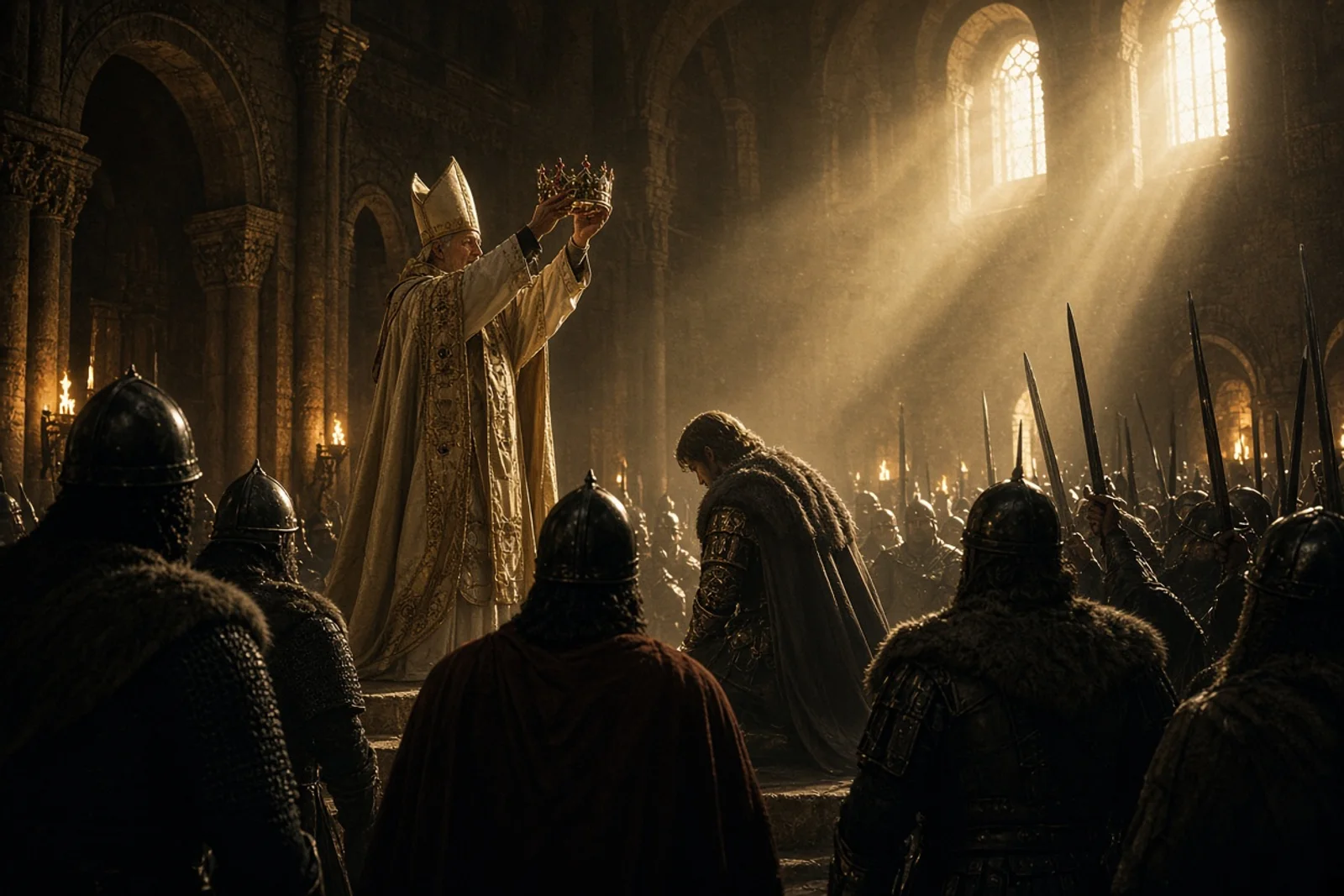
Stephen receives the crown from Pope Sylvester II.
FaithTap · Oct 2, 2026 · 10 min read
The dust rose in thin ropes from the road that climbed to Gran, and I stood among the others with my hand on the hilt of a sword I had not drawn in three years. Word had come at dawn that Astricus was returning from Rome with the answer we had waited for since the last snow. Men shifted their weight from one foot to the other. Women held children higher so they could see the bend in the track. No one spoke the name of the thing we hoped for, as if naming it might turn it away again.
Astricus rode at the head of the small party, his mule lathered and blowing. Behind him walked two men in the Pope’s livery, and between them, carried on a pole between their shoulders, rode a chest wrapped in oiled cloth. The chest was not large. It looked no bigger than a man’s helmet box. Stephen waited on the steps of the wooden hall, Gisela at his right hand. He wore the same plain tunic he had worn the morning he rode out against Koppany three winters before.
When the chest was set on the ground, Astricus lifted the lid himself. Inside lay the crown, gold and enamel, the stones catching the late light like water held in a shallow dish. Stephen stepped down, touched the rim with two fingers, and did not lift it. He only nodded once, then turned to the people gathered and said the work could begin.
That night the fires burned later than usual. Men who had kept their old amulets under their shirts now brought them out and laid them on the stones to be broken. I watched one man, a smith from the river quarter, hold his iron hammer above a small carved figure for a long time before he brought it down. The sound was small and final.
On the seventeenth day of August the assembly moved to the open ground east of the church. The bishops who had come with the crown stood in a half-circle. Stephen knelt on a cloak spread over the grass. Astricus set the crown on his head and spoke the words that made him king under the Pope’s grant. The metal settled low on Stephen’s brow. He rose slowly, as if testing the weight, then faced the river and the fields beyond it.
After the crowning, riders left for the borders. One carried letters to the chieftains who still kept the old fires. Another went south with instructions for the first stone church to be raised at the place where the battle against the rebels had ended. Stephen kept Gisela beside him when he received the messengers who returned. She read the replies aloud when his eyes grew tired from the script.
I was sent once with a small band to a village two days north where the old priests still offered meat to the river. We carried no weapons beyond our knives. When we arrived the headman met us with his hands empty. He asked only that his children be allowed to keep the name their grandfather had given them. We told him the name could stay if the children learned the new prayers. He agreed before the sun set.
Stephen began to measure land for the bishoprics the Pope had allowed him to found. He walked the boundaries himself when the snow was light, driving stakes with his own hands. The first see went to the place called Esztergom, the second farther east where the plains opened. Men who had never held a measuring cord before learned to stretch rope between the stakes and call the distances true.
One evening a messenger arrived from the German border with news that Henry, Gisela’s brother, had become emperor. Stephen read the letter standing in the doorway so the light would last. He said nothing about the news itself, only asked that the rider be fed and given a fresh horse. Later that same week he ordered more hospices built along the road that led toward Rome, so that pilgrims from the east would not sleep in the open.