




St. Teresa Benedicta Enters Auschwitz
Philosopher martyr offers life for her people.
FaithTap · Sep 22, 2026 · 12 min read
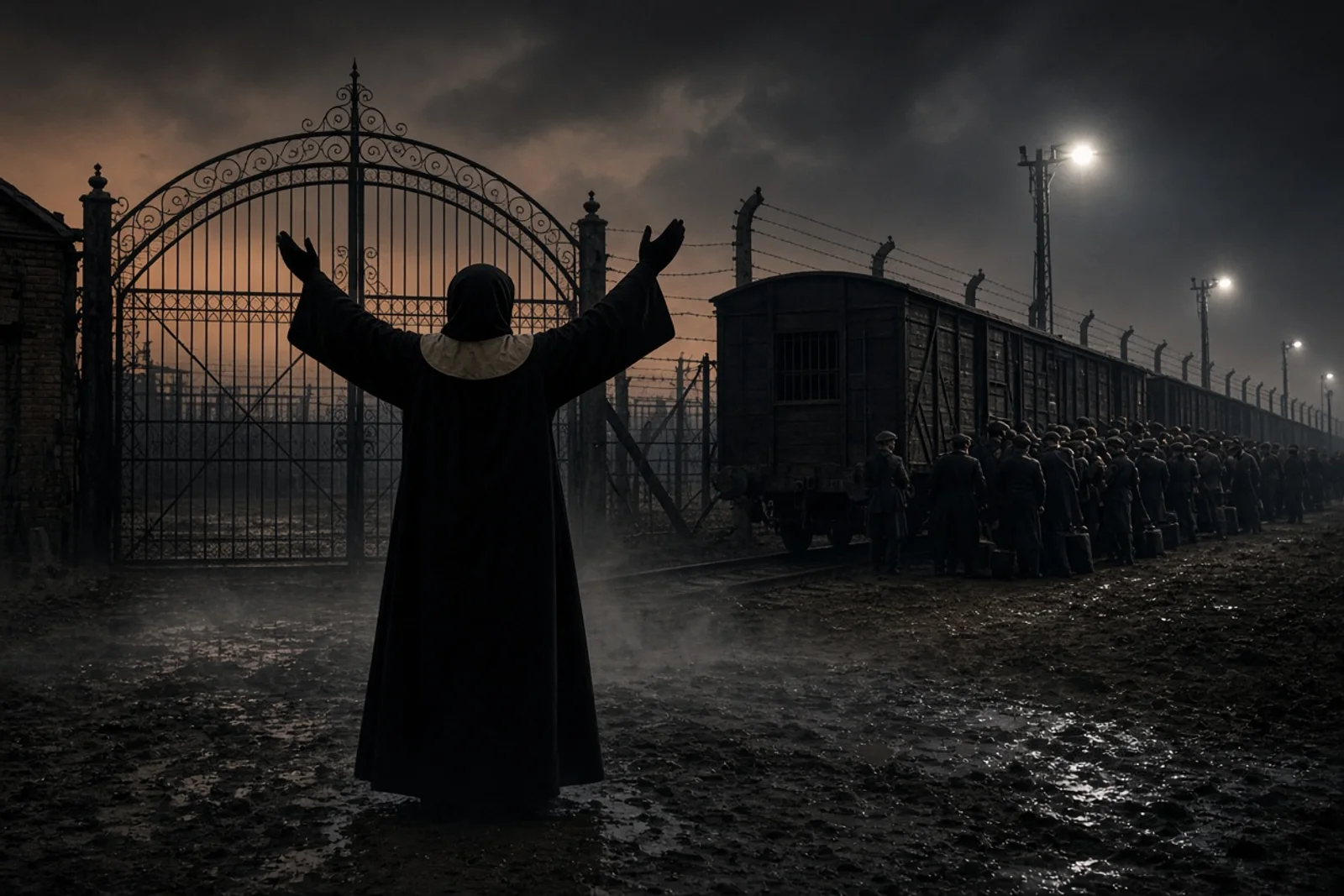
The train brakes caught with a long metal scream that rolled down the siding and into the dark. I stood on the ramp with the others already marked for work, the floodlights cutting hard white lines across the gravel. Guards moved in pairs along the edge, rifles slung, boots scraping. The wagons sat still for a moment, then the doors rolled open and the first voices spilled out into the August night.
People dropped or were pulled to the ground, some still clutching the bundles they had carried from Westerbork. Children cried for water. A woman in a thin coat tried to straighten her skirt before a guard shouted her back into line. The air smelled of coal smoke and wet wool and the sharp edge of fear that never left the platform.
I kept my eyes on the middle wagons because that was where the Dutch transport usually stood. The numbers had been called earlier: nine hundred and eighty-seven loaded, sixty of them baptized Catholics. The count passed from one prisoner to the next in low voices while we waited.
Two women stepped down together near the third wagon. One wore the plain dark dress and short veil of a Carmelite; the other held her hand and stayed close. Rosa Stein kept her sister’s fingers tight in her own. Edith Stein looked once toward the platform lights, then turned to the woman beside her and spoke the only words that reached me across the noise.
Come, we are going for our people.
An SS officer pointed them left with the rest of the older women and the mothers holding infants. The line formed quickly, three abreast, and moved toward the path that led past the low brick buildings. No one in that group carried luggage. The bundles stayed on the gravel where they had fallen.
I was ordered to help clear the wagons. Inside the first one the straw was already dark in patches. A child’s shoe lay wedged under a bench. I carried it out and dropped it onto the growing heap at the end of the ramp. The next wagon was empty except for a single coat folded on the floor.
By the time the last prisoners from the transport had been sorted, the sky had begun to pale behind the birches. The group sent left numbered more than five hundred. They were taken straight to the chambers at Birkenau. The doors closed before full light reached the trees.
Smoke rose from the chimneys before the sun cleared the horizon. It came in thin gray columns at first, then thicker, pushed by the wind that always moved across the flat ground. The prisoner next to me on the ramp turned his face away and kept working. We did not speak of the count.