




St. Teresa of Ávila Reforms the Carmelite Order
Teresa founds the Discalced Carmelites at Ávila.
FaithTap · Oct 12, 2026 · 10 min read
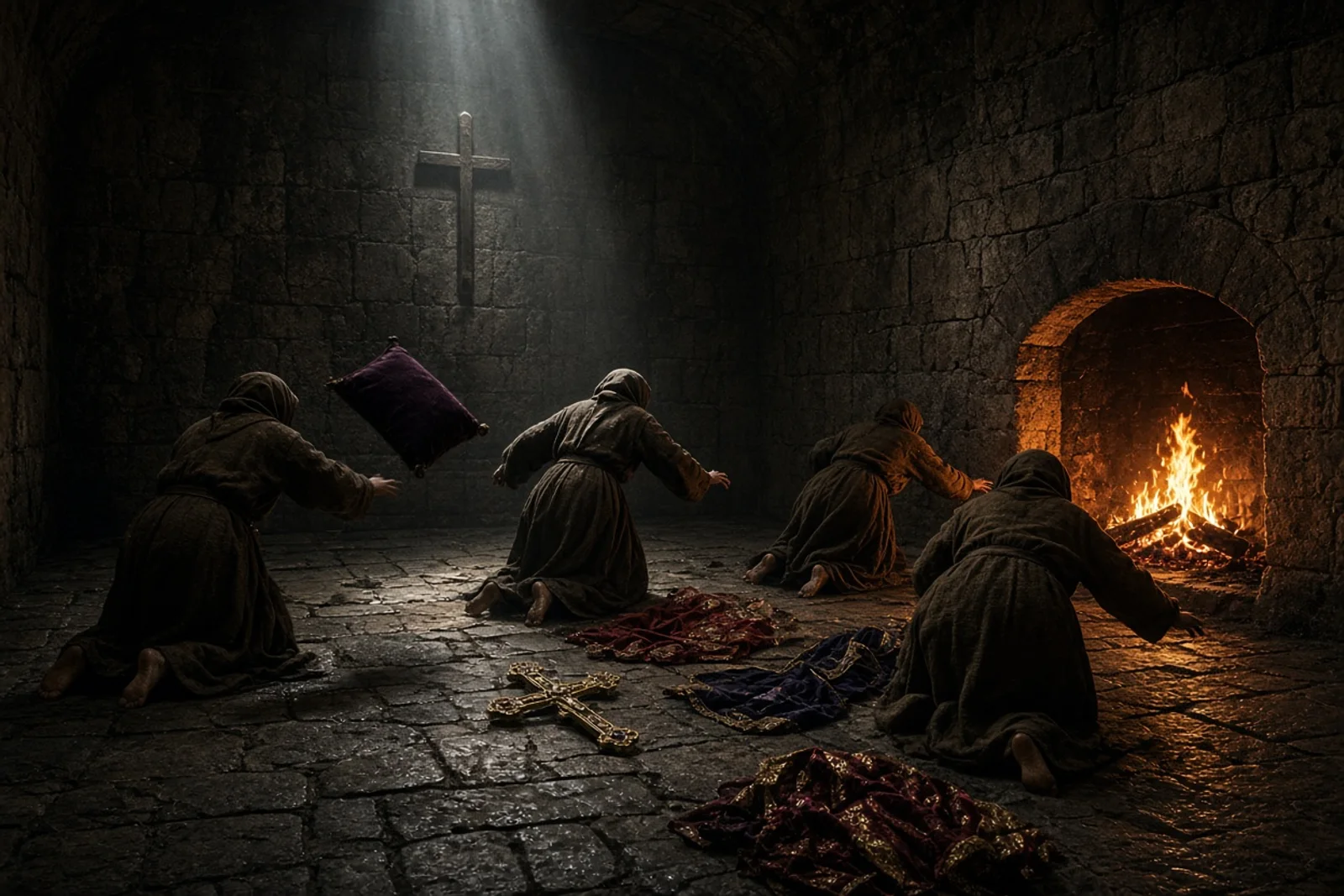
The cart rattled over the last stretch of road into Ávila just after compline. I sat on the back edge with my knees drawn up, holding the bundle of linen the prioress at the Incarnation had sent ahead. Dust coated my tongue. When the wheels stopped at the narrow lane off the plaza, a single lantern already burned inside the low doorway. Teresa stood there, sleeves rolled past her elbows, the hem of her habit dark with mortar. She looked smaller than the stories had made her.
She took the bundle without a word and set it on the bench. Three other women waited in the half-finished parlor. One was her niece, still pale from the journey from Alba. The second kept glancing at the street as if the stones themselves might rise. The third, older, simply sat with her hands open on her lap. No one spoke the name of the place yet. It was only a house with whitewashed walls and a roof that still leaked when the wind turned from the north.
We worked through the night. I helped hang the rough curtains that would serve as the grille until proper iron could be found. Teresa moved from room to room with a measuring cord, marking where the altar would stand and where the beds would be placed so that no sister would have to step over another in the dark. When the bell of the Incarnation rang for matins, she paused, head tilted, listening. Then she went back to the cord.
By dawn the first complaints had already reached the street. A merchant whose shop faced the lane stopped me when I carried water from the fountain. He asked what the women thought they were doing, shutting themselves away when the town needed hands for the harvest. I told him the truth I knew: the house had been bought with money sent from Peru and the bishop had given leave. He spat and walked on.
The brief from Rome arrived the evening Teresa returned from Toledo. She had been gone since January, finishing her writing at Doña Luisa’s house. When the messenger handed her the sealed packet she did not break it open at once. She carried it inside, set it on the table, and asked for water. Only after she had washed her face did she read it aloud to the three who would stay with her. The older woman began to weep quietly. Teresa folded the paper and placed it under a stone on the windowsill so the night air would not lift it.
On the twenty-fourth the four of them entered the chapel together. A borrowed priest said the first mass while the rest of us stood outside the door. The street was already filling. Someone had spread the word that the new rule forbade shoes and meat and that the sisters would beg rather than accept rents. A boy threw a clod of earth that struck the wall above the window. Teresa did not look up from her place on the floor.
By midday the crowd had grown. The prior from the Incarnation sent two friars to speak with her. They stood in the lane and called her name until she came to the grille. Their voices carried. They said the town council would not tolerate another house that drew alms away from the old monastery. Teresa answered that the house was small and the sisters few. One of the friars struck the grille with his staff. The sound echoed down the lane like a gate slamming.
That night the four women slept on straw because the beds had not yet been carried from the Incarnation. I stayed in the outer room with the door barred. Twice I heard footsteps stop outside and then move on. Toward morning the wind shifted and rain began. Water came through the roof in three places. Teresa rose without complaint and moved the straw farther from the leaks. She told the others to keep their habits on so the wool would hold some warmth.
The commotion lasted six days. On the third day the corregidor himself came. He demanded to see the brief. Teresa handed it through the grille without speaking. He read it twice, folded it, and returned it. Then he asked how many sisters she intended to receive. She said twelve at most, and only those who wished the stricter life. He nodded once and left. The crowd thinned after that, though the muttering in the market did not stop for weeks.