




St. Thomas More Refuses Oath
Chancellor dies for conscience.
FaithTap · Sep 30, 2026 · 12 min read
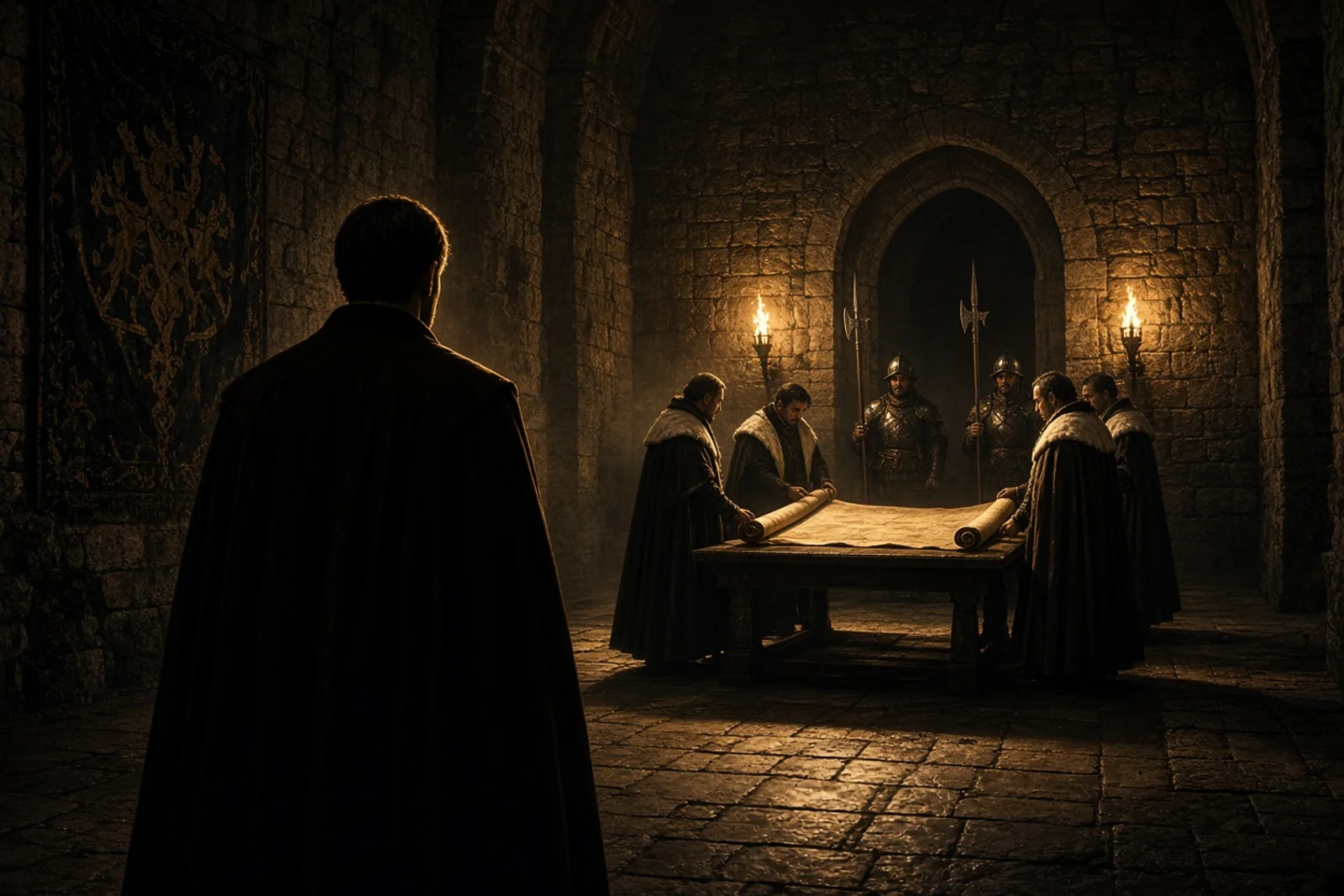
The chamber smelled of damp stone and old smoke when they brought him in. He leaned on the staff with both hands, the hem of his gown brushing the rushes, and the room went quiet enough to hear the river against the wharf outside. I stood near the back with the other clerks, holding the roll of names we had been told to mark. More’s face was thinner than the last time I had seen him in Westminster, but the eyes moved over the bench the way they always had, taking the measure of every man.
Audley sat in the centre, Norfolk on his right, the rest of them ranged along the table in their furred robes. More lowered himself onto the stool they gave him and waited. The indictment was read out in full, the long list of words they said he had spoken against the King’s title. He listened without moving. When they finished he asked to see the statute itself, and they passed it to him. He read the lines slowly, then set the parchment down.
Rich was called first. He stood with his thumbs hooked in his belt and told the court how he had gone to the Tower with Southwell and Palmer to clear the books from More’s room. He described a conversation that took place while the others were busy with the chests. More, he said, had put a case about Parliament making a king, then another about Parliament declaring God was not God. Rich claimed More had answered that a subject could not be bound to accept the King as head of the Church because no Parliament could make such a law without consent that no subject could give. More listened to all of it with the same steady look he had given the statute.
When it was his turn he spoke quietly. He said he had never denied the Act in open words and that silence could not be turned into treason. He reminded them that every man on the bench had once sworn an oath to the Pope and that the law could not punish a man for keeping faith with an earlier promise. Norfolk shifted in his chair. The other judges kept their eyes on the papers in front of them.
The jury was sent out after dark. They came back before the candles had burned low. Guilty. More stood again, using the staff, and thanked them for their trouble. He asked only that his family be allowed to attend him at the end. Audley pronounced the sentence in the usual form. More bowed his head once and was taken back down the steps.
In the days after the trial the Tower felt different. The guards spoke less when they passed his door. I carried messages between the Lieutenant and the Council and sometimes saw Margaret Roper waiting at the gate with a basket. She was allowed in twice. The second time she came out with her face blotched from crying but her back straight. More wrote to her from his cell, the same careful hand he had always used, telling her the matter was now out of their hands.
On the morning of the sixth of July they woke him early. The sky was already pale over the river when he was led out. He wore the same gown he had worn at the trial, and someone had given him a clean shirt. He walked without the staff this time, though his steps were short. At the scaffold on Tower Hill a crowd had gathered, kept back by halberds. The executioner stood ready, the axe already in place.
More climbed the steps and turned to face them. He spoke only a few sentences. He said he died the King’s good servant and God’s first. Then he knelt, placed his head on the block, and waited. The axe fell once. The head was shown to the crowd and then taken down. Margaret Roper had arranged for a boat at the stairs. She met the cart on the way back and took the head from the spike before it could be set on London Bridge. She wrapped it in a cloth and carried it away.
The court records were sealed that same week. Rich received his reward a month later. The other judges continued their sittings as before. In the Tower the cell was cleared and the books returned to the library. I kept the roll with the names marked in my own hand. On it More’s name stands with the rest, though the ink has faded where the edge of the parchment was folded.