




T. S. Eliot Joins the Church of England
Poet baptized after years of searching.
FaithTap · Sep 22, 2026 · 11 min read
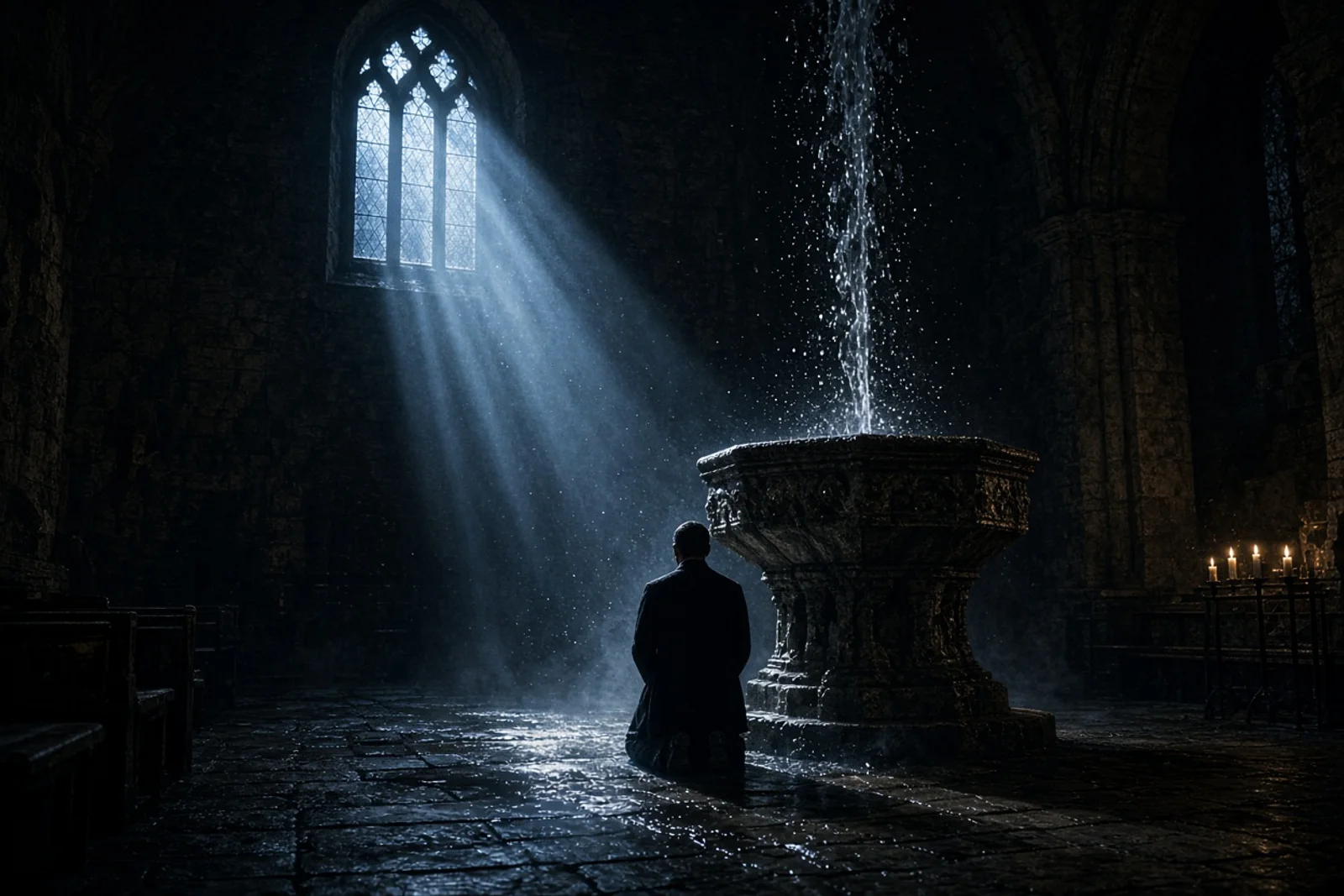
The rain had thinned to a mist by the time we reached the lane. I had driven the last stretch from Oxford with the windows down, the smell of wet hawthorn cutting through the car. Eliot sat beside me without speaking. His collar was turned up, his hat low. We had agreed weeks before that no one else need know the hour.
Finstock church stood small against the fields. The door was already locked from inside when we arrived. Stead met us at the side gate, keys in his hand, eyes quick and uneasy. He had insisted on the bolts. “I hate spectacular conversions,” Eliot had written him earlier, and Stead repeated the line now as if to steady himself.
We stepped through the low porch. The nave smelled of damp stone and old wax. Stead had brought only the necessary vessels and a single witness from the parish, an elderly man who kept his gaze on the floor. I stood a few paces back, near the font. The water had been drawn that morning. It caught the weak light from the clerestory windows.
Eliot removed his hat. His face looked narrower than usual. The years at the bank, the nights correcting proofs for The Criterion, the long unraveling with Vivienne had left their mark. He had carried the manuscript of The Waste Land through those same years like a map of everything that could not be mended. Now he stood still while Stead read the service in a lowered voice.
The words moved without flourish. No audience waited outside. No photograph was taken. When the water touched his forehead Eliot closed his eyes for a moment longer than the prayer required. Stead’s hands were steady. The elderly witness coughed once into his sleeve and fell silent again.
Afterward we walked the short distance to the car without speaking of what had happened. Eliot asked only whether the roads would be clear by morning. We drove back toward Oxford under a sky that had cleared to a hard grey.
The next day he was confirmed at Cuddesdon. Bishop Strong performed the rite in the chapel there. The building was quiet, the ceremony brief. Eliot knelt on the stone without ceremony, received the bishop’s hands, and rose again. Strong said little beyond the required words. Eliot answered in the same measured tone he used when discussing a line of verse that still needed work.
In the weeks that followed he returned to London and to the routines he had already begun to shape. He attended Mass at St Stephen’s in Gloucester Road whenever the hours allowed. The church stood a short walk from his rooms. He took his place in the pew without drawing attention, though several of the older parishioners soon recognized him. He served as sidesman at first, then later as churchwarden. The duties were ordinary: counting the collection, locking the doors after evensong, making certain the candles were replaced before the next feast.
Vivienne’s health continued to decline. The separation came in 1933. Eliot moved for a time into the clergy house attached to St Stephen’s. He kept the same hours for work at Faber, the same long evenings with manuscripts, but the pattern of his days now included regular confession and the daily offices. He spoke of the change only when asked directly, and even then he limited himself to the public statement already printed in the preface to For Lancelot Andrewes. Classicist in literature, royalist in politics, anglo-catholic in religion. The sentence stood as he had written it.